Merino Wool: Why This Fabric is the Secret to Packing Light.
We’ve all been there: standing in the middle of a hotel room, knees deep in a “Mount Everest” of clothing, trying to figure out how to zip a suitcase that clearly has other plans. The struggle of overpacking isn’t just about airline fees; it’s about the mental and physical weight of dragging your life behind you. If you’re ready to finally ditch the weight, there is one specific “secret weapon” that professional travelers and minimalists swear by: Merino wool.
Often called “nature’s performance fiber,” Merino wool is a far cry from the itchy, bulky sweaters your grandmother used to knit. This high-tech gift from the Merino sheep—originally a strictly guarded Spanish treasure—has revolutionized how we pack. According to the International Wool Textile Organisation (IWTO), humans have used wool for over 10,000 years, but the specific evolution of the Merino breed has created a fiber so fine it’s measured in microns, often rivaling the softness of cashmere.
But the real “magic” for travelers isn’t just the softness; it’s the science. Merino wool possesses a unique molecular structure that allows it to regulate your body temperature, wick moisture before it even turns into liquid sweat, and—most importantly for the light packer—naturally resist odors for days on end. This means you can effectively cut your wardrobe in half without sacrificing style or hygiene. Whether you’re building a technical hiking kit or looking for light, cool clothing for touring the town, Merino is the sustainable, high-performance foundation that makes “carry-on only” a reality.
In this guide, we’ll dive into the microscopic science that makes this fabric so powerful, the history of its “smuggled” beginnings, and how you can use a few key pieces to travel the world with less.
What is Merino Wool? (Forget Everything You Know About Wool)
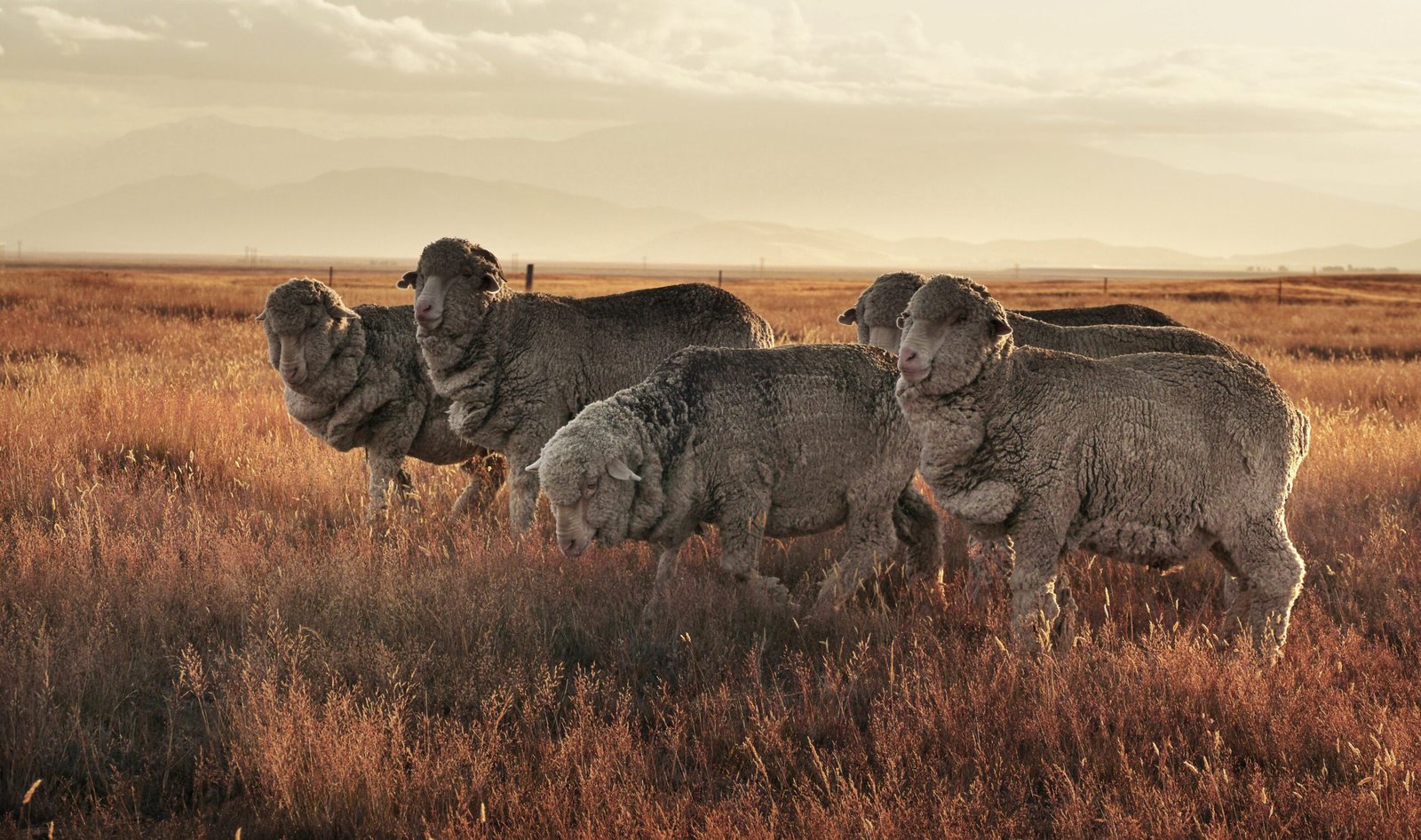
If the word “wool” conjures images of heavy, scratchy sweaters that leave your skin red and irritated, it is time to reset your expectations. Merino wool is fundamentally different from the “old school” wool of the past. It comes from the Merino sheep, a breed specifically prized for centuries for its exceptionally fine fleece. Originally guarded as a national treasure in Spain, these sheep are now primarily raised in the rugged environments of Australia and New Zealand, where their coats must protect them from both sub-zero alpine winters and scorching summer sun.
The secret to its comfort lies in the micron count. A “micron” is a measurement of the diameter of a single fiber. To put this in perspective:
-
Human Hair: 50–100 microns.
-
Traditional Wool: 30+ microns (thick, stiff, and prone to “poking” the skin, which causes itching).
-
Merino Wool: 17–21 microns (ultra-fine and flexible).
Because Merino fibers are so much thinner, they don’t have the structural rigidity to prick your skin. Instead, they bend softly upon contact. According to The Woolmark Company, this flexibility is what gives the fabric its signature “silky” feel, often making it indistinguishable from high-end synthetics or even cashmere.
Beyond the feel, the structure of the fiber is a masterpiece of natural engineering. Each fiber has a natural crimp, which creates millions of microscopic air pockets. These pockets act as a buffer against the outside environment. When it’s cold, these pockets trap your body heat to keep you warm. When it’s warm, the fiber’s breathable nature allows moisture vapor to escape before it even turns into liquid sweat, effectively cooling you down. This biological “thermostat” is what allows a traveler to move seamlessly between a chilly airplane cabin and a humid tropical tarmac without needing to change clothes.
As noted by the International Wool Textile Organisation (IWTO), this unique evolutionary trait is why Merino is often considered the most versatile natural fiber in existence. It isn’t just a fabric; it is a high-performance protective layer that has been field-tested by nature for thousands of years.
The “Magic” Properties That Enable Light Packing
To understand how a single fabric can replace half a suitcase, we have to look at the microscopic science of the fiber. Merino wool isn’t just a textile; it is a bio-engineered shield. Here are the three “superpowers” that make it a light-packer’s best friend.
The Odor-Resistance Superpower of Merino Wool
This is the single most important factor for any minimalist traveler. Most odors associated with “dirty” clothes are actually caused by bacteria breaking down sweat. Synthetic fabrics like polyester are hydrophobic (water-hating), meaning they trap sweat and oils on the surface of the plastic-like fibers, creating a breeding ground for bacteria.
Merino wool, however, is naturally antimicrobial. Its fibers have a complex chemical structure that actually absorbs odor molecules, trapping them within the fiber’s core so you can’t smell them. These odors are only released upon washing. Furthermore, because Merino is so efficient at managing moisture, it keeps your skin dry, depriving bacteria of the damp environment they need to multiply. This is why you can wear a Merino shirt for several days of travel—the “sniff test” is a real travel ritual—without a hint of “travel funk.”
The “Thermostat” Effect (Moisture Management)
Unlike cotton, which gets heavy and cold when wet, or synthetics that can feel stifling, Merino wool is hygroscopic. According to the International Wool Textile Organisation (IWTO), wool fibers can absorb up to 35% of their own weight in moisture vapor without feeling wet to the touch.
This moisture management works in two ways:
-
In the Heat: It pulls sweat away from your skin and evaporates it into the air, keeping you cool.
-
In the Cold: If the fiber becomes damp, it undergoes a process called “adsorption,” which actually generates a small amount of heat, keeping you warm even if you get caught in a light rain.
Natural Wrinkle Resistance of Merino Wool
Packing light often means stuffing clothes into tight packing cubes. Cotton shirts usually emerge looking like a crumpled piece of paper, but Merino fibers are shaped like tiny coiled springs. This natural elasticity allows the fabric to stretch and then return to its original shape.
Even if your clothes do pick up a few creases in transit, the solution is simple: hang the garment in the bathroom while you take a warm shower. The steam, combined with the fiber’s natural resilience, will cause the wrinkles to fall out in minutes. This effectively eliminates the need to pack a travel steamer or hunt for an iron in your hotel.
As highlighted by The Woolmark Company, these properties are inherent to the fiber itself, meaning they won’t wash out over time like the chemical coatings often found on “performance” synthetic gear.
The Mathematics of a Minimalist Wardrobe
The biggest barrier to packing light isn’t a lack of space; it’s the “Fear of the Dirty Shirt.” Most travelers pack based on a 1-to-1 ratio: one fresh shirt for every day of the trip. For a 10-day vacation, that means 10 bulky cotton t-shirts taking up half of your suitcase.
When you switch to Merino wool, the mathematics of your suitcase changes completely.
The 3-to-1 Ratio
Because of the odor-resistance properties we discussed, a single Merino wool t-shirt can easily be worn for three to four days of normal activity (or two days of intense physical exertion) before it truly needs a wash.
-
Standard Packing: 9–10 cotton t-shirts for a 9-day trip.
-
Merino Packing: 3 Merino t-shirts for a 9-day trip.
By rotating just three shirts, you reduce your clothing volume by roughly 66%. As advocated by the experts at OneBag.com, the pioneers of light travel, this reduction is the key to transitioning from a checked bag to a single carry-on. That saved space can then be used for essential gear, a pair of shoes, or simply to keep your bag light enough to carry comfortably.
The “Capsule” Concept
Merino wool is almost always manufactured with a fine, matte finish that looks more “premium” than the shiny finish of synthetic gym clothes. This allows for a “Capsule Wardrobe” where every piece serves multiple purposes. A high-quality Merino tee can:
-
Act as a moisture-wicking base layer for a morning hike.
-
Serve as a comfortable shirt for a long flight.
-
Be dressed up under a light jacket for a nice dinner in the city.
This versatility allows you to pack for “what if” scenarios without actually packing extra clothes.
Visualizing the Space Savings
Imagine your suitcase. A stack of ten cotton shirts is approximately 6–8 inches high. A stack of three Merino shirts—which are lighter and more compressible—is barely 2 inches high. By choosing a fabric that works harder, you aren’t just packing “less”; you are packing smarter, giving yourself the freedom to move through airports and train stations without being weighed down.
Practical Travel Benefits: Sink Washing and Durability
While the “math” of packing fewer shirts is compelling, the true magic of Merino wool reveals itself once you’re actually on the road. It solves two of the most common headaches for mobile travelers: finding a laundromat and keeping clothes alive for the duration of a trip.
The “Sink Wash” Advantage
Because Merino wool is naturally antimicrobial, you don’t need heavy agitation or harsh detergents to clean it. This allows for the ultimate traveler hack: the “Sink Wash.”
If you do reach a point where a refresh is needed—usually after 4–5 wears—you can simply wash a Merino tee in a hotel sink with a bit of mild soap or shampoo.
-
Wash: Gently squeeze the soapy water through the fabric (don’t wring it hard).
-
Dry: Lay it flat on a towel, roll the towel up to squeeze out excess water, and then hang the shirt.
Unlike cotton, which can take 24 hours to air-dry and often ends up stiff or smelling musty, Merino’s moisture-wicking properties allow it to dry in a fraction of the time. In most climates, a Merino shirt washed at night will be dry and ready to wear by breakfast. This capability is central to the care guidelines provided by The Woolmark Company, which emphasizes that wool is actually “self-cleaning” to a degree, requiring far less washing than other fibers.
Built for the Long Haul (Durability)
A common misconception is that because Merino is “fine,” it is fragile. While it is true that you shouldn’t walk through a bramble patch in a lightweight 150gsm t-shirt, high-quality Merino is surprisingly resilient.
The fibers can be bent back on themselves 20,000 times without breaking. (Cotton breaks after about 3,000 bends; silk after 2,000). This flexibility means that despite being lightweight, a well-made Merino shirt resists tearing and holes during the rigors of travel—backpack straps, crowded trains, and repeated packing and unpacking. When you combine this physical durability with the fact that you are washing the garment 75% less often than cotton, the lifespan of the garment extends significantly.
The “Elephant in the Room”: The Price Tag
The most common objection to Merino wool is the sticker shock. A high-quality Merino t-shirt can range from $65 to $120. When you compare that to a $15 multi-pack of cotton tees, it feels like a luxury expense. However, for the experienced traveler, this is a calculation of “Cost Per Wear.”
When you consider that one Merino shirt replaces three cotton ones, the price gap immediately begins to close. You aren’t buying a t-shirt; you are buying wardrobe efficiency. Furthermore, because you are washing the garment less frequently, the fibers are subjected to less “laundry stress.”
The Ethical Investment
Part of the cost also goes toward sustainability. Cheap synthetic fabrics are often the product of “fast fashion” and shed microplastics into the water system. Merino is natural, renewable, and biodegradable.
To ensure your investment is supporting good practices, look for brands that carry the Responsible Wool Standard (RWS). Managed by the Textile Exchange, this voluntary standard ensures that the sheep are treated humanely (prohibiting practices like mulesing) and that the land they graze on is managed progressively. Buying certified Merino means you are voting for a supply chain that respects both the animal and the environment.
Where to Start?
If you aren’t ready to drop $100 on a t-shirt, start with the “gateway drug” of the Merino world: socks. A pair of Merino wool socks (usually $20–$25) will change your life. They keep your feet dry, prevent blisters, and won’t smell even after a 12-hour flight. Once you experience the difference on your feet, you’ll understand why travelers upgrade the rest of their wardrobe.
Conclusion: Travel Light, Travel Better
Ultimately, the “Merino Wool Magic” isn’t really about the fabric itself—it’s about what the fabric allows you to do. It removes the physical burden of heavy luggage and the mental clutter of deciding what to wear every morning.
By investing in a few key pieces of Merino wool, you gain the freedom to walk off a plane and head straight into the city, skipping the baggage carousel and the heavy lifting. You become more agile, more comfortable, and less weighed down by “stuff.” As the old minimalist travel adage goes: pack less, and you will see more.