The Top 10 Must-Have Items for Flying with Toddlers
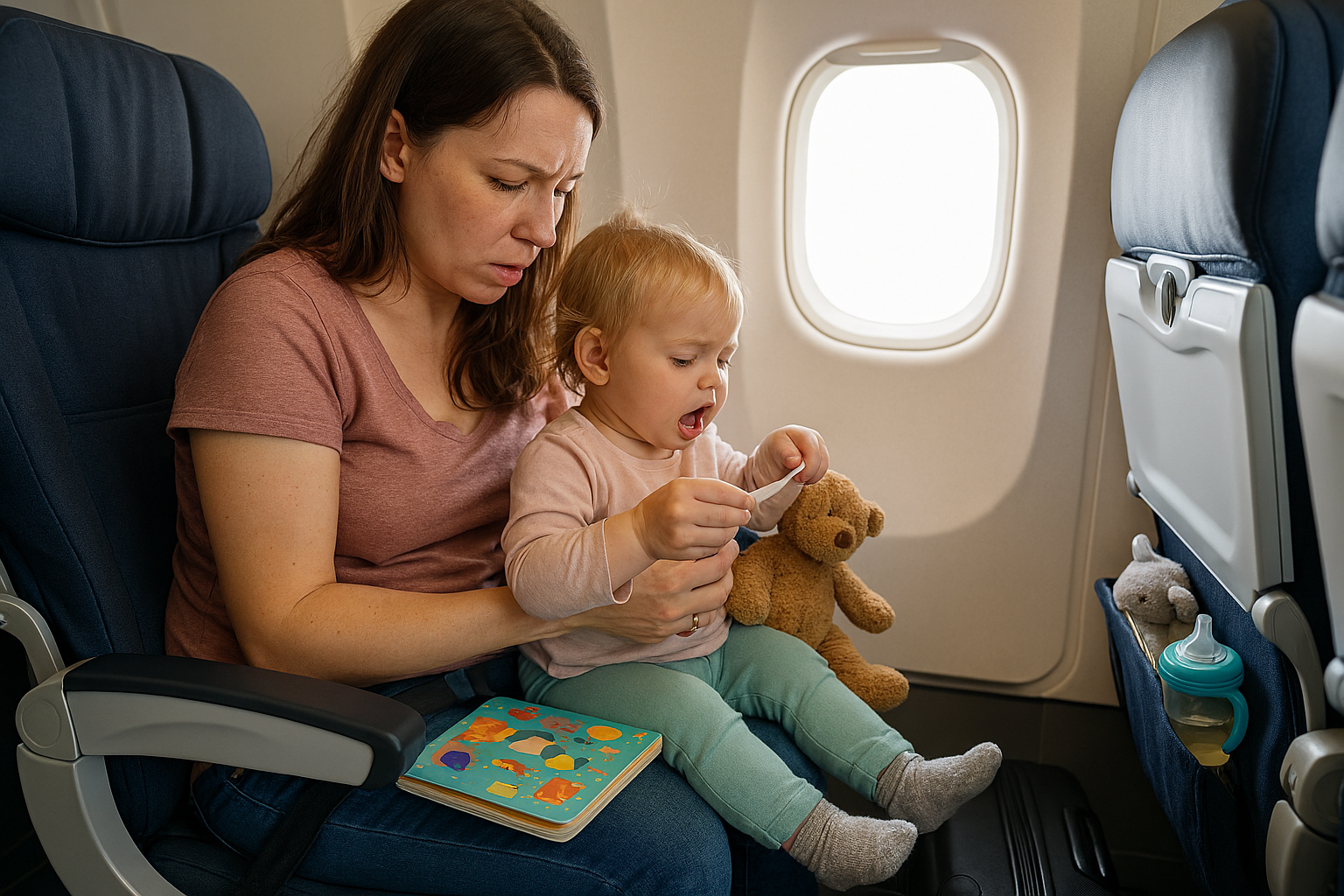
The collective gasp of passengers while flying with toddlers is a sound every parent knows all too well. It’s the sound of anticipated chaos—kicked seats, crying fits, and the distinct possibility of a mid-air meltdown. But while flying with a young child is certainly an endurance sport, it doesn’t have to be a disaster.
Introduction
The difference between a nightmare flight and a manageable journey often comes down to preparation and packing the right gear. It isn’t just about keeping your child entertained; it’s about safety and logistics. For instance, while lap infants are permitted, the Federal Aviation Administration (FAA) strongly urges parents to secure children in a government-approved Child Restraint System (CRS) for safety during turbulence. Knowing you have the right setup can instantly lower your stress levels.
Furthermore, navigating airport security requires its own strategy. Did you know that the Transportation Security Administration (TSA) allows formula, breast milk, and juice in quantities greater than 3.4 ounces? Knowing these exemptions—and having the right coolers and bags to utilize them—can save you from a frantic repack at the security checkpoint.
We’ve combined expert advice from organizations like the American Academy of Pediatrics with real-world testing to bring you the essential gear list when flying with toddlers. From comfort items to distraction tools, here are the top 10 must-haves you shouldn’t board without.
Comfort & Sleep Essentials While Flying with Toddlers
The Golden Rule of Flying: A sleeping toddler is a good toddler.
If your child is uncomfortable, the entire plane will know about it. The goal with this gear is to replicate the comfort of home in a confined, upright space.
1. The Inflatable Seat Extender (Airplane Bed)
For long-haul flights flying with toddlers, inflatable seat extenders are game-changers. These cushions fill the gap between your child’s seat and the seat in front, creating a flat surface for them to lay down or play.
-
Why it’s essential: It prevents toys from falling onto the dirty floor and allows for actual horizontal sleep.
-
Crucial Note: Airline policies on these devices vary wildly. While some carriers are family-friendly regarding “comfort devices,” others classify them as prohibited obstructions. Always check the “Traveling with Children” section of your specific airline’s website before booking. For example, British Airways generally allows them, provided they are not used during taxi, takeoff, or landing.
2. A Lightweight, Overhead-Bin Stroller
Navigating a massive airport without a stroller is a non-starter, but checking your expensive jogging stroller into the cargo hold increases the risk of damage. The solution is a “travel stroller” designed to fold up small enough to fit in the overhead bin. You can find these on amazon here.
-
Why it’s essential: You can keep your child contained all the way to the airplane door and have the stroller immediately upon landing—no waiting on the jet bridge for gate-checked bags.
-
Insider Tip: Policies are finally catching up to modern gear. As of late 2025, major carriers like American Airlines have updated their policies to allow any collapsible stroller to be gate-checked or brought onboard (space permitting), regardless of weight, removing the old 20lb restriction that frustrated parents for years.
3. Volume-Limiting Toddler Headphones
Airplane engines are loud (often exceeding 85dB), and standard tablet volume might not be enough to hear a movie—but regular headphones can damage developing ears if cranked up too high. Instead use these toddler headphones that have a safe volume adjustment .
-
Why it’s essential: You need headphones specifically designed to cap volume at safe levels. According to the World Health Organization (WHO), exposure to loud sounds is a primary cause of preventable hearing loss in children. Look for headphones with a built-in limiter of 85dB to ensure safety, even if your toddler mashes the “volume up” button.
Entertainment & Distraction
Focus: Engaging them without creating a mess.
The secret to toddler entertainment on a plane is novelty and containment. You want toys that hold their attention but don’t have a million pieces to lose under the seat.
4. LCD Writing Tablet (e.g., Boogie Board)
Crayons drop, roll away, and melt. Markers stain the tray table. An LCD writing tablet solves all of this.
-
Why it’s essential: It offers endless drawing capability with zero waste.
-
Top feature to mention: Look for a model with a “lock” switch. This prevents your toddler from accidentally erasing their masterpiece while they are drawing, saving you from a potential meltdown.
5. Suction Cup Window Spinners
If you are lucky enough to have a window seat, use the vertical space! These fidget spinners suction directly onto the plane window (or the tray table).
-
Why it’s essential: They are quiet, mesmerizing, and excellent for development. According to Zero to Three, toys that encourage reaching and manipulation are vital for building fine motor skills and hand-eye coordination.
-
Top feature to mention: Sensory engagement. The spinning motion is visually stimulating without the overstimulation of flashing lights and loud noises.
6. “Water Wow” Activity Books
These water wow books are the holy grail of mess-free art. The “pen” is filled with plain water, which reveals colors on the page. As the page dries, it turns white again.
-
Why it’s essential: If the pen leaks or your toddler draws on the seat, it’s just water. It dries in minutes.
-
Top feature to mention: Reusability. A single book can last a 4-hour flight because by the time they finish the last page, the first page is ready to be painted again.
7. A Tablet with Offline Content
Even if you are a low-screen-time family, flying with toddlers is often considered a “survival mode” exception. That’s where these tablets come in handy.
-
Why it’s essential: It is the ultimate backup plan when all other toys fail.
-
Top feature to mention: Offline capability. Do not rely on airplane Wi-Fi, which often blocks streaming services. Download your content at home.
-
Expert Advice: While the American Academy of Pediatrics (AAP) recommends limiting screen time for children aged 2-5 to one hour of high-quality programming per day, many pediatricians agree that travel is a reasonable exception. To ensure the content is appropriate, check Common Sense Media for age-based reviews of apps and shows.
-
TSA Note: Remember that per TSA regulations, tablets must often be removed from your bag and placed in a separate bin at security (unless you have TSA PreCheck), so pack it somewhere accessible!
Eating & Hygiene For Flying with Toddlers
Focus: Managing the mess and germs.
Toddlers are messy eaters on the ground; at 30,000 feet, that mess is magnified. Plus, airplanes are shared public spaces where hygiene is a valid concern.
8. The “Snack Spinner” Container
Toddlers love autonomy and novelty. A snack spinner allows them to push a button to rotate through different compartments of food.
-
Why it’s essential: It turns snacking into an activity. The interactive element keeps them occupied longer than a simple ziplock bag would.
-
Top feature to mention: Spill prevention. Because only one small compartment is open at a time, if they drop the container during turbulence, you lose five Goldfish crackers instead of fifty.
9. Disposable Tray Table Covers (or Silicone Placemats)
It is a widely cited travel fact that the tray table is often one of the germiest surfaces on an airplane. That’s why these disposable tray covers are essential when you’re flying with toddlers.
-
Why it’s essential: You want a clean barrier between your child’s food and the surface where the previous passenger might have rested their head (or worse). The Centers for Disease Control and Prevention (CDC) emphasizes the importance of hand hygiene and clean surfaces when traveling with children to prevent illness.
-
Top feature to mention: Adhesive strips. Look for stick-on disposable placemats that adhere to the table so your toddler can’t rip them off and throw them on the floor.
10. A Wet/Dry Bag
These are typically used for cloth diapering, but they are a travel essential for any parent. Check them out here.
-
Why it’s essential: From juice spills to motion sickness or a diaper blowout, wet clothes need to go somewhere that won’t ruin the rest of your carry-on.
-
Top feature to mention: Odor containment. A high-quality wet bag is waterproof and seals in smells, which your fellow passengers will appreciate.
Bonus: The “Grab Bag” Packing Strategy
Even with the best gear, if it’s buried in the overhead bin during turbulence, it’s useless.
-
The Strategy: Pack a small, separate zipper pouch or “grab bag” that fits in the seatback pocket.
-
What goes inside:
-
One emergency snack.
-
The tablet/headphones.
-
A small pack of wipes.
-
The water bottle.
-
-
Why it works: You can settle into your seat and have the essentials at your fingertips immediately, without blocking the aisle digging through your main diaper bag.
Flying with Toddlers Conclusion
Flying with toddlers is a memory-making experience—sometimes chaotic, often exhausting, but ultimately rewarding. While you can’t control the flight delays or the air pressure changes, you can control what’s in your bag.
By packing these 10 must-have items, you aren’t just bringing “stuff”; you are bringing peace of mind. You are ensuring that when the seatbelt sign turns on, you have a plan.
Frequently Asked Questions (FAQ)
Q: Do I need a car seat for my toddler on the plane?
A: If your child is under 2 years old, they can fly as a lap infant for free on most domestic airlines. However, the FAA and AAP strongly recommend that all children sit in their own seat, secured in a government-approved Child Restraint System (CRS) or car seat, to protect them during turbulence. If you do bring a car seat, ensure it has the label stating: "This restraint is certified for use in motor vehicles and aircraft."
Q: How do I pop my toddler's ears during takeoff and landing?
A: The change in cabin pressure can cause ear pain. Encouraging swallowing helps equalize the pressure. For toddlers, offer a sippy cup with water or juice, a pouch, or a lollipop during ascent and descent. The sucking and swallowing motion is the most effective way to relieve the pressure.
Q: Is it better to board first or last with a toddler?
A: It depends on your strategy.
Board First (Pre-boarding): Best if you need time to install a car seat or want to guarantee overhead bin space for your carry-on.
Board Last: Best if you want to minimize the amount of time your energetic toddler has to sit strapped in the tube. Many parents send one partner on first with the bags/car seat, while the other waits at the gate with the toddler until the last possible minute.
Q: What if my toddler throws a tantrum mid-flight?
A: First, take a deep breath. Most passengers are parents or have been around kids and are more sympathetic than you think. Acknowledge your child’s feelings ("I know it's hard to sit still"), change the scenery if possible (walk the aisle when the seatbelt sign is off), and cycle through your "distraction" gear.