Beyond Twin Falls: The 5 Best Hidden Waterfalls in Maui Off the Beaten Path
To find the best hidden waterfalls in Maui off the beaten path, you have to be willing to leave the paved walkways behind. We are talking about the secret spots in East Maui and the rugged valleys of the West Mountains—places where the only sounds are the wind in the bamboo and the roar of cascading water. These secluded swimming holes offer a connection to nature that you simply cannot get at the crowded mile markers.
Introduction
If you have researched the legendary Road to Hana, you have undoubtedly heard of Twin Falls. It is the first easily accessible stop on the drive, featuring a convenient parking lot and the famous Wailele Farm stand serving fresh sugarcane juice. While it is a beautiful spot, the reality often involves fighting for parking spaces and waiting in line to snap a photo.
For the adventurous traveler, the real magic of the Valley Isle lies deeper in the jungle.
A Critical Note on Safety and Culture
Before we share these locations, it is vital to understand the concept of Mālama (to care for). Exploring Maui’s hidden gems comes with a responsibility to respect the land and the locals.
-
Respect Private Property: Many “secret” trails cross private land. If you see a sign that says “Kapu” (forbidden/keep out) or “No Trespassing,” you must turn around.
-
Flash Flood Awareness: Maui’s weather is unpredictable. A sunny day on the coast can mask heavy rain in the mountains. Always check the weather and understand the signs of flash floods—if the water turns brown or rises suddenly, get to higher ground immediately.
-
Health Safety: Be aware of Leptospirosis, a bacterial disease found in freshwater in Hawaii. It is generally advised not to drink the water or swim with open cuts.
If you are ready to trade convenience for solitude and muddy boots for breathtaking views, here are our top five picks for the most secluded waterfall adventures in Maui.
The 5 Best Hidden Waterfalls in Maui
1. Alelele Falls (The East Maui Gem)
-
Location: Past Hana near the Kipahulu District (approx. 10-15 minutes past the Seven Sacred Pools).
-
Why it’s “Hidden”: Most tourists turn around at the Seven Sacred Pools (Ohe’o Gulch). Alelele requires driving further into the “backside” of Haleakala, where the road becomes unpaved and rugged. Because it is far from the resort areas, it remains one of the quietest secluded swimming holes in Maui.
-
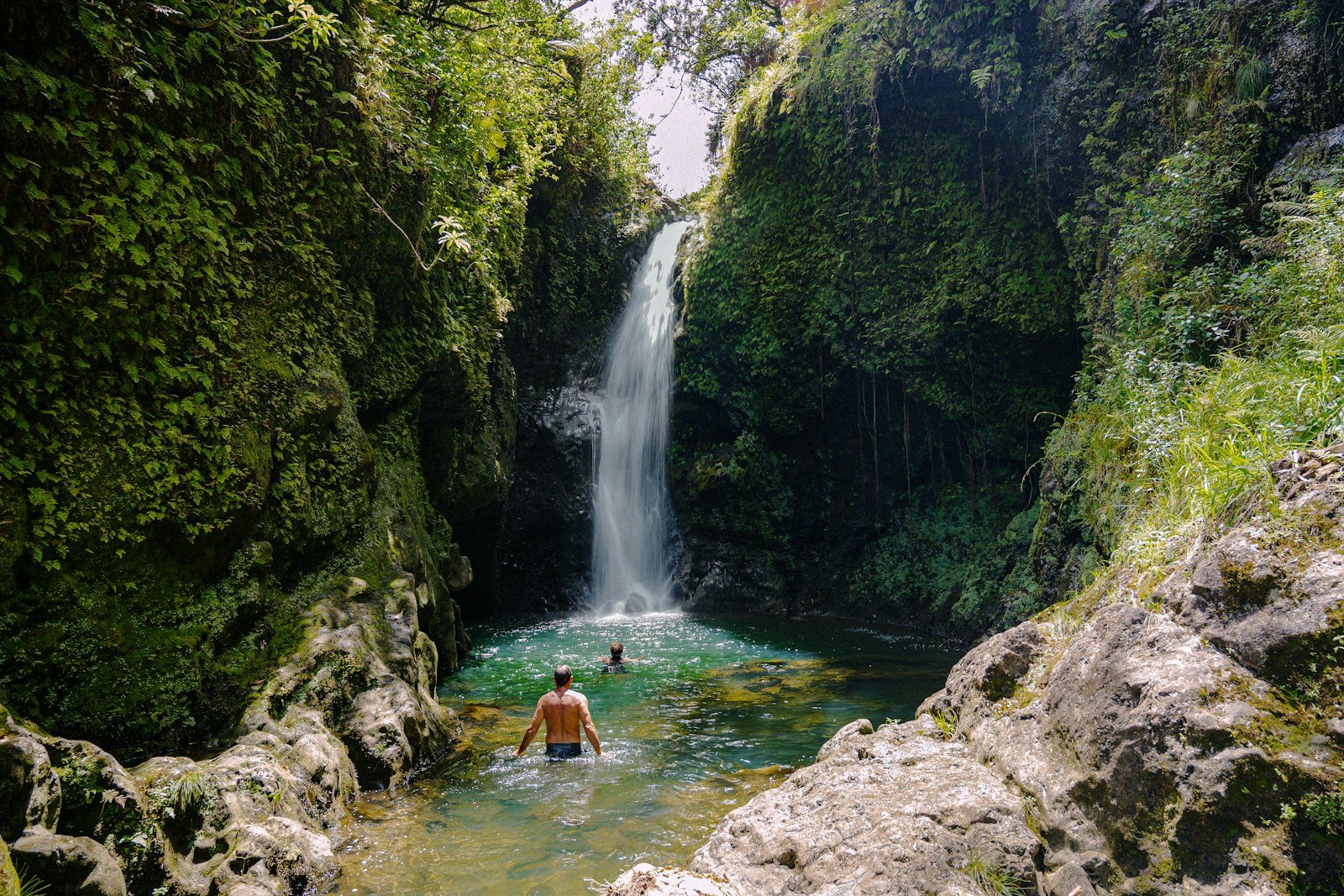
The Experience: A stunning 50-foot waterfall cascading into a large, dark pool perfect for swimming. The hike is short (about 15 minutes) but requires crossing a stream, which filters out the casual flip-flop tourists.
-
What Travelers Are Saying:
“One of the top highlights… we had this beauty all to ourselves! The water is cold but refreshing.” — Recent Visitor Review “Park in the sandy area carefully—rentals without 4WD can get stuck if you aren’t paying attention.”
-
Pro Tip: There is no cell service here. Download your Google Maps for the area offline before you leave the hotel.
2. Punalau Falls (The Stream Scramble)
-
Location: Just past Mile Marker 13 on the Hana Highway.
-
Why it’s “Hidden”: It is completely invisible from the road. There is no sign, no paved lot, and no distinct trailhead. The “trail” is the stream itself.
-
The Experience: This is a raw, prehistoric-feeling canyon trek. You must scramble over slippery boulders and hike up the stream bed for about 15–20 minutes. The reward is a massive 100-foot waterfall that feels like a cathedral of rock and water.
-
Safety Warning: Do not attempt this hike if it is raining. This gulch is a high-risk zone for Flash Floods. If the water is brown or rising, turn back immediately.
-
What Travelers Are Saying:
“This is not a walk in the park. It’s a scramble. My shins got scraped, but seeing that 100ft drop with zero other people around was worth it.” “Extremely slippery rocks—do not wear slippahs (flip flops). You need felt-bottomed tabis or good hiking boots.”
3. Upper Waikani Falls (The “Three Bears” Secret Access)
-
Location: Mile Marker 19 (Mauka/Mountain side).
-
Why it’s “Hidden”: Thousands of people drive by and snap a photo from the car window. Very few realize you can hike down to the base to swim under the falls.
-
The Experience: Known as the “Three Bears” because of the three parallel cascades (Papa, Mama, and Baby bear), this spot is magical from the water level. The descent is tricky—a steep, muddy bank often requiring you to hold onto tree roots or a makeshift rope.
-
Cultural Note: The water here is fresh and clean, flowing from the rainforest. Always rinse off sunscreen (or use reef-safe brands) before entering freshwater streams to protect the ecosystem.
-
What Travelers Are Saying:
“The hike down is short but steep and very muddy. I saw people struggling in sandals. Once you are down there, it’s paradise.” “Parking is the hardest part. You have to drive a bit past the falls to find a safe shoulder spot.”
4. Makamaka’ole Falls (The West Maui Adventure)
-
Location: West Maui Forest Reserve (near the Waihee Ridge Trail), not on the Road to Hana.
-
Why it’s “Hidden”: It’s located on the “13 Crossings Trail.” While Waihee Ridge is famous for ocean views, this trail dives deep into the jungle valley.
-
The Experience: True to its nickname, you will cross the stream roughly 13 times (each way!). The trail winds through a dense bamboo forest before ending at a two-tiered waterfall. There is often a rope to help you climb to the second tier, though this is for experienced climbers only.
-
What Travelers Are Saying:
“Your feet will get wet. Don’t try to rock hop, just embrace the mud.” “Warning: Do not leave valuables in your car. We saw glass on the ground near the trailhead.” — Common advice for many Maui hiking trails.
5. Waikamoi Falls (The Mile 10 Secret)
-
Location: Just before the bridge at Mile Marker 10.
-
Why it’s “Hidden”: It is unmarked and often confused with the “Waikamoi Nature Trail” (which is a different, dry loop hike). Most drivers zoom past the bridge without looking right.
-
The Experience: This is an “instant gratification” stop. The lower pool is visible from the road, but if you carefully scramble up the rocks for 5 minutes, you reach a second, larger waterfall and swimmable pool that is often empty.
-
The Vibe: Unlike Twin Falls at Mile 2, there are no fruit stands or crowds here—just you and the jungle.
-
What Travelers Are Saying:
“We almost missed it! It’s a small pullout before the bridge. The second pool up top is the real winner.” “Perfect spot to rinse off the road dust. Great swimming hole without the hike.”
Practical Guide: Surviving the Maui Jungle
Searching for the best hidden waterfalls in Maui off the beaten path is not the same as a poolside lounge at a Wailea resort. These trails are often unmaintained, extremely muddy, and prone to sudden weather changes. To keep your adventure safe and enjoyable, you need to pack the right gear and respect the environment.
What to Pack: The “Off-Road” Checklist
Leave the white sneakers and cotton t-shirts at the hotel. Here is what you actually need for a safe Maui jungle trek.
-
Proper Footwear (The “Tabi” Secret): The rocks in East Maui streams are coated in invisible, ice-slick moss. Standard hiking boots often fail here. Locals and fishermen use Tabis—felt-bottomed water shoes that grip the moss. If you don’t have Tabis, wear trail runners with aggressive tread that drain well.
-
Avoid: Flip-flops (slippahs) and heavy waterproof boots that fill up with water and weigh you down.
-
-
Reef-Safe Sunscreen: Even deep in the jungle, the UV rays are strong. Maui County has banned non-mineral sunscreens to protect marine life. Ensure your sunscreen is Zinc Oxide or Titanium Dioxide based.
-
Resource: Learn more about the Maui County Sunscreen Ban to ensure you are compliant.
-
-
Waterproof Dry Bag: Between sudden tropical downpours and accidental slips in the stream, everything you carry will get wet. A small 10L dry bag is essential for your car keys (electronic fobs die instantly in water), wallet, and phone.
-
Mosquito Repellent: Hidden waterfalls are often surrounded by stagnant pools in dense canopy—prime breeding ground for mosquitoes. Apply repellent before you start hiking.
-
A Change of Clothes (and a Trash Bag): Red Maui dirt stains everything. Bring a full change of clothes and a plastic bag to isolate your muddy hiking gear so you don’t ruin the upholstery of your rental car.
Bio-Security: Stop Rapid ʻŌhiʻa Death
When hiking off the beaten path, you become a carrier for invasive species and diseases. The native ʻŌhiʻa lehua trees are currently threatened by a fungal disease called Rapid ʻŌhiʻa Death (ROD).
-
The Rule: You must clean your shoes before and after every hike. Spray them with 70% rubbing alcohol to kill the fungus.
-
Resource: Read the official guidelines on preventing Rapid ʻŌhiʻa Death to help save Hawaii’s native forests.
Navigation & Safety
-
Offline Maps: Most of the locations listed above (especially Alelele and Punalau) have zero cell service. Download the Offline Area in Google Maps for East Maui before you leave your hotel.
-
The “Turn Around” Point: If you arrive at a stream crossing and the water is flowing fast or looks brown/muddy, do not cross. This is the first sign of a flash flood from rain higher up the mountain.
Conclusion: Embracing the Adventure
Finding the best hidden waterfalls in Maui off the beaten path transforms a typical tropical vacation into a true expedition. It requires more than just a rental car and a GPS; it requires patience, respect for the land, and a willingness to get a little dirty.
While the resort pools in Wailea offer comfort, they cannot compete with the feeling of swimming in a cool, fresh mountain stream surrounded by ancient bamboo forests. Whether you conquer the slippery rocks of Punalau or enjoy the quiet solitude of Alelele, these secret spots offer a glimpse into the raw, untouched power of the island.
As you plan your journey along the Road to Hana or into the valleys of West Maui, remember that these spaces are fragile. By practicing sustainable tourism and leaving no trace, you ensure that these waterfalls remain pristine for future generations of locals and visitors alike.
If you are just staying on the mainland, check out these Affordable Beach Vacations in the U.S.
Q. When is the best time to visit waterfalls in Maui?
A. The best time to visit hidden waterfalls in Maui is early in the morning (between 7:00 AM and 9:00 AM). This guarantees you beat the crowds and usually offers the clearest weather. Avoid hiking during or immediately after heavy rainfall, as the trails become dangerous mudslides and the risk of flash floods increases significantly.
Q. Do I need a 4-wheel drive (4WD) to get to these spots?
A. For most stops on the Road to Hana, a standard sedan is fine. However, if you plan to visit Alelele Falls via the "backside" of Haleakala (driving past Hana town), a 4WD vehicle (like a Jeep) is highly recommended. The road there is unpaved, bumpy, and often violates standard rental car agreements.
Q. Are these waterfall hikes suitable for children?
A. It depends on the specific location.
Kid-Friendly: Waikamoi Falls (lower pool) and Twin Falls are accessible for active children.
Adults Only: Punalau Falls and Makamaka’ole Falls involve slippery scrambling, rope assists, and steep drop-offs that are dangerous for young children. Always prioritize safety over the photo.
Q. Can I drink the water from the waterfalls?
A. No. Even if the water looks crystal clear, it may contain parasites or bacteria from animals upstream. Always pack enough potable water for your hike or bring a filtration system if you plan to be out all day.