Travel Packing Hacks Every Traveler Should Know
Packing is one of those travel tasks that seems simple until you’re knee‑deep in clothes, gadgets, and toiletries, wondering how it all went wrong, and are searching for any travel packing hacks you can find. Most travelers either overpack — lugging around heavy bags filled with “just in case” items — or underpack, forgetting essentials that end up costing time and money to replace. That’s why learning the right travel packing hacks is so important. These clever strategies don’t just help you fit more into your suitcase; they make your entire journey smoother, lighter, and more enjoyable.
Smart packing means less stress at airports, fewer wrinkles in your clothes, and more room for souvenirs you’ll treasure. It means being ready for unexpected weather, long layovers, or spontaneous adventures without dragging half your closet along.
At YoHoTravel.com, we believe every adventure should start with confidence. That’s why we’ve compiled the Top 10 Travel Packing Hacks Every Traveler Should Know — practical, proven strategies that save space, protect your belongings, and keep you organized from takeoff to touchdown. Whether you’re a weekend wanderer or a globe‑trotting explorer, these hacks will change the way you pack forever.
Travel Packing Hacks: Roll, Don’t Fold — The Space-Saving Secret of Smart Travelers
If you’ve ever sat on your suitcase to zip it shut, you already know the pain of overpacking. Traditional folding methods — stacking shirts, pants, and dresses in neat piles — look tidy at first but quickly collapse into chaos once you start digging for that one elusive item. Wrinkles set in, wasted space builds up, and suddenly your “organized” bag feels like a laundry basket on wheels.
That’s where the rolling method comes in. It’s not just a gimmick; it’s a tried-and-true technique used by backpackers, flight attendants, and seasoned globetrotters. Rolling clothes tightly into cylindrical bundles transforms your suitcase into a puzzle where every piece fits snugly, maximizing space and minimizing mess.
Why Rolling Works Better Than Folding
- Compression: Rolling squeezes air out of fabrics, reducing bulk. A folded stack traps air pockets, wasting precious inches.
- Visibility: Rolled items line up like logs, making it easy to see everything at a glance. No more digging through layers.
- Wrinkle Control: Surprisingly, rolling reduces creases because fabric tension is distributed evenly.
Imagine packing for a two-week trip to Europe. Instead of stacking 10 shirts, you roll them into compact tubes and line them side by side. Suddenly, you’ve freed up enough space for an extra sweater or that collapsible tote you’ll need for souvenirs.
Step-by-Step: How to Roll Clothes Like a Pro
- Lay the item flat: Smooth out wrinkles with your hands.
- Fold lengthwise: For shirts, fold sleeves inward; for pants, fold legs together.
- Start at one end: Roll tightly, applying gentle pressure as you go.
- Secure if needed: Use rubber bands or packing cube compartments to keep rolls intact.
👉 For delicate fabrics like silk or linen, place tissue paper inside before rolling to prevent creases.
Advanced Rolling Techniques
- Ranger Roll (Military Style): Tuck the edges in as you roll, creating a self-contained bundle that won’t unravel. Perfect for t-shirts and workout gear.
- Bundle Rolling: Roll outfits together — shirt, pants, socks — so you can grab a complete look instantly. This is a lifesaver for early mornings or quick hotel checkouts.
- Hybrid Method: Roll casual wear but fold structured items like blazers. This balances efficiency with garment care.
Real-Life Example
On a recent trip to Southeast Asia, a traveler managed to fit two weeks’ worth of clothes into a single carry-on using rolling and packing cubes. Not only did they avoid checked baggage fees, but they also breezed through airports without waiting at luggage carousels. Rolling wasn’t just about space — it was about freedom.
Common Mistakes to Avoid
- Rolling too loosely: This defeats the purpose and creates wrinkles.
- Ignoring fabric type: Heavy denim rolls well, but stiff cotton may need folding.
- Overstuffing rolls: Keep them tight but not bulky; otherwise, they won’t stack neatly.
Pairing Rolling with Other Travel Packing Hacks
Rolling works best when combined with packing cubes (Travel Packing Hack #2). Rolls slide neatly into cubes, keeping categories organized. It also complements stuffing shoes with socks (Hack #4), since rolled socks fit perfectly inside footwear.
👉 For more space-saving strategies, check out our budget travel tips.
Rolling clothes is more than a packing trick — it’s a mindset shift. Instead of treating your suitcase like a closet, think of it as a puzzle where every inch matters. By rolling instead of folding, you’ll save space, reduce wrinkles, and travel lighter. And when you’re sprinting to catch a train or navigating cobblestone streets with a carry-on, you’ll thank yourself for packing smart.
Travel Packing Hacks: Use Packing Cubes — Organize Your Bag Like a Pro
If rolling clothes is the secret to saving space, packing cubes are the secret to staying sane. Imagine arriving at your hotel after a long flight. Instead of rummaging through a chaotic suitcase, you simply unzip a cube labeled “shirts” or “toiletries” and place it neatly in a drawer. No mess, no stress, no wasted time.
Packing cubes are lightweight fabric containers, usually zippered, that divide your luggage into manageable sections. They transform your suitcase into a modular system where everything has its place.
Why Packing Cubes Are Game-Changers
- Organization: Separate categories (clothes, electronics, toiletries) so you always know where to look.
- Efficiency: Unpack by moving cubes directly into hotel drawers or shelves.
- Compression: Many cubes are designed to squeeze air out, reducing bulk.
- Cleanliness: Keep dirty laundry in one cube, fresh clothes in another.
Think of cubes as drawers you carry with you. Instead of living out of a suitcase, you’re living out of a portable closet.
Types of Packing Cubes
- Standard Cubes: Rectangular, zippered, perfect for clothes.
- Compression Cubes: Feature double zippers to shrink bulkier items like sweaters.
- Shoe Cubes: Keep footwear separate from clean clothes.
- Toiletry Cubes: Waterproof lining for liquids and hygiene products.
- Tech Cubes: Padded compartments for cables, chargers, and small electronics.
👉 Explore our gear recommendations for the best cubes and organizers.
How to Use Packing Cubes Effectively
- Assign categories: Shirts in one cube, pants in another, underwear in a smaller cube.
- Color-code: Use different colors for quick identification.
- Roll inside cubes: Combine Hack #1 with cubes for maximum efficiency.
- Plan outfits: Pack complete outfits together in one cube for grab-and-go mornings.
- Dirty laundry cube: Keep a dedicated cube for worn clothes to avoid mixing.
Travel Packing Hacks in a Real-Life Example
A family of four traveling through Europe used color-coded cubes — blue for dad, red for mom, green and yellow for kids. Each person had their own set, making it easy to grab clothes without mixing belongings. The cubes doubled as laundry sorters, keeping clean and dirty items separate throughout the trip.
Advanced Cube Strategies
- Regional Packing: If your trip spans multiple destinations, assign one cube per city. When you arrive, just pull out the cube for that stop.
- Activity-Based Packing: Separate cubes for hiking gear, beachwear, or formal outfits.
- Emergency Cube: Keep one cube with essentials (underwear, toothbrush, charger) in case your luggage is delayed.
Common Mistakes to Avoid
- Overstuffing cubes: This defeats their purpose and makes zippers prone to breaking.
- Ignoring cube sizes: Match cube dimensions to your suitcase for best fit.
- Skipping compression cubes: Bulky items like sweaters need extra help.
Pairing Cubes with Other Travel Packing Hacks
Packing cubes shine when combined with rolling clothes (Hack #1). Rolled items fit neatly into cubes, maximizing space. They also complement digitalizing documents (Hack #8), since you can dedicate a cube to travel paperwork and keep it accessible.
Packing cubes aren’t just accessories — they’re a mindset shift toward organized travel. They save time, reduce stress, and keep your belongings clean and accessible. Once you try them, you’ll wonder how you ever traveled without them.
Travel Packing Hacks: Layer Your Outfits Strategically — The Capsule Wardrobe Approach to Travel
One of the biggest mistakes travelers make is packing “just in case” items. A bulky sweater for a single chilly night, three pairs of shoes for different moods, or a dress that only matches one pair of heels. These extras add weight, take up space, and often go unworn. The smarter approach is to layer strategically and build a capsule wardrobe that adapts to multiple situations.
Why Layering Beats Overpacking
- Versatility: A lightweight jacket over a t-shirt works for cool evenings, while the same jacket over a button-down can pass for semi-formal dinners.
- Climate Control: Layers let you adapt to changing weather without needing separate outfits for every condition.
- Efficiency: A capsule wardrobe of mix-and-match pieces creates dozens of outfit combinations from fewer items.
Think of layering as modular travel fashion. Instead of packing for every possible scenario, you pack building blocks that can be combined in different ways.
The Capsule Wardrobe Formula
A capsule wardrobe is a curated set of clothing items that all work together. For travel, this usually means:
- 2–3 Base Colors: Neutral shades like black, navy, or beige.
- 1–2 Accent Colors: A scarf, shirt, or accessory that adds personality.
- Mix-and-Match Tops: Shirts that pair with multiple bottoms.
- Flexible Bottoms: Pants or skirts that match every top.
- Layering Pieces: A cardigan, hoodie, or light jacket.
- One Statement Item: Something bold for photos or special occasions.
👉 Explore our destination guides for outfit inspiration tailored to climate and culture.
Travel Packing Hacks in a Real-Life Example
A traveler heading to Japan in spring packed:
- 3 neutral tops (white, navy, gray)
- 2 bottoms (black jeans, khaki chinos)
- 1 lightweight jacket
- 1 scarf in red for accent
- 1 dress shirt for formal occasions
This small set created over 10 unique outfits, perfect for both temple visits and city nightlife. By layering strategically, they stayed stylish without lugging around a heavy suitcase.
Layering for Different Climates
- Cold Destinations: Thermal base layer + sweater + waterproof jacket.
- Warm Destinations: Breathable shirt + light cardigan for evenings.
- Mixed Weather: T-shirt + hoodie + rain shell, easily adjusted throughout the day.
The key is adaptability. Instead of packing separate outfits for hot, cold, and rainy days, you pack layers that combine to handle all three.
Accessories as Layering Tools
Don’t underestimate accessories. Scarves, hats, and belts transform outfits without taking up much space.
- Scarves: Add color, warmth, or modesty in cultural settings.
- Belts: Change the silhouette of dresses or tunics.
- Hats: Protect from sun or add flair to photos.
Common Mistakes to Avoid
- Ignoring Color Coordination: Random colors limit mix-and-match potential.
- Packing Too Many Shoes: Stick to 2 pairs — one casual, one versatile.
- Bulky Layers: Choose lightweight, packable fabrics like merino wool or polyester blends.
Pairing Layering with Other Travel Packing Hacks
Layering works beautifully with wearing your bulkiest items (Hack #6). By wearing your jacket and boots during transit, you save space while still keeping your capsule wardrobe intact. It also complements leaving room for souvenirs (Hack #10), since fewer clothes mean more space for treasures you’ll bring home.
Strategic layering isn’t just about fashion — it’s about freedom. By building a capsule wardrobe, you reduce weight, increase outfit options, and stay prepared for any climate. The result? A suitcase that feels lighter, a wardrobe that feels bigger, and a traveler who feels ready for anything.
Travel Packing Hacks: Stuff Shoes with Socks & Chargers — Unlock Hidden Storage Space
Shoes are one of the bulkiest items in any suitcase. They take up awkward space, add weight, and often feel like wasted real estate. But here’s the secret: shoes are hollow, and that hollow space is prime storage for small essentials. By stuffing shoes with socks, chargers, belts, or even fragile items wrapped in cloth, you transform dead space into functional packing zones.
Why This Travel Packing Hack Works
- Maximizes Space: Every inch of your suitcase counts. Shoes can hold several pairs of socks or small accessories.
- Protects Fragile Items: Chargers, adapters, or small souvenirs stay cushioned inside shoes.
- Maintains Shoe Shape: Filling shoes prevents them from collapsing or deforming during transit.
Think of shoes as protective containers. Instead of wasting space, they become mini storage units.
Step-by-Step: How to Pack Shoes Smartly
- Clean First: Wipe shoes before packing to avoid transferring dirt.
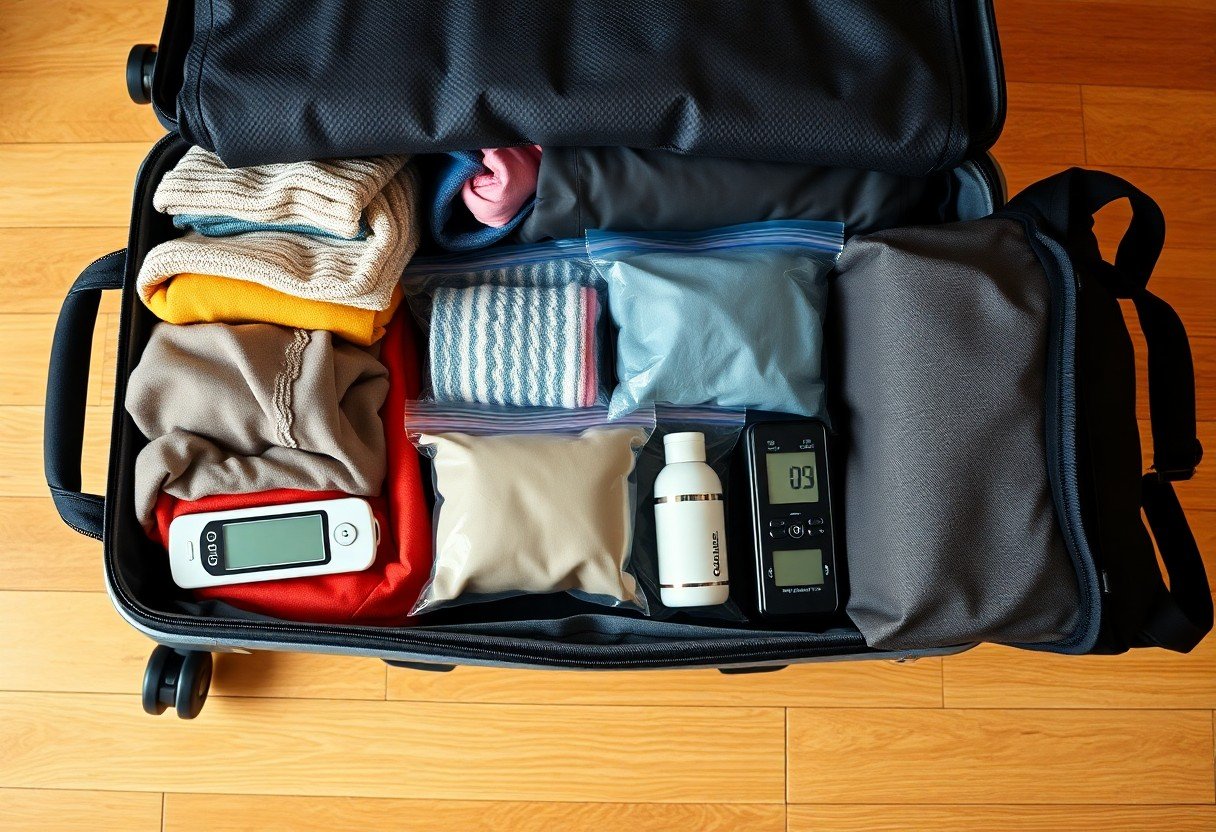
- Wrap Items: Place socks, chargers, or fragile items in cloth or ziplock bags.
- Stuff Strategically: Fill shoes evenly to maintain shape.
- Seal Shoes: Place each shoe in a dust bag or plastic bag to keep clothes clean.
👉 Learn more in our travel gear hacks section.
Travel Packing Hacks in a Real-Life Example:
On a two-week trip to Italy, a traveler packed three pairs of shoes: sneakers, sandals, and dress shoes. Inside the sneakers, they stored six pairs of socks. The sandals held rolled belts, and the dress shoes cushioned a small jewelry case. This clever use of space freed up nearly half a packing cube for other essentials.
Advanced Shoe Stuffing Ideas
- Electronics: Wrap chargers, adapters, or power banks in cloth and tuck them inside.
- Toiletries: Small bottles of lotion or deodorant sticks fit snugly in sneakers.
- Souvenirs: Fragile trinkets or ornaments can be cushioned inside sturdy shoes.
- Emergency Cash: Hide rolled bills inside shoes for backup funds.
Common Mistakes to Avoid
- Overstuffing: Too much pressure can stretch or damage shoes.
- Skipping Wrapping: Bare chargers or toiletries can dirty or damage shoes.
- Ignoring Hygiene: Always clean shoes before packing to avoid odor transfer.
Pairing Shoe Stuffing with Other Hacks
This hack pairs naturally with rolling clothes (Hack #1), since rolled socks fit perfectly inside shoes. It also complements packing cubes (Hack #2), as you can dedicate a cube to footwear while still using the shoes themselves for storage.
Shoes don’t have to be wasted space. By stuffing them with socks, chargers, and small essentials, you maximize efficiency, protect fragile items, and keep your suitcase organized. It’s a simple hack that turns one of the bulkiest items in your bag into one of the most useful.
Travel Packing Hacks: Ziplock Your Liquids — Leak-Free Travel Made Simple
Few things ruin a trip faster than opening your bag to find shampoo spilled across your clothes. Liquids are notorious for leaking under pressure changes in airplanes or when squeezed in tightly packed luggage. The solution is simple but powerful: use ziplock bags or reusable silicone pouches to contain all liquids.
Why This Travel Packing Hack Matters
- Prevents Leaks: Even tightly sealed bottles can burst under cabin pressure.
- Speeds Security Checks: TSA requires liquids to be visible in a clear bag.
- Keeps Clothes Safe: A single leak can ruin outfits and electronics.
👉 According to the TSA’s official 3-1-1 liquids rule, travelers may carry liquids in containers of 3.4 ounces (100 milliliters) or less, all fitting into one quart-sized clear zip-top bag.
Step-by-Step: How to Pack Liquids
- Choose the Right Bag: A quart-sized clear ziplock or silicone pouch.
- Limit Size: Only containers 3.4 oz (100 ml) or smaller in carry-on.
- Seal Twice: For extra protection, double-bag items like shampoo or lotion.
- Position Carefully: Place the liquid bag at the top of your suitcase for easy removal at security.
Eco-Friendly Alternatives
- Reusable Silicone Bags: Durable, washable, and better for the environment.
- Solid Toiletries: Shampoo bars, toothpaste tablets, and deodorant sticks eliminate liquid risk entirely.
- Refillable Bottles: Buy travel-sized bottles and refill from larger containers at home.
Travel Packing Hacks in a Real Life Example
A traveler flying from Seattle to London packs all toiletries in a single silicone pouch. During the flight, a lotion bottle leaked — but the pouch contained the mess. Clothes and electronics stayed safe, and security checks were smooth thanks to the clear bag visibility.
Common Mistakes to Avoid
- Ignoring TSA Rules: Larger bottles will be confiscated.
- Packing Liquids Loose: Even small leaks can spread quickly.
- Overfilling Bottles: Leave space for air expansion to prevent bursting.
Pairing This Hack with Other Travel Packing hacks
Ziplock bags complement packing cubes (Hack #2) by keeping toiletries separate from clothes. They also work with digitalizing documents (Hack #8), since you can store paper copies in waterproof bags for extra protection.
Ziplock bags may seem basic, but they’re a traveler’s best friend. They prevent leaks, comply with security rules, and keep your belongings safe. Whether you choose disposable bags or eco-friendly silicone pouches, this hack ensures your trip starts clean and stress-free.
Travel Packing Hacks: Wear Your Bulkiest Items
Packing light doesn’t mean leaving essentials behind. It means being strategic. One of the easiest ways to maximize suitcase space is to wear your bulkiest clothing items on the plane or train instead of stuffing them into your bag.
Think about it: jackets, boots, and jeans can consume up to 20% of your luggage volume. By wearing them, you free up space for lighter items and souvenirs, while also staying warm in chilly airports and cabins.
Why This Travel Packing Hack Works
- Saves Space: Heavy coats and boots don’t eat up suitcase room.
- Avoids Fees: Airlines often charge for overweight or oversized bags — wearing bulky items helps you stay under limits.
- Adds Comfort: Layers keep you cozy during flights, where temperatures often drop.
- Flexibility: You can remove layers once onboard and stow them in overhead bins.
👉 Frequent fliers swear by this trick, noting it’s one of the simplest ways to breeze through check-in without last-minute bag checks.
Step-by-Step: How to Apply This Travel Packing Hack
- Identify Bulky Items: Jackets, hoodies, boots, or heavy jeans.
- Wear Them During Transit: Put them on for flights, trains, or buses.
- Layer Smartly: Wear a t-shirt underneath so you can remove layers easily.
- Use Pockets: Jackets with deep pockets can hold snacks, chargers, or even small books.
Real-Life Example
A traveler flying from Seattle to Iceland wore their winter coat and hiking boots on the plane. By doing so, they freed up half their carry-on for lighter clothes and avoided a $75 overweight baggage fee. Once onboard, they simply stowed the coat in the overhead bin and slipped into a lighter layer.
Advanced Tips
- Choose Convertible Jackets: Some jackets fold into travel pillows, doubling their utility.
- Pocket Strategy: Use jacket pockets for items you’ll need mid-flight (headphones, snacks, passport).
- Airport Comfort: Airports are often cold, so wearing layers keeps you comfortable while waiting.
Common Mistakes to Avoid
- Overheating: Don’t wear too many layers if you’re traveling through hot climates.
- Ignoring Security: Bulky boots can slow you down at TSA checkpoints — wear slip-ons if possible.
- Carrying Instead of Wearing: Holding a jacket doesn’t save space; wear it to maximize efficiency.
Pairing This Hack with Other Travel Packing Hacks
This hack pairs perfectly with layering outfits strategically (Hack #3). By wearing your bulkiest layer, you keep your capsule wardrobe intact while saving space. It also complements leaving room for souvenirs (Hack #10), since less bulk in your bag means more room for treasures.
Wearing your bulkiest items is a clever, low-effort hack that saves space, avoids fees, and keeps you comfortable. It’s a strategy used by frequent fliers and seasoned travelers alike — proof that sometimes the simplest tricks are the most effective.
Travel Packing Hacks: Create a Mini First-Aid Kit — Be Ready for the Unexpected
Travel is full of surprises — most of them wonderful, but some less so. A blister from walking cobblestone streets, a headache after a long flight, or an allergy flare-up from unfamiliar food can derail your day. That’s why carrying a mini first-aid kit is one of the smartest packing hacks every traveler should know. It doesn’t have to be bulky or complicated; just a small pouch with essentials can save you time, money, and stress.
Why This Travel Packing Hack Matters
- Immediate Relief: You don’t have to hunt for a pharmacy in a foreign city.
- Peace of Mind: Knowing you’re prepared reduces anxiety.
- Cost Savings: Buying medicine abroad can be expensive or confusing.
- Safety: Quick access to supplies can prevent minor issues from becoming major problems.
👉 The CDC’s travel health packing list recommends carrying basic medical supplies to handle common travel ailments.
Essentials for a Mini First-Aid Kit
- Band-aids: For blisters, cuts, or scrapes.
- Painkillers: Ibuprofen or acetaminophen for headaches and muscle aches.
- Antihistamines: For allergies or insect bites.
- Motion Sickness Tablets: Crucial for boat rides or winding bus journeys.
- Antiseptic Wipes: Clean cuts quickly to prevent infection.
- Tweezers: Handy for splinters or removing ticks.
- Small Scissors: For cutting bandages or tape.
- Personal Medications: Always pack enough for your trip plus a few extra days.
Storage Tips
- Compact Case: Use a mint tin, zip pouch, or small toiletry bag.
- Waterproofing: Store in a resealable bag to protect from spills.
- Accessibility: Keep it in your carry-on, not checked luggage.
Real-Life Example of These Travel Packing Hacks
A traveler hiking in Peru developed painful blisters halfway through the trek. Instead of stopping or searching for supplies, they pulled out their mini kit, applied band-aids and antiseptic, and continued the journey. The kit turned what could have been a trip-ending problem into a minor inconvenience.
Advanced Kit Ideas
- Destination-Specific Items: Mosquito repellent for tropical areas, altitude tablets for mountain regions.
- Emergency Contacts: Write down local emergency numbers and keep them in the kit.
- Multi-Use Items: Duct tape can serve as bandage reinforcement or gear repair.
Common Mistakes to Avoid
- Overpacking: Don’t bring a full pharmacy; stick to essentials.
- Forgetting Refills: Always check expiration dates before a trip.
- Packing in Checked Bags: You may need supplies mid-flight or during transit delays.
Pairing This with Other Travel Packing Hacks
A mini first-aid kit complements digitalizing documents (Hack #8), since you can store medical insurance info alongside your kit. It also pairs with leaving room for souvenirs (Hack #10), as a small kit ensures you don’t waste space on bulky supplies.
A mini first-aid kit is a small investment with huge returns. It keeps you safe, prepared, and confident no matter where your adventures take you. Pack smart, and you’ll be ready for whatever surprises the road throws your way.
Travel Packing Hacks: Digitalize Your Documents
Few things are more stressful than losing a passport, boarding pass, or insurance paperwork while abroad. Paper documents are fragile — they can be misplaced, damaged, or stolen. That’s why one of the smartest packing hacks is to digitalize your documents before you travel. By scanning and storing copies securely, you ensure that even if the originals go missing, you’ll have backups ready to prove your identity and keep your trip on track.
Why Digitalizing Documents Matters
- Emergency Backup: Digital copies help you replace lost or stolen documents faster.
- Accessibility: Store files in the cloud and on your phone for instant access.
- Peace of Mind: Knowing you have backups reduces anxiety.
- Compliance: Some countries require proof of onward travel or insurance — digital copies make this easy.
👉 The U.S. Department of State advises travelers to carry photocopies or digital backups of passports to speed up replacement in case of loss.
Step-by-Step: How to Digitalize Travel Documents
- Scan or Photograph: Use a scanner or your phone to capture clear images of passports, visas, tickets, and insurance cards.
- Save Securely: Upload to encrypted cloud storage (Google Drive, Dropbox, OneDrive).
- Offline Backup: Save PDFs directly on your phone for areas with poor internet.
- Password Protection: Use apps or folders with password locks to keep sensitive data safe.
- Share with Trusted Contact: Email copies to a family member or friend for emergency access.
What to Digitalize
- Passport and visa pages
- Flight tickets and boarding passes
- Hotel reservations
- Travel insurance documents
- Emergency contacts and itineraries
- Vaccination certificates (if required)
Real-Life Example
A traveler in Spain had their passport stolen. Because they had a digital copy stored in Google Drive, they were able to show proof of identity at the U.S. Embassy and expedite the replacement process. Without the backup, the ordeal could have taken days longer.
Advanced Digitalization Tips
- Use Secure Apps: Password managers like LastPass or 1Password can store sensitive files safely.
- QR Codes: Generate QR codes linked to your itinerary for quick sharing.
- Multiple Formats: Save both PDF and JPEG versions for flexibility.
- Redundancy: Keep copies on your phone, tablet, and cloud for triple protection.
Common Mistakes to Avoid
- Storing Without Security: Don’t keep sensitive files in unprotected photo galleries.
- Relying Only on Cloud: Internet access isn’t guaranteed everywhere.
- Forgetting Updates: Always refresh copies before each trip to reflect new visas or bookings.
Pairing This Travel Packing Hack with Others
Digitalizing documents pairs well with creating a mini first-aid kit (Hack #7), since you can store medical insurance info alongside your kit. It also complements tech organizers (Hack #9), where you can keep USB drives or encrypted storage devices with backups.
Digitalizing your documents is a small step that delivers huge peace of mind. By scanning, securing, and backing up your travel essentials, you protect yourself against the unexpected and ensure smoother journeys. It’s one of those hacks you’ll be grateful for if things go wrong — and proud of every time they go right.
Here’s the expanded Hack #9: Use a Dedicated Tech Organizer section, with depth, practical examples, and an authoritative external reference link included:
Travel Packing Hacks: Use a Dedicated Tech Organizer
In today’s world, traveling without technology is almost impossible. Phones, tablets, laptops, cameras, chargers, cables, adapters — the list goes on. But without a system, these items quickly turn into a tangled mess at the bottom of your bag. That’s why a dedicated tech organizer is one of the smartest packing hacks you can adopt. It keeps your gadgets safe, accessible, and ready to use.
Why This Travel Packing Hack Matters
- Prevents Tangling: No more fishing through a knot of cables.
- Protects Electronics: Padded compartments shield fragile items like memory cards or external drives.
- Saves Time: Everything is in one place, so you can grab what you need instantly.
- Reduces Stress: You won’t lose adapters or chargers in the chaos of your luggage.
👉 According to Travel + Leisure, tech organizers are essential for keeping cords and devices safe, especially for frequent travelers.
Step-by-Step: How to Use a Tech Organizer
- Choose the Right Size: Small pouches for minimal gear, larger cases for laptops and cameras.
- Sort by Category: Cables in one section, chargers in another, memory cards in a pocket.
- Label Cables: Use washi tape or tags to identify each cord quickly.
- Pack Essentials Only: Avoid carrying duplicate chargers unless necessary.
- Keep It Accessible: Store the organizer in your carry-on for easy access during transit.
What to Include
- Phone charger and cable
- Laptop charger
- Universal adapter
- Power bank
- Headphones or earbuds
- Memory cards and USB drives
- Camera batteries
- Portable Wi-Fi hotspot (if needed)
Real-Life Example
A digital nomad traveling through Southeast Asia carried a tech organizer with compartments for cables, adapters, and a portable hard drive. When their hostel lost power, they quickly grabbed the organizer and moved to a café, knowing they had everything they needed to stay connected and keep working.
Advanced Organizer Tips
- Waterproof Cases: Protect electronics from rain or spills.
- Multi-Port Chargers: Reduce the number of individual plugs you carry.
- Cable Winders: Keep cords neat and prevent fraying.
- Redundancy Strategy: Carry a spare USB cable in a separate pocket for emergencies.
Common Mistakes to Avoid
- Overpacking Tech: Don’t bring every gadget you own — focus on essentials.
- Skipping Organization: Tossing cables loosely defeats the purpose.
- Ignoring Durability: Cheap organizers may rip or fail to protect electronics.
Pairing This with Other Travel Packing Hacks
A tech organizer pairs perfectly with digitalizing documents (Hack #8), since you can store USB drives or encrypted storage devices inside. It also complements rolling clothes (Hack #1), as keeping tech separate prevents cables from snagging on fabric.
A dedicated tech organizer is more than a pouch — it’s peace of mind. It keeps your gadgets safe, your cables untangled, and your travel days stress-free. For modern travelers, it’s not optional; it’s essential.
Travel Packing Hacks: Leave Room for Souvenirs — Pack Smart for Treasures You’ll Bring Home
One of the joys of travel is collecting memories in tangible form — a handmade scarf from Morocco, a ceramic bowl from Japan, or a quirky fridge magnet from Prague. But too often, travelers pack their bags to the brim and forget to leave space for souvenirs. The result? Stressful repacking, overweight baggage fees, or worse, leaving treasures behind. The solution is simple: plan ahead and leave room for souvenirs.
Why This Travel Packing Hack Matters
- Avoids Fees: Airlines charge steep fees for overweight bags.
- Protects Souvenirs: Fragile items need space and cushioning.
- Reduces Stress: You won’t scramble to fit new purchases at the last minute.
- Encourages Smart Shopping: Knowing you have space helps you choose souvenirs wisely.
👉 According to SmarterTravel, planning for souvenirs is one of the most overlooked but essential packing strategies.
Step-by-Step: How to Leave Room
- Pack Light Initially: Aim to fill only 80–85% of your suitcase.
- Bring a Collapsible Tote: Lightweight and perfect for shopping days.
- Carry a Foldable Duffel: Expands your luggage capacity without buying a new bag abroad.
- Use Packing Cubes: Dedicate one cube for souvenirs, leaving it empty at the start.
- Ship Items Home: For bulky or fragile purchases, consider mailing them instead of squeezing them in.
Travel Packing Hacks Real-Life Example
A traveler in Turkey bought a set of hand-painted ceramics. Because they had packed a collapsible tote, they carried the fragile items separately as a personal item on the flight. This prevented breakage and avoided overweight baggage fees.
Advanced Souvenir Strategies
- Prioritize Portability: Choose items that are lightweight and easy to carry.
- Protect Fragile Goods: Wrap souvenirs in rolled clothes for cushioning.
- Budget for Shipping: Some destinations offer affordable international shipping for larger items.
- Think Practical: Souvenirs like scarves, jewelry, or spices are easy to pack and meaningful.
Common Mistakes to Avoid
- Packing to the Brim: Leaving no space forces you to abandon items or pay fees.
- Ignoring Fragility: Tossing souvenirs into a stuffed bag risks breakage.
- Buying Impulsively: Without space, you may regret purchases.
Pairing This with Other Travel Packing Hacks
Leaving room for souvenirs pairs perfectly with wearing your bulkiest items (Hack #6), since freeing up space early makes room for new treasures. It also complements rolling clothes (Hack #1), as rolled clothes create cushioning for fragile souvenirs.
Souvenirs are more than objects — they’re memories you carry home. By leaving room in your luggage, you ensure those memories arrive safely and without stress. Smart packing isn’t just about the journey; it’s about bringing a piece of the world back with you.
Travel Packing Hacks Conclusion — Pack Smarter, Travel Better
Packing isn’t just about fitting clothes into a suitcase; it’s about setting the tone for your entire journey. By applying these travel packing hacks — from rolling clothes and using packing cubes to digitalizing documents and leaving room for souvenirs — you transform packing from a stressful chore into a strategic advantage.
Smart packing means fewer wrinkles, less wasted space, and more peace of mind. It means being prepared for surprises, whether that’s a sudden rainstorm, a lost passport, or an irresistible souvenir. Most importantly, it means traveling lighter, freer, and with confidence.
At YoHoTravel.com, we believe every adventure should start with clarity and end with stories worth telling. These hacks are your toolkit for smoother journeys, whether you’re exploring hidden villages, bustling cities, or remote trails. Pack smart, travel bold, and let the world unfold without the weight of unnecessary baggage.
Travel Packing Hacks Frequently Asked Questions (FAQ)
What are travel packing hacks?
Travel packing hacks are simple, practical strategies that help you save space, stay organized, and avoid stress when preparing for a trip. They range from rolling clothes to using packing cubes and digitalizing documents.
Do travel packing hacks really save space?
Yes. Techniques like rolling clothes, using compression cubes, and wearing bulky items during transit can reduce luggage volume by up to 20%, giving you more room for essentials or souvenirs.
Are packing cubes worth it?
Absolutely. Packing cubes act like portable drawers, keeping categories separated and making unpacking faster. Many travelers find they save time and reduce clutter in hotels or hostels.
How do I prevent liquids from leaking in my bag?
Use ziplock bags or reusable silicone pouches to contain toiletries. According to the [TSA’s 3-1-1 rule](https://www.tsa.gov/travel/security-screening/liquids-aerosols-gels-rule), liquids must be in containers of 3.4 oz (100 ml) or less, stored in a clear quart-sized bag for carry-ons.
What should I include in a mini first-aid kit?
Essentials include band-aids, painkillers, antihistamines, antiseptic wipes, and motion sickness tablets. The [CDC travel health packing list](https://wwwnc.cdc.gov/travel/page/pack-smart) provides a full guide for destination-specific needs.
How can I keep my tech gear organized?
A dedicated tech organizer keeps cables, chargers, and memory cards tangle-free and protected. [Travel + Leisure](https://www.travelandleisure.com/best-travel-tech-organizers-7489470) recommends padded organizers for frequent travelers.
Should I leave room for souvenirs?
Yes. Always pack light initially (80–85% full) and carry a collapsible tote or foldable duffel. [SmarterTravel](https://www.smartertravel.com/packing-tips-for-souvenirs/) suggests wrapping fragile souvenirs in rolled clothes for protection.
How do I protect important travel documents?
Digitalize passports, visas, and insurance papers by scanning and storing them securely in the cloud. The [U.S. Department of State](https://travel.state.gov/content/travel/en/international-travel/emergencies/lost-stolen-passport-abroad.html) advises keeping digital backups to speed up replacement in case of loss.
What’s the biggest mistake travelers make when packing?
Overpacking. Bringing too many “just in case” items leads to heavy bags, extra fees, and clutter. Instead, focus on versatile layers and capsule wardrobes.
Can these travel packing hacks work for both short trips and long journeys?
Yes. Whether you’re packing for a weekend getaway or a month-long adventure, these hacks scale easily. The principles of space-saving, organization, and preparation apply to any trip length.
============