Desert Camping Essentials and Tips
Desert camping is a special mix of peace, beauty, and adventure as long as you learn the desert camping essentials. The stunning landscapes, amazing sunsets, and clear skies make it a unique place for outdoor lovers.
It’s important to be ready for desert camping. The tough environment needs careful planning and the right tools for a safe and fun trip.
Key Takeaways
- Understand the unique challenges of desert camping
- Prepare a comprehensive desert camping checklist
- Learn about the essential gear for desert camping
- Discover tips for a safe and enjoyable desert camping experience
- Explore the best practices for desert camping
Understanding the Desert Environment
The desert is a place of extreme heat and dryness. It requires respect and careful planning from campers. Knowing the desert is key for a safe and fun camping trip. Deserts are known for their dry air, huge temperature swings, and special plants and animals. The weather can be harsh, with scorching days and chilly nights. When camping in the desert, it’s important to know about the local wildlife. Some deserts have venomous snakes, spiders, and other dangerous animals. These are important desert camping essentials to understand.
Key Considerations for Desert Camping Safety
- Be aware of your surroundings and watch for wildlife.
- Keep a safe distance from any wildlife you encounter.
- Use a tent with a secure closure to prevent animals from entering.
- Store food and trash properly to avoid attracting wildlife.
Keeping cool in the desert is a big challenge. Here are some tips:
- Stay hydrated by drinking plenty of water throughout the day.
- Wear light, loose-fitting clothing to help keep cool.
- Use sun protection such as hats, sunglasses, and sunscreen.
- Take breaks in shaded areas or use a canopy for shade.
By understanding the desert and taking the right steps to learn the desert camping essentials, campers can enjoy the desert’s beauty and peace.
Essential Gear for Desert Camping
For a great desert camping trip, you need the right gear. A good shelter is key to protect you from the desert’s tough weather.
For camping gear for desert trips, a four-season tent is best. It must handle strong winds and keep you warm at night. Look for a tent with a strong frame, waterproof material, and good airflow to stay cool.
A quality sleeping bag is also crucial. It should keep you warm in the desert’s cold nights. Choose a sleeping bag that’s rated for low temperatures, matching your destination’s night temperatures.
Cooking gear is another must-have. Pick a portable stove or grill that’s efficient and can handle windy conditions. Make sure you have enough fuel and cooking tools. For more packing tips, see our guide on top 10 travel packing hacks.
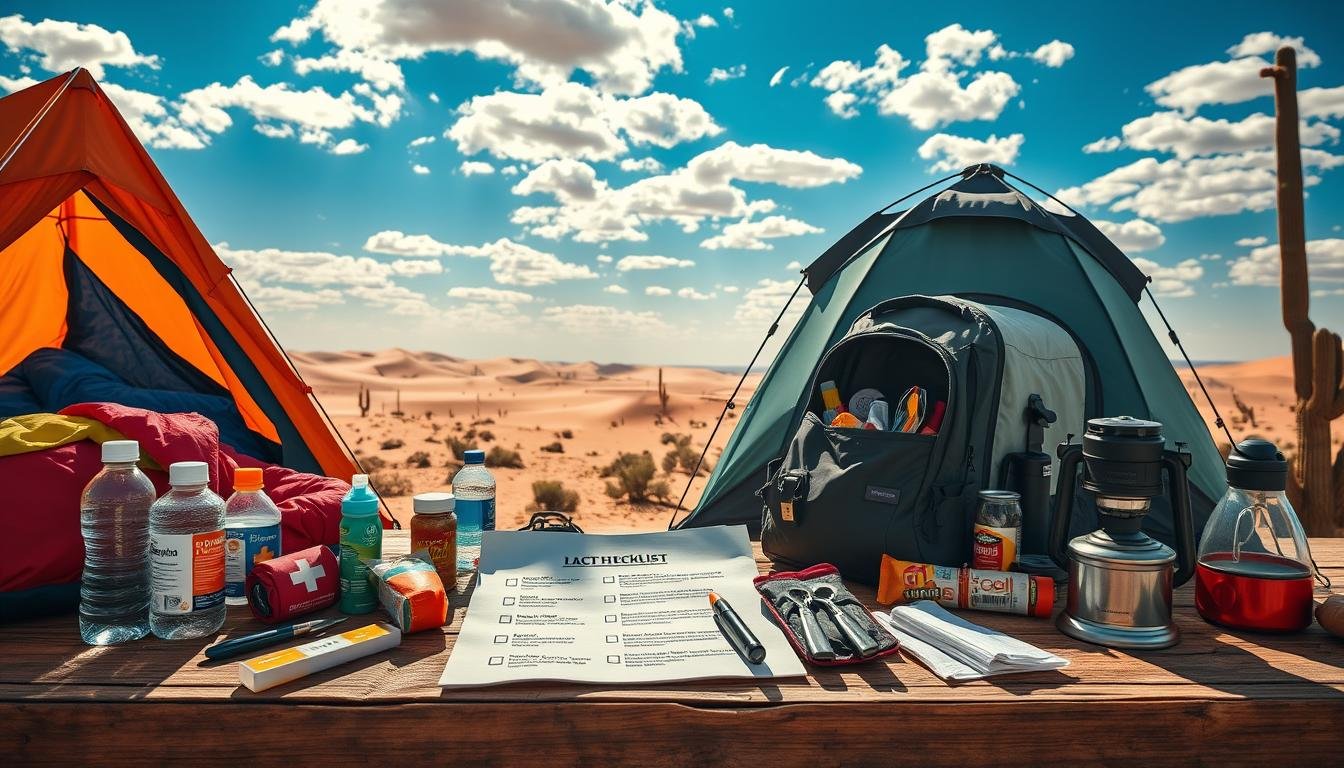
Here’s what to include in your desert camping list:
- A four-season tent with a sturdy frame and waterproof fabric
- A sleeping bag rated for low temperatures
- Portable cooking equipment and fuel
- Waterproof matches or a lighter
- A first-aid kit
With these key desert camping essentials, you’re set for a safe and fun desert camping trip. The right gear is essential in the desert’s harsh conditions.
Hydration and Nutrition Tips
Desert camping needs careful planning, mainly for water and food. Water is rare in the desert and the most important of the desert camping essentials. It’s key to plan your water needs well.
To stay hydrated, bring enough water for drinking, cooking, and cleaning. Aim for at least one gallon of water per person each day. Using water purification tablets or a portable filter is also smart. This way, you can have safe drinking water, as suggested in this desert camping checklist.
It’s also important to pack snacks that give lots of energy. Nuts, dried fruits, and jerky are great because they’re light, nutritious, and give quick energy. Planning your meals ahead can keep your energy up. Bring a portable stove or camping grill to cook hot meals.
- Choose snacks that are high in calories and protein.
- Plan your meals around non-perishable ingredients.
- Bring a water filter or purification tablets as part of your desert camping gear.
By focusing on staying hydrated and eating well, you can have a safe and fun desert camping trip. Remember, a successful trip starts with good preparation and a solid plan, and desert camping essentials.
Clothing and Footwear Recommendations
Camping in the desert needs more than just the right gear. You also need the right clothes and shoes to handle its challenges. The desert’s extreme temperatures and harsh sun make dressing in layers essential.
Layering helps control your body temperature. Begin with a moisture-wicking base layer. Then add an insulating layer to keep warm. Finish with an outer layer that guards against wind and sun. This way, you can adjust your clothes as the temperature changes.
Choosing the right shoes is also vital. The desert terrain can be tough, with sharp rocks and spiky plants. You’ll need sturdy, comfy hiking boots or shoes with good tread and ankle support. For sandy dunes, pick lightweight, breathable shoes that won’t get filled with sand.
Accessories are also key for a great desert camping trip. A wide-brimmed hat, sunglasses, and sunscreen are must-haves to protect against the sun. For more packing tips, see our guide on top 10 travel packing hacks every traveler should know.
Here are some more clothing and footwear tips for desert camping:
- Moisture-wicking socks to keep feet dry
- Lightweight, quick-drying pants and shirts
- A lightweight rain jacket or poncho
- Insulating layers for cold nights
- Sturdy sandals or water shoes for water activities
By picking the right clothes and shoes, campers can stay comfortable and safe while enjoying the desert’s beauty.
Setting Up Camp in the Desert
Choosing the right spot is key for a great desert camping trip. You need to think about a few things to make sure your stay is safe and fun.
First, find a flat spot for your tent. Stay away from areas where water might gather if it rains. Also, avoid dry riverbeds because they can flood suddenly.
Think about the natural surroundings when picking your campsite. Look for places with natural windblocks, like trees or rocks. Knowing your area can also help you spot dangers, like wildlife or steep cliffs.
Here are some important tips for desert camping:
- Choose a spot with shade or make your own using a canopy or umbrella.
- Keep your campsite tidy to avoid attracting animals.
- Follow local rules and respect protected areas.
For more tips and essentials on desert camping, check out our guide at desert camping tips and tricks.
Navigating the Desert Landscape
Exploring the desert requires knowing how to navigate its vast, challenging terrain. Even with GPS, the desert’s open spaces and lack of landmarks can be tough.
Learning to use a physical map and compass is key for desert camping. These tools are desert camping essentials and reliable backups when tech fails or isn’t available.
- A detailed topographic map of the area
- A reliable compass
- A GPS device or a smartphone with a GPS app
- A backup power source for your devices
To navigate the desert well, learn to read natural signs. Pay attention to the sun’s position, the land’s layout, and natural landmarks.
Tips for Exploring Safely
- Always carry a map and compass and know how to use them.
- Use a GPS device or a smartphone with a GPS app to track your route.
- Inform someone about your itinerary and expected return time.
- Be aware of the weather forecast and potential hazards like sandstorms.
By using modern tech and traditional skills, you can safely explore the best desert camping spots.
Best Practices for Leave No Trace Camping
When you go camping in the desert, it’s key to follow Leave No Trace principles. This helps keep the desert beautiful and reduces harm to the environment. Always stay on the trails to prevent erosion and damage.
Managing waste properly is very important. Take all trash, leftover food, and disposable items with you. Use a portable container for waste and dispose of it correctly when you get back home. It’s also crucial to respect wildlife. Keep a safe distance, don’t feed them, and avoid disturbing their homes.
For a great desert camping trip, think about renting equipment from trusted services. This way, you have the right gear and help reduce waste by using reusable items. Learn about desert camping essentials and tips to prepare well for your adventure.
Following these practices helps protect the desert for the future. It ensures the desert stays beautiful for generations to come.
FAQ
What are the desert camping essentials to pack?
For desert camping, pack a reliable tent and a sleeping bag. Don’t forget plenty of water and non-perishable food. A first aid kit and a map or GPS are also key.
Remember to bring sun protection like sunscreen, a hat, and sunglasses. These items are crucial for a safe and enjoyable trip.
How can I stay cool while desert camping?
To stay cool, stay in the shade, mainly during the hottest hours. Wear light, loose clothes. Using a canopy or umbrella can also help.
Drinking lots of water is essential to keep your body temperature down.
What type of tent is best for desert camping?
Choose a tent that’s lightweight, breathable, and well-ventilated. Look for ones with mesh panels and a waterproof rain fly. A freestanding design is best for sandy or rocky ground.
How can I navigate the desert without getting lost?
Bring a map, compass, and GPS device. Mark your route and note landmarks. Let someone know your plans and when you’ll return.
Consider a personal locator beacon (PLB) or satellite phone for remote areas with no cell service.
What are some high-energy snack options for desert camping?
Good snacks include nuts, dried fruits, jerky, and energy bars. Choose lightweight, compact options that don’t need refrigeration. Trail mix is a great choice.
How can I manage waste while desert camping?
Pack out all trash and disposable items. Bury human waste and toilet paper at least 200 feet from water and campsites. Use a portable toilet or shovel for easier disposal.
What are some best practices for Leave No Trace camping in the desert?
Stay on trails and avoid sensitive habitats. Don’t litter and keep a safe distance from wildlife. Bring a repair kit and pack out trash or disposable items.
What are the best desert camping locations in the US?
Top spots include Joshua Tree National Park in California, Big Bend National Park in Texas, and Organ Pipe Cactus National Monument in Arizona. Look into national forests and BLM lands for dispersed camping.