10 Essential Tips for Traveling with a Baby on a Plane (Stress-Free!)
Traveling with a baby on a plane can seem scary, but it doesn’t have to be. With the right steps, it can be a breeze. Many parents worry about keeping their baby calm and happy in the air.
Being ready is the first step to a stress-free flight. From picking the best flight time to packing must-have baby items, there are many ways to make flying easier.
Key Takeaways
- Choose a flight that coincides with your baby’s nap time
- Pack essential baby items, such as diapers and formula
- Consider booking a bassinet seat for added comfort
- Bring entertainment, like toys and books, to keep your baby occupied
- Be prepared for takeoff and landing with feeding or pacifiers
Preparing for Your Flight
To make your journey with your baby comfortable, thorough preparation is key. This includes several important steps that can greatly improve your travel experience.
Choosing the Right Flight Time
Choosing a flight that matches your baby’s sleep schedule is crucial. Flying when your baby naps can make the trip quieter for everyone.
- Consider red-eye flights if your baby sleeps well at night.
- Daytime flights might be better if your baby is more alert during the day.
- Be flexible; sometimes an unexpected nap can make a big difference.
Booking Your Seats in Advance
Booking your seats early is vital, even more so when you have a baby. Airlines offer special seats for families, like bassinets or seats with more legroom.
Some key points to consider:
- Check with your airline for their family seating policies.
- Book seats together to ensure you can manage your baby’s needs during the flight.
- Consider the location of the lavatories and galley, as seats near these areas might be noisier.
Understanding Airline Policies for Infants
Every airline has its own rules for traveling with infants. Knowing these can prevent unexpected issues or complications.
Here are some aspects to look into:
- Age and weight restrictions for lap infants.
- Requirements for infant safety seats or bassinets.
- Any additional fees associated with infant travel.
By choosing the right flight time, booking the right seats, and understanding airline policies, you can greatly improve your flying experience with a baby. These steps are essential for making flying with a baby less stressful and more enjoyable.
Packing Essentials for Baby
Traveling with a baby needs careful planning. Start with a well-stocked diaper bag and other baby travel essentials. Having everything you need can make your trip a success.
Diaper Bag Must-Haves
Your diaper bag is essential for flying with a baby. Here are some must-have items:
- Diapers and wipes
- Changing pad or portable changing mat
- Diaper cream
- Disposable bags for soiled diapers
Comfortable Clothing and Blankets
Comfort is crucial for your baby while traveling. Pack:
- Comfortable, layered clothing for changing temperatures
- Soft blankets or a lightweight baby blanket
- A hat and mittens for colder climates
Baby Food and Feeding Supplies
For feeding on the go, consider:
- Baby food or formula
- Bottles or sippy cups
- Breast pump (if breastfeeding)
- Nursing cover or bib
Being prepared with these essentials can reduce stress during your journey. It’s wise to pack a little extra, just in case.
Safety and Comfort on Board
Flying with a baby can seem scary, but with the right steps, you can make it safe and comfy. Before your flight, think about what will make your baby happy and safe on the plane.
Using a Baby Carrier vs. Stroller
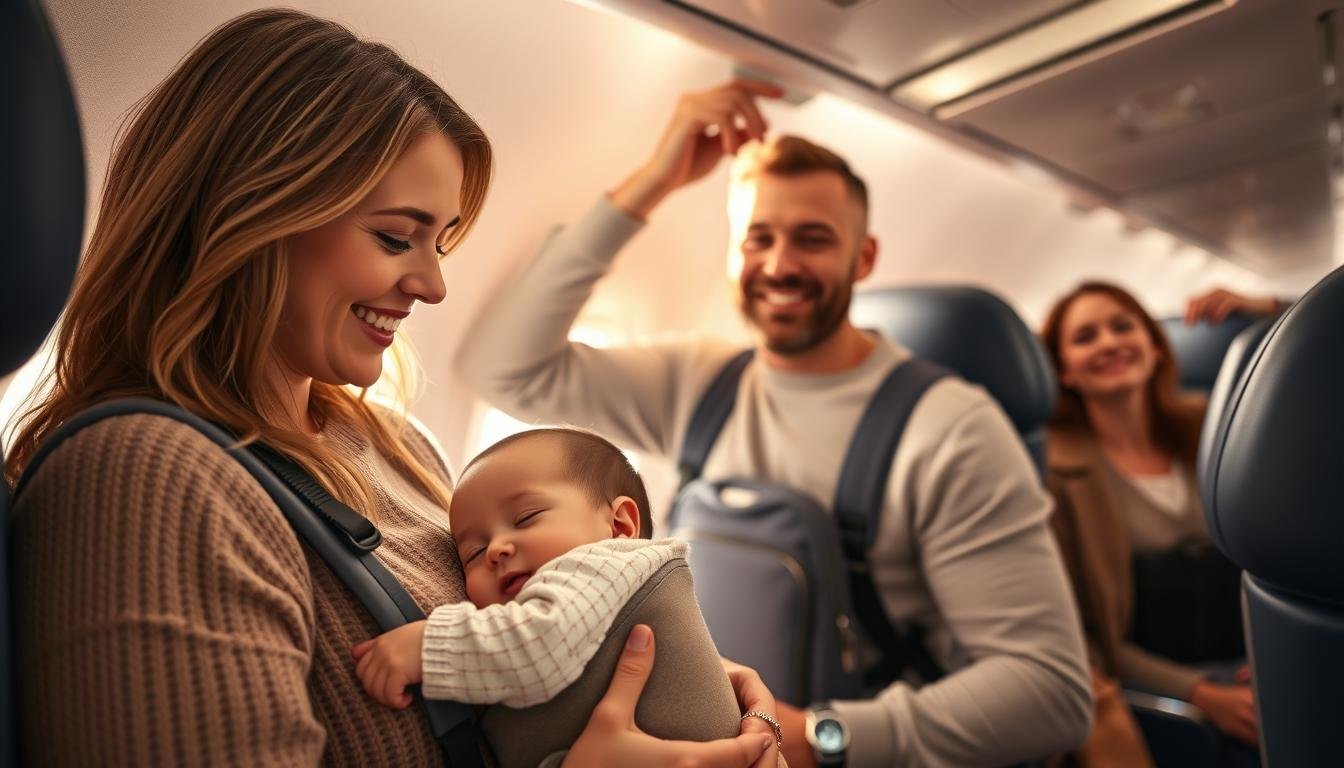
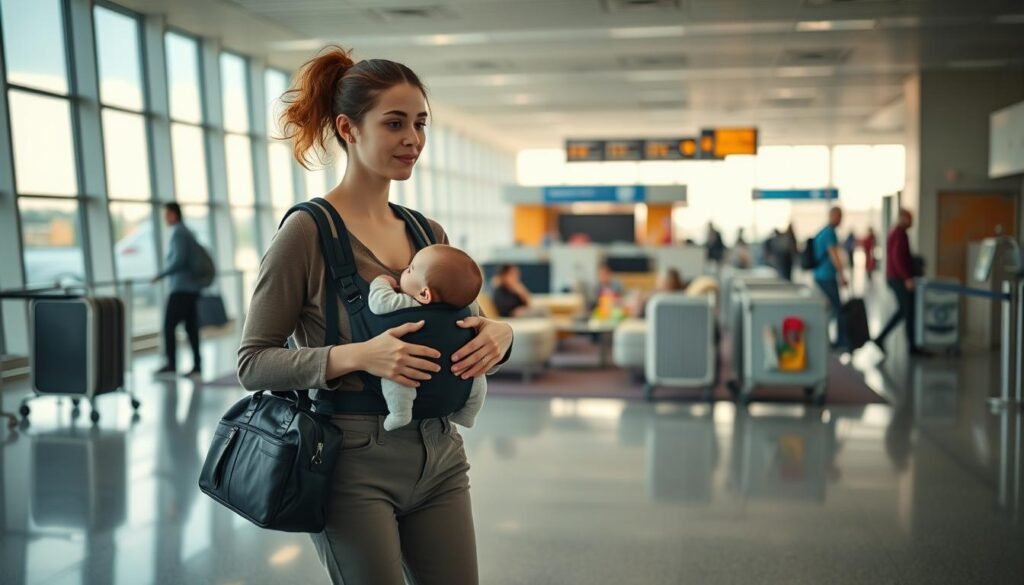
Deciding between a baby carrier or a stroller is a big choice. A carrier lets you hold your baby close and keeps your hands free. It’s great for moving around.
- A baby carrier keeps your baby snug and comfy against you.
- Strollers are good for the airport but might not work well on the plane.
- Choose a light stroller that’s easy to fold and carry if you use one.
Securing Your Baby in Their Seat
It’s very important to buckle your baby into their seat safely. If you have a car seat, make sure it’s installed right, following the airline’s rules.
- Ask your airline if they can help with car seat installation.
- Make sure your baby is securely fastened in the car seat.
- Book a seat that fits your car seat well.
Managing Cabin Pressure During Takeoff
Takeoff and landing can be hard on babies because of the air pressure. Feeding your baby during these times can help.
- Breastfeeding or bottle-feeding can help your baby’s ears feel better.
- For older babies, a pacifier or swallowing can also help.
- Watch how your baby feels and change what you’re doing if needed.
By thinking about these things and getting ready, you can make flying safe and comfy for your baby. Picking airlines that are good for babies and being ready can really help your trip.
Keeping Your Baby Entertained
Keeping your baby entertained on a flight can be tough. But, with the right plan, you can make the trip smoother for both of you. A prepared parent can keep their baby happy and occupied.
Toys and Activities for the Flight
Choosing the right toys and activities is key. Bring soft toys, teething toys, and baby mirrors. These items are fun and help soothe your baby. Interactive toys that make sounds or have different textures are also great.
- Soft toys for cuddling
- Teething toys for relief
- Baby-friendly mirrors for self-discovery
- Board books with simple images
Digital Entertainment Options
Today, there are many digital options for babies. Download apps, shows, and music on your device. Don’t forget baby-safe headphones. For more ideas, check out this helpful resource.
Some top digital options include:
- Baby music and lullabies
- Children’s shows and nursery rhymes
- Interactive apps for infants
Playtime Before Boarding the Plane
Playtime before the flight can help your baby relax. Airports have play areas or you can play at the gate. This can calm your baby before the flight.
Managing Jet Lag with a Baby
Traveling across time zones with a baby requires careful planning to avoid jet lag. Jet lag happens when our body clocks get out of sync with the new time zone. It’s even harder for babies.
To reduce jet lag in your baby, start by adjusting their sleep schedule before you leave.
Adjusting Sleep Schedules
Start adjusting your baby’s sleep a few days before you travel. Try to match their sleep times to the new time zone.
- Gradually adjust bedtime and nap times to the new time zone.
- Expose your baby to natural light at the appropriate times for the new time zone.
- Avoid long naps close to bedtime to ensure a smooth transition.
Tips for Soothing an Overstimulated Baby
Travel can overwhelm babies, causing them to feel overstimulated. Here are some tips to soothe your baby:
- Create a calm environment with white noise or a fan.
- Use gentle motions like swaying or rocking.
- Offer a pacifier or comfort object.
Keeping a Consistent Routine
Keeping a regular routine is key when traveling with a baby. Stick to regular feeding times, nap schedules, and bedtime routines as much as possible.
- Try to maintain the same feeding schedule.
- Keep nap times consistent, even if the location changes.
- Stick to a familiar bedtime routine to signal sleep.
By following these tips, you can help your baby adjust to the new time zone. This makes your trip less stressful for everyone.
In-Flight Feeding Tips
Traveling by airplane with a baby can be challenging, but there are ways to make it easier. Planning and being flexible are key to a smooth journey for you and your baby. This includes feeding your baby during the flight.
Breastfeeding on a Plane
Breastfeeding can help soothe your baby during the flight. It’s great for takeoff and landing when the cabin pressure changes. Here are some tips for breastfeeding on a plane:
- Choose a comfortable position that allows you to hold your baby securely.
- Use a nursing cover or scarf for privacy if needed.
- Be prepared for potential ear popping issues by feeding during ascent and descent.
Bottle-Feeding Techniques
If you’re bottle-feeding, having the right supplies and techniques is crucial. Here are some tips:
- Pack enough formula or breastmilk for the duration of your trip, plus some extra in case of delays.
- Bring a variety of nipples to find one that your baby is comfortable with.
- Be mindful of the plane’s water quality if you’re mixing formula.
Exploring Solid Foods for Older Infants
Introducing solid foods for older infants during travel can be tricky. But with planning, it can be successful. Here are some tips:
- Pack a variety of baby-friendly foods that are easy to eat on a plane.
- Consider pureed foods or soft fruits and vegetables.
- Don’t forget to bring plenty of wipes for cleaning up spills.
Being prepared and flexible can make feeding time during your flight positive for your baby. Always check with your airline for any specific guidelines or restrictions on baby food and supplies.
Handling Airport Security with a Baby
Knowing how airport security works is key for a stress-free trip with a baby. Being ready and knowing what’s coming can help a lot. It makes things easier for parents.
What to Expect during Security Checks
Security checks at airports include taking off shoes, belts, and gadgets. When you’re flying with a baby, you might:
- Have to take your baby out of their stroller or carrier for screening.
- Face extra checks if you have a baby carrier or big items.
- Keep your baby close during screening, but be ready for more checks.
Being patient and following instructions is important. If you’re breastfeeding, you can keep going during screening.
Tips for a Smooth Passage
Here are some tips to get through security smoothly with a baby:
- Choose simple shoes and clothes that won’t cause extra checks.
- Be ready to quickly take your baby out of their stroller or carrier.
- Using a baby carrier can help move through security faster.
- Have diapers and formula ready and easy to find.
Managing Screens and Electronics
Handling electronics at security is important. When flying with a baby:
- Be ready to take out big electronics from your bags.
- Have your baby’s gadgets, like tablets, ready for screening.
- Think about using a baby monitor or entertainment system that doesn’t need to be taken out.
Being ready and knowing the security steps can make your trip better. It’s easier for you and your baby.
Navigating Layovers with Infants
Managing layovers with an infant can be tough. But, knowing what to expect and preparing can help a lot. Layovers are common in many flights. Being ready can make a stressful experience easier.
Finding Family-Friendly Facilities
Finding places for families in airports is key. Many airports have special areas for families. These areas have play spaces, nursing rooms, and sometimes even playpens or sleeping areas.
- Check the airport’s website before your trip to identify family-friendly facilities.
- Look for airports with play areas or playpens where your baby can stretch and play.
- Nursing rooms can provide a quiet, comfortable space for feeding your baby.
Planning for Extra Time
Layovers need extra planning when you have an infant. You must plan for time to care for your baby, like feeding and changing diapers.
- Plan for extra time to navigate the airport, considering your baby’s needs.
- Keep your baby’s essentials easily accessible to avoid unnecessary stress.
- Consider the timing of your layover in relation to your baby’s sleep schedule.
Keeping Your Baby Comfortable During Waits
It’s important to keep your baby comfortable during layovers. This means managing their environment to keep them happy and calm.
- Dress your baby in comfortable clothing suitable for the airport’s temperature.
- Bring familiar items like a favorite toy or blanket to provide comfort.
- Be prepared to soothe your baby with feeding or cuddling if they become fussy.
By finding family-friendly facilities, planning for extra time, and keeping your baby comfortable, you can handle layovers better. This makes your travel experience less stressful and more fun.
Understanding Baby Travel Gear
Getting ready for your next family trip means knowing the best baby travel gear. Traveling with a baby needs careful packing and preparation. The right gear makes the journey smooth and fun.
Best Travel Cribs and Playards
Choosing a safe and comfy spot for your baby to sleep is key. Travel cribs and playards are perfect for trips. They’re portable and easy to use.
- Find a crib or playard that’s light and small for easy carrying.
- Make sure it meets safety standards and is well-made.
- Look for one with a carrying bag or handles for easier transport.
Selecting the Right Car Seat
A car seat is vital for safe baby travel. When picking a car seat for flying, remember:
- Check if the car seat is approved for airplane use.
- Choose one that’s easy to install and has a simple harness.
- Consider a seat that grows with your child.
Lightweight Strollers for Air Travel
A lightweight stroller is essential for airport travel and exploring. When picking a stroller for flying, look for:
- A design that folds up small and fits in airline storage.
- A sturdy build that can handle travel well.
- A comfy ride for your baby, with good cushioning and support.
Knowing the basics of baby travel gear helps prepare for your next family trip. It ensures a safe, enjoyable, and worry-free journey for everyone.
Building a Support System
Creating a network of fellow travelers and parents can change the game for families with infants. Having a support system can reduce stress and make travel more fun for everyone.
Connecting with Fellow Parents
Traveling with a baby offers a chance to meet other parents who get it. Here are ways to connect:
- Join online forums or social media groups for parents who travel with babies.
- Go to parenting classes or workshops about traveling with infants.
- Talk to other parents at the airport or on the plane.
Seeking Help from Flight Attendants
Flight attendants are ready to help with all sorts of needs, including babies. Don’t be shy about asking for help. Here’s how to ask for assistance:
- Tell the flight attendants about your baby’s needs, like diaper changes or feeding.
- Ask for tips on calming a fussy baby during the flight.
- Ask for extra blankets or pillows to make your baby more comfy.
Utilizing Online Resources and Communities
The internet is full of helpful info for parents traveling with babies. Here are some online resources and communities to check out:
- Websites like BabyCenter or Travel + Leisure that focus on parenting and travel.
- Online forums and discussion groups for traveling with infants.
- Social media groups where parents share their flying with babies experiences and tips.
By building a support system and using these resources, parents can feel more confident and ready for travel with their babies.
Post-Flight Tips for Parents
Stepping off the plane brings excitement and a chance to be ready for what’s next. Traveling with a baby is just the start. What you do after landing is key for a great trip.
Adjusting to Your Destination’s Time Zone
Adjusting to a new time zone can be tough for parents and babies. To ease jet lag, start a routine that fits the local time right away.
- Expose your baby to natural light to help regulate their circadian rhythms.
- Adjust feeding and sleeping schedules to match the local time.
- Be patient, as it may take a few days for your baby to fully adjust.
Essentials for a Smooth Arrival
Having the right things can make a big difference after you arrive. Make sure you have a checklist for your baby’s travel needs.
- Comfortable clothing and diapers for your baby.
- Favorite toys or pacifiers to provide comfort in a new environment.
- Snacks and water to keep your baby hydrated and satisfied.
Reconnecting with Family Post-Travel
Reconnecting with family after a long flight is special. Enjoy your first days by:
- Planning gentle, baby-friendly activities.
- Allowing time for rest and recovery.
- Sharing your travel experiences and memories with your family.
By following these tips, parents can make the transition smoother after flying with an infant. This makes the whole family’s travel experience better.
Traveling With a Baby on a Plane and Enjoying the Journey
Traveling with a baby on a plane can seem tough, but it can also be a great adventure. By focusing on the journey, not just the end goal, you can enjoy it more. This mindset can change how you see your trip.
Focusing on the Adventure
When flying with a baby, being flexible and open to new things is key. This way, you can turn a tough trip into a memorable one. Tips for traveling with a baby often talk about being ready, but also about enjoying the surprises.
Embracing Flexibility and Making Memories
Traveling with a baby means being flexible. Being adaptable can make your trip better. Focus on making special moments with your baby. This way, you’ll enjoy the journey and make the most of your time together, whether at the airport or during a layover.
FAQ’s
What are the best tips for traveling with a baby on a plane?
To travel smoothly with a baby on a plane, pick a good flight time. Book seats early and know the airline’s rules for babies. Pack diapers, comfy clothes, and feeding stuff. Use a baby carrier for easy carrying.
How do I manage jet lag when traveling with a baby on a plane?
Adjust your baby’s sleep schedule before flying. Keep a regular routine and be ready to calm an overexcited baby. Slowly get used to the new time zone to avoid jet lag.
What should I pack for my baby when flying?
Take diapers, wipes, comfy clothes, blankets, and feeding items. Check the airline’s rules on baby food and formula. Don’t forget a pacifier or favorite toy for comfort.
How can I keep my baby entertained traveling with a baby on a plane?
Bring toys, books, and digital fun like tablets with baby-friendly shows. Play with your baby before flying to tire them out. Choose a baby-friendly airline with fun options.
What are the best strategies for feeding my baby on a plane?
Use breastfeeding or bottle-feeding to calm your baby during takeoff and landing. For older babies, start solid foods. Pick a baby-friendly airline or pack your own food.
How do I navigate airport security with a baby?
Be ready to take your baby out of their carrier or stroller at security. Wear clothes that are easy to remove. Use a baby carrier for easy movement.
What baby travel gear is suitable for traveling with a baby on a plane?
Look for light strollers, compact cribs, and car seats that fit airline rules. A baby carrier is great for saving space and being hands-free.
How can I build a support system when traveling with a baby on a plane?
Connect with other parents, ask flight attendants for help, and use online groups. Don’t be afraid to ask for assistance when you need it.
What are the best post-flight tips for parents traveling with babies?
Adjust to the new time zone and plan a smooth arrival. Reconnect with family and be flexible. Prioritize rest when you need it.
How can I make the most of my travel experience traveling with a baby on a plane?
Focus on the adventure and be flexible. Create lasting memories with your baby. Enjoy the journey and don’t worry too much about challenges.