The 5 Best Via Ferrata Routes for Beginners
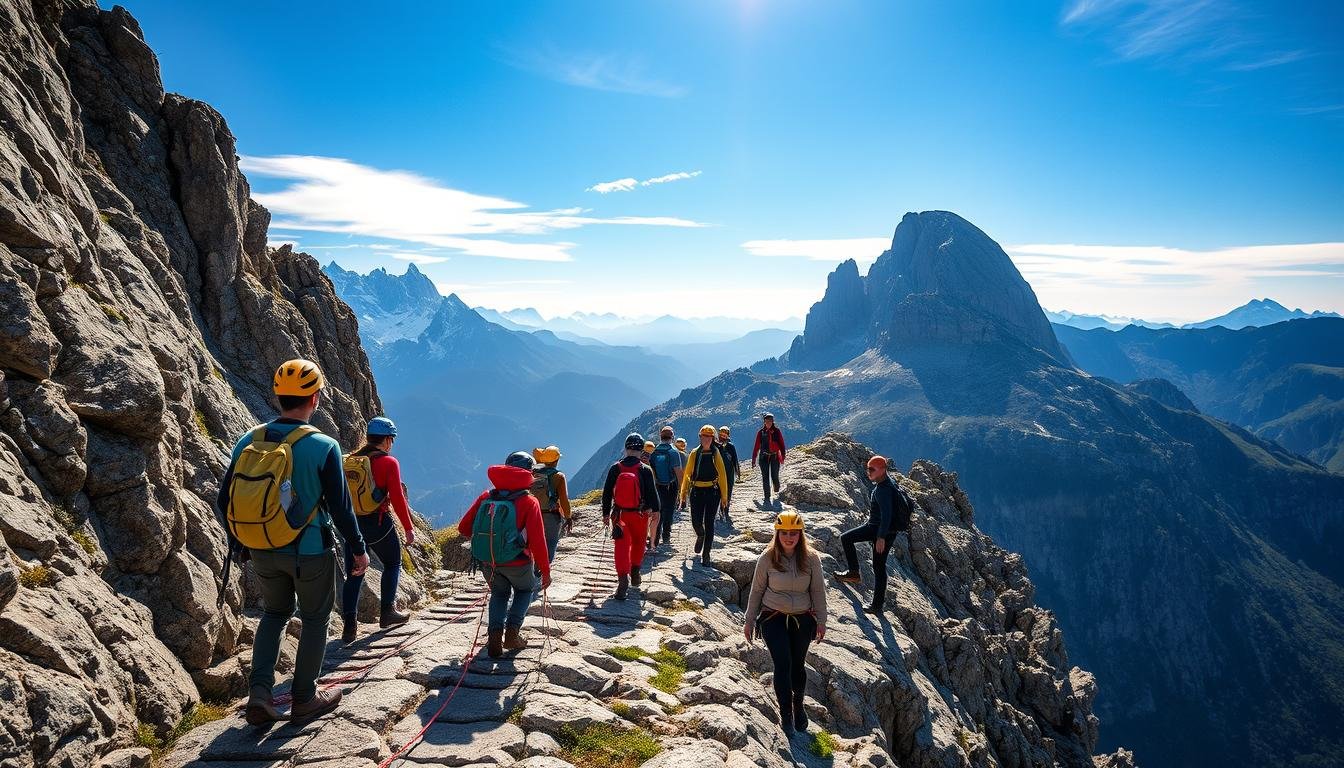
Are you craving the adrenaline of climbing but don’t know the first thing about ropes and belaying? Let’s discuss Via Ferrata routes for beginners to get you on your way. Do you dream of reaching stunning, airy summits without the specialized training of a mountaineer? If so, the Via Ferrata—the “Iron Way”—is your ticket to vertical adventure!
A Via Ferrata is a protected climbing path found throughout the world, equipped with fixed steel cables, rungs, ladders, and bridges. It makes spectacular mountain terrain accessible to anyone with a basic level of fitness and the right gear.
But taking the first step can feel daunting. That’s why we’ve put together the ultimate guide for beginners. We’ve combed the Alps and beyond to bring you the 5 easiest and safest via ferrata routes for beginners to prepare you for your first climb. These paths are carefully chosen to build your confidence, introduce essential techniques, and, most importantly, provide breathtaking views without excessive exposure or technical difficulty.
Ready to clip in? Let’s break down the essential gear, cover the basic rules of the Iron Way, and unveil the best beginner-friendly routes to launch your new mountain obsession!
Key Takeaways
- Via ferrata is a great introduction to climbing and hiking for beginners.
- The activity involves following metal cables, ladders, and steps fixed to the rock face.
- It’s a thrilling experience that offers breathtaking landscapes.
- Via ferrata provides a secure way to ascend rugged terrain.
- There are many via ferrata routes for beginners with different levels of difficulty.
Via Ferrata Basics for First-Timers
Before you set foot on an iron rung, understanding the required gear and basic rules is non-negotiable. Via Ferrata is generally safer than traditional climbing, but only when you respect the system and use the right equipment correctly. It’s also very important when you first start out that your are on one of the via ferrata routes for beginners, and not an advanced course.
Essential Gear Checklist (Must-Haves)
Do not attempt a Via Ferrata without these three fundamental pieces of equipment. This gear is specifically designed to work together to protect you in a fall.
-
Harness: Any certified climbing harness will do. It’s the piece of gear that securely holds you and connects to the lanyard.
-
Via Ferrata Lanyard/Kit (Energy Absorber): This is the most critical piece of safety equipment. A Via Ferrata lanyard consists of two elasticized arms ending in carabiners, which are attached to a specialized shock absorber pack. In the event of a fall, the shock absorber tears open to dissipate the massive forces, greatly reducing injury. Crucially, never use a standard climbing sling or quickdraw for this purpose.
-
Helmet: Essential for protecting your head from falling rocks (the most common danger) and from bumping your head on overhanging sections or the iron rungs themselves.
Highly Recommended Comfort Gear
-
Gloves: Simple leather or synthetic cycling/work gloves are highly recommended. They protect your hands from the rough steel cable, especially on long routes, and prevent blisters.
-
Backpack: Small, well-fitting daypack for water, snacks, and extra layers.
-
Footwear: Sturdy, ankle-supporting hiking boots or approach shoes with good grip. Avoid trail runners or soft-soled shoes, as you need stiffness and edge support for standing on the rungs.
Key Safety Rules
Your safety and the safety of everyone else on the route depend on following these two rules strictly:
-
The “One Person, One Section” Rule: Never have more than one person clipped into the same section of cable between two anchor points. The anchor points (where the cable is bolted to the rock) are designed to hold the weight of one person in a fall. Having two people attached dramatically increases the force and risk of anchor failure.
-
The Always-Clipped Rule (The Leapfrog Technique): When traversing the route, you will continuously move your two lanyard carabiners from one cable section to the next. You must use the “leapfrog” technique:
-
Unclip one carabiner and move it past the anchor point to the new section.
-
Only then unclip the second carabiner and move it to the new section.
-
At all times, at least one carabiner must be clipped to the cable.
-
Difficulty Grading (Know Your Limits)
Via Ferrata routes are typically graded from A (easiest) to E (extremely difficult/expert).
-
Grade A (Easy): Routes are mostly walking on wide paths with the cable used primarily for confidence or in short, non-technical sections. These are perfect for children and would the via ferrata routes for beginners.
-
Grade B (Moderate): Vertical sections are more common, and the rungs may be further apart. A basic level of fitness and comfort with heights is required. This could also be one of the via ferrata routes for beginners if you have some experience with climbing.
The 5 routes we cover in this guide are all Grade A or B, making them the perfect entry point for your first vertical step!
Top 5 Easy Via Ferrata Routes for Beginners
These via ferrata routes for beginners have been selected because they are well-maintained, offer reasonable accessibility, and feature Grade A or B technical difficulty, ensuring a fun and safe first experience.
Route 1: Via Ferrata Delle Bocchette – Sentiero delle Bocchette Alte (Dolomites, Italy)
-
Location: Brenta Group, Dolomites, Italy (Trentino Region)
-
Difficulty: Grade A (Very Easy) – Primarily a protected traverse path, rather than a steep climb.
-
Why it’s Great for Beginners: While technically high in the mountains, this is more of a high-altitude hike where the cable is used for security across exposed ledges. It requires very little vertical climbing and is excellent for building comfort with exposure. It also offers some of the most spectacular scenery in the Dolomites.
-
Key Highlight: The sheer scale of the surrounding Brenta Dolomites is unmatched. You will literally be walking along carved mountain ledges high above the valley floor.
Route 2: Via Ferrata Mürren-Gimmelwald (Bernese Oberland, Switzerland)
-
Location: Mürren, Switzerland (near Lauterbrunnen Valley)
-
Difficulty: Grade B (Moderate) – A mix of walking and short vertical sections, but entirely downhill.
-
Why it’s Great for Beginners: This is a slightly unique route as it descends down the cliff face toward Gimmelwald. It features ladders, a dizzying cable bridge, and exposed traverses, but the movement is primarily downward, which can feel less strenuous than climbing straight up. It’s often supervised by local guides and is a popular first route.
-
Key Highlight: The famous 80-meter-long, two-cable “Nepali bridge” over a massive ravine, giving you an unforgettable sense of scale.
Route 3: Zugspitze Alpspitz Ferrata (Bavarian Alps, Germany)
-
Location: Near Garmisch-Partenkirchen, Germany
-
Difficulty: Grade B (Moderate) – Requires a bit more effort but is very well-protected.
-
Why it’s Great for Beginners: Accessible directly via a gondola lift (the Alpspitzbahn), minimizing the long approach hike. The route is often busy and incredibly well-maintained. It provides a classic Alpine ridge experience with continuous cables but few overly technical passages, focusing on endurance.
-
Key Highlight: Summiting the Alpspitze peak (2,628 m / 8,622 ft) and enjoying 360-degree views of the German and Austrian Alps.
Route 4: Via Ferrata Hvannagil (Iceland)
-
Location: Hvannagil Canyon, Southeast Iceland
-
Difficulty: Grade A (Easy) – Short and perfect for a taste of the activity.
-
Why it’s Great for Beginners: If you’re looking for a quick, non-Alpine introduction, this short canyon route is ideal. It involves ascending a beautiful, moss-covered gorge alongside waterfalls. The duration is short (around 2-3 hours), making it an excellent afternoon activity and a low commitment for first-timers.
-
Key Highlight: The unique combination of volcanic rock, bright green moss, and the roar of a glacial river and waterfall right beside you.
Route 5: Via Ferrata de Barranco de la Cueva (Andalusia, Spain)
-
Location: Sierra de Grazalema Natural Park, Andalusia, Spain
-
Difficulty: Grade B (Moderate) – Can be steep in sections, but short duration.
-
Why it’s Great for Beginners: The route is relatively short (less than 2 hours to complete) and located in a warmer, sunnier climate, offering a different climbing experience than the Alps. The exposure is manageable, and the vertical sections are often equipped with ample metal rungs, making the climb feel more like a ladder than a rock face.
-
Key Highlight: Panoramic views over the beautiful white villages (Pueblos Blancos) of Andalusia and the surrounding Mediterranean landscape.
Pro Tips to Make Your First Climb a Success
Knowing the gear is one thing; mastering the movement and managing your energy is another. Use these pro tips to ensure your first Via Ferrata is fun, safe, and efficient.
Technique Focus: Walk, Don’t Climb
Many beginners make the mistake of treating the Via Ferrata like rock climbing. On a Via Ferrata, your primary method of ascent should be using the fixed metal infrastructure—the rungs, ladders, and steps—not relying on the natural rock face.
-
Use the Rungs: Stand on the rungs and steps, even if the rock looks tempting. This conserves energy, as gripping rock requires more strength than simply standing on a flat metal rung.
-
Stay Close to the Cable: The closer your body is to the rock, the less your arms have to work to pull yourself in. Use the cable mainly for balance and protection, not as a pull-up bar.
Pacing and Courtesy
Via Ferrata routes are usually one-way and can bottleneck, especially the popular beginner ones.
-
Start Slow and Steady: Maintain a consistent, manageable pace. Short bursts of speed followed by exhaustion are dangerous and inefficient.
-
Let Others Pass (If Safe): If a faster, more experienced group catches up to you, find a safe, wide spot to clip into an anchor and let them pass. This minimizes pressure and allows you to continue at your comfort level.
-
Look Up, Not Down: While it’s tempting to look at the view, focus on the section immediately ahead of you. Looking straight down frequently can increase nervousness and heightens the risk of vertigo.
Hydration & Snacks
Even easy routes can take several hours, and mountain air and physical exertion lead to rapid dehydration.
-
Bring Plenty of Water: Always carry more water than you think you need. Consider using a hydration pack (camelbak) so you can easily drink without fumbling with bottles while clipped in.
-
Quick Energy: Pack easily digestible, high-energy snacks like nuts, dried fruit, or energy bars. Eat them before you feel hungry to keep your muscles fueled.
Footwear is Crucial
We mentioned this in the gear section, but it bears repeating: Your choice of footwear impacts safety and stamina.
-
Stiff Soles: You need shoes with stiff soles (like proper hiking boots or approach shoes). When you stand on a thin metal rung or the edge of a rock, a stiff sole transfers the pressure across your whole foot, preventing pain and fatigue. Soft-soled trainers will feel like standing on a knife edge after just a few minutes.
-
Ankle Support: Especially on the approach and descent (which can often be steeper and rockier than the climb itself), ankle support is vital for preventing twists and sprains.
Via Ferrata Routes for Beginners Conclusion
Via Ferrata offers an incredible blend of hiking and climbing, allowing you to access spectacular mountain scenery that few others ever see. We have you take advantage of these via ferrata routes for beginners by choosing a Grade A or B route and respecting the fundamental safety rules—especially using a certified lanyard and the leapfrog clipping technique—you know have everything you need to start your vertical adventure safely.
The confidence gained from traversing these via ferrata routes for beginners routes is immense. Whether you choose the historical paths of the Dolomites or the spectacular descent in Switzerland, your first Via Ferrata will unlock a whole new dimension of travel and challenge.
Ready to stop dreaming and start planning? Gear up!