Stay Charged: The Top 7 Best Power Banks for International Travel
Picture this: You’ve just landed in Tokyo after a 13-hour flight. You’re exhausted, your hostel reservation is buried in your email, and you need to figure out which train gets you to Shinjuku. You reach for your phone—and the screen is black.
In today’s connected world, a dead battery isn’t just an inconvenience; it’s a safety risk. When your boarding passes, maps, translation apps, and emergency contacts all live on your device, a reliable power bank becomes the single most critical piece of gear in your backpack—arguably more important than your toothbrush.
But not all chargers are created equal, especially when you are crossing borders. International travel requires a specific breed of power bank: one that balances high capacity with portability, durability, and, most importantly, strict airline safety compliance.
The “Golden Rule” of Flying with Batteries
Before you buy the biggest battery you can find, you need to know the rules. The Transportation Security Administration (TSA) and international aviation authorities have strict regulations regarding lithium-ion batteries.
The most critical rule: You must never pack a power bank in your checked luggage. Loose lithium batteries are a fire hazard and are strictly prohibited in the cargo hold (see the TSA “What Can I Bring?” guidelines). They must always go in your carry-on.
Furthermore, there is a limit on how powerful your battery can be. According to the FAA’s PackSafe guidelines for batteries, passengers are generally limited to batteries rated under 100 watt-hours (Wh). While some airlines may allow up to 160Wh with special permission, sticking to the 100Wh limit ensures you breeze through security in almost any country, from the US to strict checkpoints in China and Thailand.
If you are trying to travel light, this creates a challenge: finding a battery powerful enough to keep your laptop and camera running without adding a brick to your bag. (If you’re looking to streamline your gear further, check out our guide on Ditch the Weight: 10 Things You Need to Stop Packing Right Now).
In this guide, we’ve tested and ranked the top 7 power banks that hit that sweet spot—safe for air travel, powerful enough for digital nomads, and rugged enough for the road. Whether you are looking for Travel Gadgets or just a reliable backup for your iPhone, these are the best portable chargers to keep you connected around the globe.
We’ve broken down our top picks based on travel style. Whether you are a minimalist backpacker, a remote worker, or someone who just needs to keep their kids’ iPads running on a long haul, there is a specific tool for the job.
The Top 7 Power Banks for International Travel
Best Overall: Anker Prime 20,100mAh (220W)

-
The Vibe: The “Do-It-All” Powerhouse.
-
Capacity: 20,100mAh (72.36Wh)
-
Weight: ~1.2 lbs (540g)
If you only buy one power bank for the next five years, make it this one. The Anker Prime strikes the perfect balance between massive power and portability. With a total output of 220W, it is powerful enough to fast-charge two laptops simultaneously, yet it remains compact enough to slide into a daypack drink holder.
What sets this apart for travelers is the smart digital display. Instead of guessing what “two blinking lights” means, the screen tells you exactly how much battery percentage you have left and how many minutes until it’s fully recharged.
See product details and pricing
Best for Digital Nomads: Anker Prime 27,650mAh (250W)

-
The Vibe: The Mobile Office.
-
Capacity: 27,650mAh (99.54Wh)
-
Weight: ~1.45 lbs (660g)
This Anker Prime is the ultimate tool for remote workers. Notice the specific capacity number? 99.54Wh. Anker engineered this battery to sit exactly 0.46Wh below the strict TSA and FAA legal limit for carry-on batteries. It provides the maximum amount of power legally allowed on a plane without requiring special airline permission.
If you are working from cafes with limited outlets or taking long train rides, this bank can keep a MacBook Pro 16″ alive for hours. It’s an essential investment if you are following our guide on How to Become a Digital Nomad.
See product details and pricing
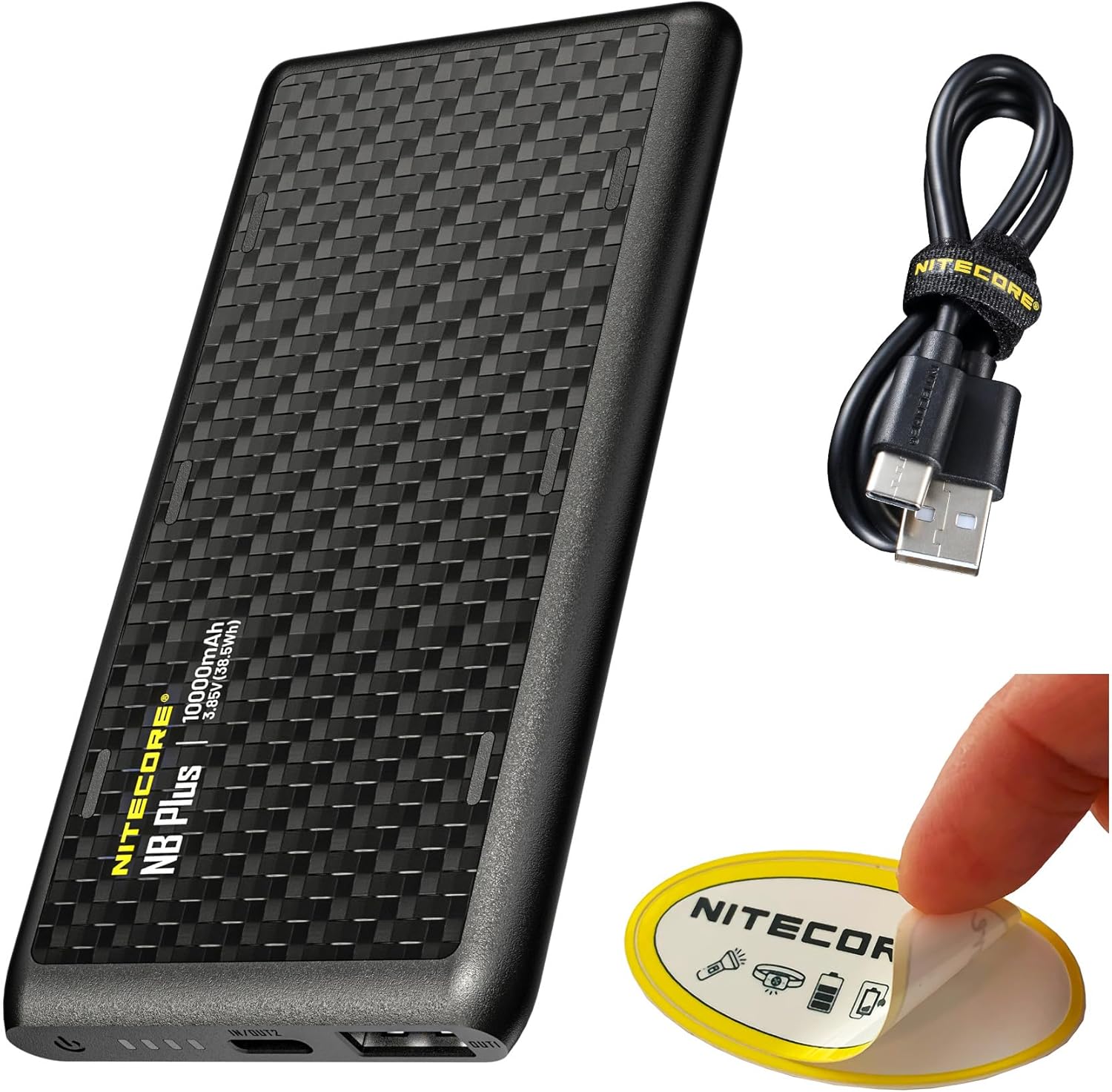
Best for Ultralight Hikers: Nitecore NB10000
-
The Vibe: The Weight-Weenie’s Dream.
-
Capacity: 10,000mAh (38.5Wh)
-
Weight: 5.47 oz (150g)
In the hiking community, this battery has a cult following. Built with a carbon fiber reinforced shell, the Nitecore NB10000 is shockingly light—roughly half the weight of standard chargers with the same capacity.
It is slim enough to fit in a pocket without weighing down your shorts, making it perfect for thru-hiking or minimalist “one-bag” travel. If you are planning an active trip, this is the only charger you should bring.
See product details and pricing
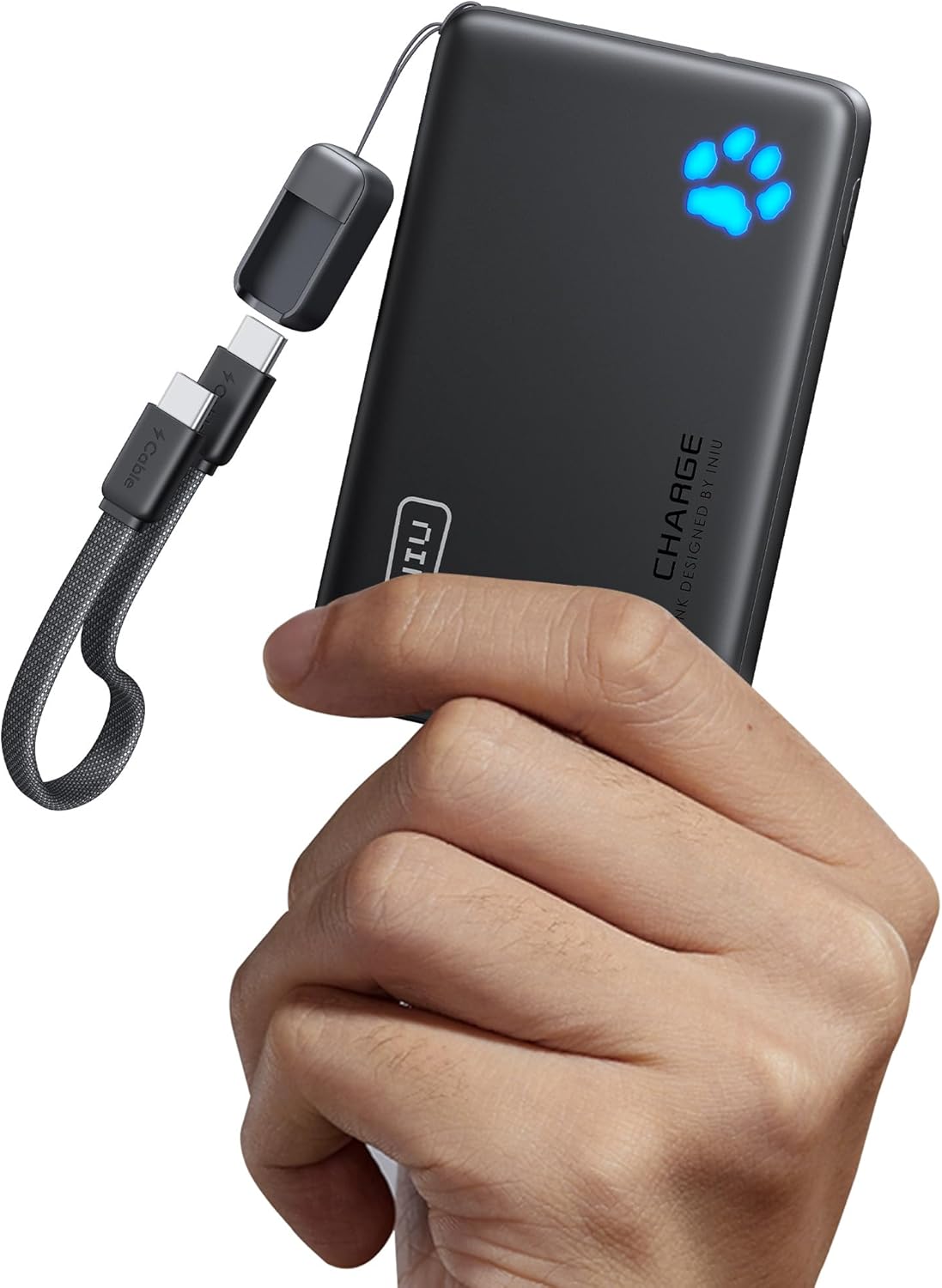
Best Value: INIU 10000mAh Portable Charger
-
The Vibe: Reliable and Cheap.
-
Capacity: 10,000mAh (37Wh)
-
Weight: 7 oz (198g)
You don’t always need top-tier tech; sometimes you just need something that works. The INIU is frequently available for under $25, making it a low-risk option. If you accidentally leave it in a hostel in Bangkok, it won’t ruin your trip. Despite the price, it supports high-speed charging and features a unique “paw print” light indicator that is surprisingly useful for checking levels in the dark.
See product details and pricing
Best for iPhone Users: Anker MagGo Power Bank (10k)

-
The Vibe: Wire-Free Freedom.
-
Capacity: 10,000mAh (38.5Wh)
-
Weight: 8.8 oz (250g)
Cables are the enemy of organized travel. The Anker MagGo magnetic battery snaps directly onto the back of your iPhone (12 and newer) using MagSafe technology. The latest version is Qi2 certified, meaning it offers faster wireless charging speeds than older magnetic packs. It includes a kickstand, which is excellent for watching movies on tray tables during flights.
See product details and pricing
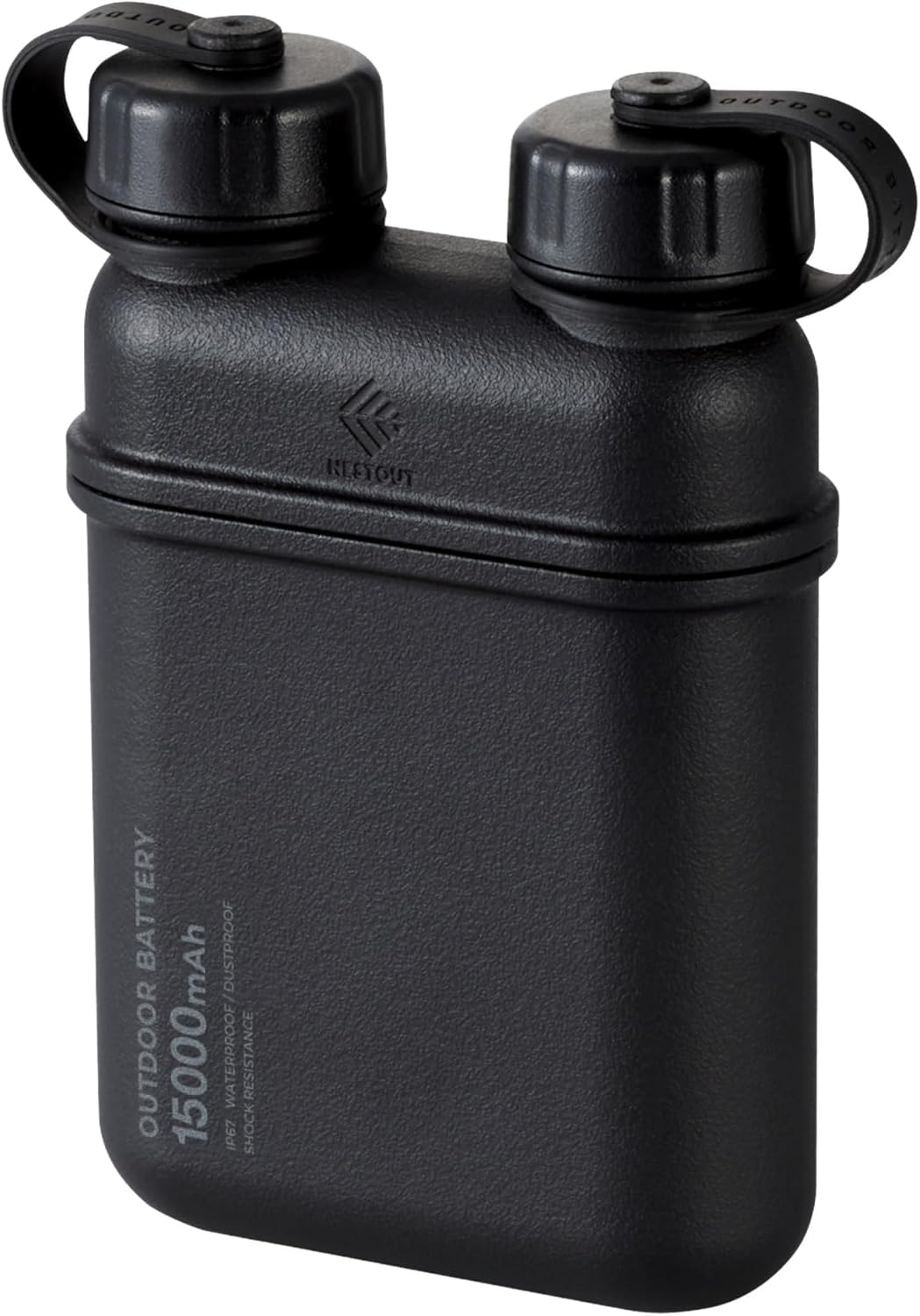
Best Rugged / Adventure Proof: Elecom Nestout 15,000mAh
-
The Vibe: The Apocalypse Survivor.
-
Capacity: 15,000mAh (54Wh)
-
Weight: 13 oz (370g)
If your travels involve sand, sea spray, or rain, you need ingress protection. The Nestout is designed to withstand the elements with an IP67 rating, meaning it is dust-tight and can survive being submerged in water (up to 1 meter for 30 minutes).
It looks like military gear and is built to take a beating. This is the ideal companion for outdoor-heavy itineraries, like Desert Camping, where fine sand destroys standard electronics.
See product details and pricing
Best “All-in-One”: Anker Nano Power Bank (45W)

-
The Vibe: The Minimalist.
-
Capacity: 10,000mAh (36Wh)
-
Weight: 7.5 oz (215g)
The biggest hassle with power banks is remembering to pack the cable. The Anker Nano solves this with a built-in USB-C cable that doubles as a carrying strap. It supports 30W two-way charging, meaning the same built-in cable is used to charge your phone and to recharge the battery itself. It’s one less thing to lose when you’re rushing to catch a bus.
See product details and pricing
Buying Guide: How to Choose the Right Charger
Now that you’ve seen the top models, how do you decide which specs actually matter? Marketing jargon can be confusing, so let’s break down the technical terms into plain English.
1. Capacity (mAh vs. Wh)
Most people look at milliamp-hours (mAh), which tells you how much energy the battery holds.
-
5,000 – 10,000mAh: Good for 1-2 full phone charges. Great for day trips.
-
20,000mAh+: Can charge a phone 4-5 times or a tablet/laptop once. Best for long flights.
However, for air travel, you must pay attention to Watt-hours (Wh). This is the metric airport security cares about. To find this number, you can use the formula: (mAh × Voltage) / 1000 = Wh. Always check the label on the device itself; if the Wh rating isn’t visible, TSA has the right to confiscate it.
2. Power Delivery (PD) and Output
If you see “PD” on a charger, it stands for USB Power Delivery. This is a fast-charging standard that allows devices to negotiate higher power levels safely.
-
18W – 30W: Ideal for fast-charging phones (iPhone/Samsung).
-
45W – 65W: Required if you want to charge a laptop (like a MacBook Air or Dell XPS).
-
100W+: For power-hungry laptops (MacBook Pro) or fast-charging the power bank itself.
3. Pass-Through Charging
This is a feature often overlooked by beginners. Pass-through charging allows you to plug the power bank into a wall outlet and your phone into the power bank simultaneously. The electricity flows through the battery to your phone. This is a lifesaver in hotels with only one usable outlet—you wake up with both your phone and your backup battery 100% charged.
Conclusion: Power Your Next Adventure
The difference between a stressful travel disaster and a smooth adventure often comes down to 15% battery life. Whether you are navigating the chaotic streets of Cairo, hiking a remote trail in Patagonia, or just trying to keep your kids entertained on a flight to Orlando, reliable power is the key to independence.
For most travelers, the Anker Prime offers the best versatility. But if you are counting every gram, the Nitecore NB10000 is a game-changer that proves you don’t have to sacrifice power for weight.
Remember, gear is only useful if you know how to pack it efficiently. Before you zip up your suitcase, make sure to read our Travel Packing Hacks Every Traveler Should Know to find the perfect spot for your new charger.