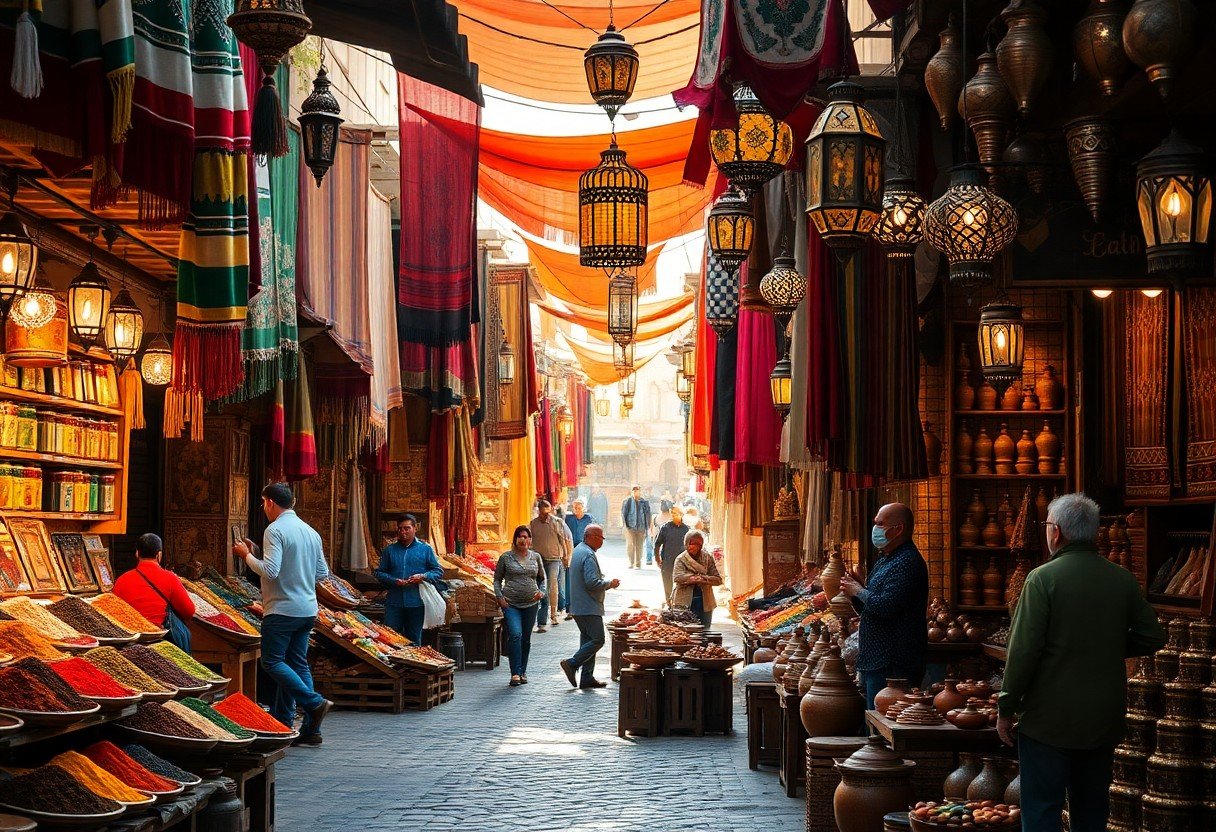
Exploring Traditional Markets in Morocco
Exploring the vibrant traditional markets in Morocco offers you a unique glimpse into the country’s rich culture and history. As you navigate the bustling souks filled with colorful textiles, aromatic spices, and intricate handicrafts, you’ll experience the dynamic interaction between local vendors and tourists. While it’s imperative to stay vigilant against pickpockets, immersing yourself in these lively markets can lead to unforgettable encounters and genuine treasures. Embrace the sensory overload of sights, sounds, and smells, as you discover the heart and soul of Moroccan life through its thriving marketplaces.
Key Takeaways:
- Traditional markets, or souks, are central to Moroccan culture, showcasing local crafts, spices, and culinary delights.
- Bargaining is a common practice in souks; engaging with vendors can enhance the shopping experience.
- Each region has distinct offerings, from leather goods in Marrakech to pottery in Fes, reflecting local craftsmanship and traditions.
The History of Traditional Markets in Morocco
Traditional markets, known as souks, have deep historical roots in Morocco, dating back to the 8th century when trade flourished under the reign of the Almoravid dynasty. These markets emerged as central hubs in towns and cities, facilitating commerce and the exchange of goods between diverse cultures, including Berber, Arab, and European traders. As you explore the souks, you can feel the echoes of centuries of trade, with vendors selling everything from handcrafted leather goods to intricate textiles, all maintaining connections to ancient practices.
Origins and Evolution
The origins of Morocco’s souks can be traced to the caravan trade routes that crisscrossed the region, which enabled merchants to exchange spices, metals, and handicrafts. Over time, these early marketplaces evolved into bustling centers where locals gathered to buy and sell daily necessities. As cities developed, so did the complexity of the souks, adapting to cultural influences from the Moorish and Ottoman empires, thereby enriching the fabric of Moroccan commerce.
Cultural Significance of Traditional Markets in Morocco
The cultural significance of souks extends beyond mere commerce; they embody the soul of Moroccan identity. Each souk reflects the region’s unique heritage, showcasing traditional crafts, local produce, and artisanal foods that define the Moroccan lifestyle. Engaging with artisans and listening to their stories connects you to the community, reinforcing the spirit of solidarity and cultural continuity that is vital in today’s rapidly changing world.
Walking through the souks provides you with firsthand experiences that highlight their importance in everyday Moroccan life. For instance, the famous souk in Marrakech, Souk Semmarine, features a rich assortment of handmade jewelry and ceramics, each piece telling a story of craftsmanship passed down through generations. Such interactions not only support local economies but also preserve traditional expertise, making these markets a living testament to Morocco’s vibrant cultural mosaic. In this environment, you gain insight into the traditions that shape Moroccan society, enhancing your appreciation for the artistry and history that the souks embody.
Types of Traditional Markets in Morocco
Morocco’s traditional markets feature diverse offerings, each with a distinct character. The most prominent types are the souks, artisan markets, and flea markets. Each serves as a vibrant hub for local commerce and cultural exchange.
- Souks: The bustling, lively marketplace where you can find everything from spices to textiles.
- Artisan markets: Specialty markets showcasing handmade crafts and traditional skills.
- Flea markets: A treasure trove of antiques, secondhand goods, and unique finds.
- Food markets: Where you can savor local delicacies and fresh produce.
- Jewelry markets: Offering exquisite handcrafted jewelry and metalsmithing.
This blend of markets creates a dynamic shopping experience, each with its unique charm.
Souks: The Heart of Moroccan Commerce
The souks of Morocco are more than mere shopping venues; they are cultural epicenters brimming with life and activity. You will find yourself navigating through narrow alleys filled with merchants hawking colorful textiles, fragrant spices, and intricate ceramics. Each souk specializes in different goods, often categorized by trade, allowing you to dive deep into Morocco’s diverse artisanal heritage.
Artisan Markets and Craftsmanship
Artisan markets showcase the incredible craftsmanship that Moroccan artisans have honed for generations. You can connect directly with skilled craftspeople, watching them create traditional pottery, leatherwork, and rugs. The authenticity of these markets lies in the stories behind each handcrafted piece, making every purchase not just a transaction, but an investment in culture.
These artisan markets are a celebration of time-honored techniques passed down through before generations. Artisans often utilize natural materials and traditional methods, ensuring that every item reflects not only personal skill but also regional identity. In places like the Medina of Marrakech, you’ll find workshops where craftsmen demonstrate weaving, embroidery, and metalwork, inviting you to appreciate the intricate processes that contribute to Morocco’s rich cultural tapestry.
Goods and Products Commonly Found
As you wander through Morocco’s vibrant souks, you will encounter an array of goods that reflect the rich local culture. From authentic Berber carpets to stunning ceramics, each stall tells a story. You can find everything from handmade leather goods to intricate jewelry, along with a bounty of spices and culinary staples that will tantalize your senses.
Spices and Culinary Staples
The aroma of spices fills the air as you navigate the market aisles. You’ll discover an impressive selection of cumin, saffron, cinnamon, and ras el hanout, among others. These spices are not just for flavor; they embody the heart of Moroccan cuisine, enriching traditional dishes like tagines and couscous. Buying spices in bulk allows you to recreate authentic Moroccan meals at home.
Textiles and Handicrafts
Your eyes will be drawn to the vibrant textiles that adorn the market stalls. From richly colored rugs to intricately woven scarves, the craftsmanship is evident in every piece. These textiles often feature traditional patterns that reflect Morocco’s diverse cultural heritage, making them a perfect souvenir for you to take home.
As you explore further, you’ll learn that Moroccan textiles, especially rugs, are a blend of ancient techniques and contemporary designs. For example, the Beni Ourain rugs, made by Berber tribes, are characterized by their unique geometric patterns and plush texture. Authentic handcrafted items, like kaftans and slippers (babouches), are made with great care, often using local materials. These textiles not only serve practical purposes but also provide a tangible connection to Moroccan history and artistry, making your purchase all the more special.
Navigating the Traditional Markets in Morocco
Exploring a Moroccan souk can be both exhilarating and overwhelming, given the vibrant array of sights, sounds, and aromas. As you meander through narrow aisles, haggling becomes an art form, where understanding local customs can significantly influence your experience. Be prepared to engage with enthusiastic vendors while remaining mindful of your surroundings to fully enjoy your visit.
Tips for First-Time Visitors To Traditional Markets in Morocco
Approaching a Moroccan market requires a blend of confidence and patience. Here are some necessary tips to enhance your experience:
- Start with a clear budget.
- Practice basic Arabic or French phrases.
- Be ready to negotiate prices.
- Stay hydrated while exploring.
- Always keep an eye on your belongings.
After immersing yourself in the vibrant atmosphere, you’ll find that engaging with the local culture adds depth to your experience.
Understanding Local Etiquette
Respecting local customs can enrich your interaction with vendors and enhance your overall enjoyment at traditional markets in morocco. In Moroccan souks, greeting shopkeepers with a polite “salut” or “salaam” sets a positive tone. Bargaining is expected, but always maintain a friendly demeanor. Avoid showing excessive interest in a specific item until you’re ready to negotiate, as this can inflate prices. While photography is common, seek permission before capturing vendor portraits.
Understanding local etiquette not only helps you navigate the traditional markets in morocco, but also establishes rapport with vendors. For instance, bargaining isn’t merely transactional; it’s a social practice that fosters connections. Establishing a friendly exchange can lead to better deals and personal stories about the crafts. You may discover that gift items come with unique histories or cultural significance. As a mark of respect, if you decline an offer, do so politely, as rudeness can sour experiences. By embracing local etiquette, you’ll ensure a more rewarding and authentic exploration of Moroccan souks.
The Role of Traditional Markets in Morocco Today
In the landscape of modern Morocco, traditional markets continue to thrive as vital economic and cultural lifelines. You’ll find these markets not only bustling with trade but also harmonizing with the advancements of contemporary retail. As the world evolves, these souks adapt by integrating modern goods, yet they maintain their charm and authenticity, drawing both locals and tourists alike.
Economic Contributions
Traditional markets significantly contribute to Morocco’s economy, generating millions in revenue annually. These vibrant souks provide employment for thousands, from artisans to vendors, offering a platform for local producers. In 2021, for instance, Moroccan souks supported over 200,000 jobs solely in crafts and local produce, reinforcing the importance of these markets in sustaining communities.
Preservation of Cultural Heritage
The preservation of cultural heritage is indispensable in Morocco’s markets, as they serve as living museums of traditions. As you navigate through the labyrinthine alleys, you’ll notice handcrafted goods that epitomize centuries-old techniques passed down through generations. Local artisans remain committed to maintaining these practices, ensuring that the essence of Moroccan identity thrives in a rapidly changing world.
Artisans often specialize in intricate crafts like pottery, weaving, and leatherwork, enriching the cultural tapestry of Morocco. For instance, the vibrant tiles of Fez are not just decorative but also tell stories of artisanal mastery and historical significance. Each item in the souk carries a legacy, making your shopping experience more than just a transaction; it’s an immersion into Morocco’s rich narrative. Community initiatives have emerged to preserve these crafts, reinforcing their relevance in today’s market while providing invaluable income for families. With tourists seeking authentic experiences, these markets become imperative for maintaining the delicate balance between tradition and modernity.
Famous Traditional Markets in Morroco to Visit
Marrakech Souk
The Marrakech Souk is a vibrant tapestry of sights and sounds, stretching across a labyrinth of narrow alleys filled with artisanal goods. Here, you can explore countless stalls offering everything from exquisite textiles to handcrafted pottery. The lively atmosphere is complemented by the scents of local spices and the vibrant chatter of merchants eager to engage you in haggling, making it a quintcrucial Moroccan experience.
Fes El-Bali Market
Step into the Fes El-Bali Market, where you’re surrounded by the echoes of history in the world’s largest car-free urban area. This UNESCO World Heritage site teems with life, presenting a sensory overload of intricate mosaics, fragrant spices, and shimmering lanterns. As you meander through its twists and turns, you’ll uncover a treasure trove of local crafts, including the city’s renowned leather goods and ceramics, making it a must-visit for any traveler.
The Fes El-Bali Market not only showcases traditional Moroccan craftsmanship but also offers an unparalleled glimpse into the local culture. As artisans demonstrate their skills, you might spot a tannery at work, where leather is dyed in vivid hues using ancient methods. Engaging with vendors adds authenticity to your experience, allowing you to learn the stories behind handcrafted items. Navigate through the market’s historic alleys and discover hidden gems that speak to the heart of Moroccan heritage, ensuring your visit is both enriching and memorable.
Summing up Traditional Markets in Morocco
Following this journey through Morocco’s traditional markets, you gain a deeper understanding of the cultural richness and vibrancy that these bustling spaces offer. Engaging with local vendors and exploring unique products allows you to appreciate not only the craftsmanship but also the community spirit woven throughout each market. Your experience will enhance your perspective on Moroccan culture, making your travels even more meaningful. Embrace the opportunity to connect with artisans and savor the authenticity that these markets represent in your exploration of Morocco.
FAQ
Q: What are the best traditional markets in Morocco to visit?
A: Some of the best traditional markets include Jemaa el-Fnaa in Marrakech, the Souks of Fes, and the markets in Essaouira. Each market offers unique local crafts, foods, and cultural experiences.
Q: What types of goods can I find in traditional markets in Morocco?
A: You can find a wide variety of goods including handmade textiles, pottery, leather goods, metalworks, spices, and traditional Moroccan cuisine. The markets are a treasure trove of local craftsmanship.
Q: Are bargaining skills necessary when shopping in these markets?
A: Yes, bargaining is a common practice in Moroccan markets. Sellers often set prices higher with the expectation that customers will negotiate, so it’s advisable to practice your haggling skills for a better deal.
Q: What is the best time to visit traditional markets in Morocco?
A: Early morning or late afternoon are ideal times to visit traditional markets. These hours typically offer a less crowded experience and the freshest products, especially in food stalls.
Q: How can I ensure a respectful shopping experience in Moroccan markets?
A: To ensure respect while shopping, ask for permission before taking photos, engage politely with sellers, and be mindful of local customs. Understanding basic Moroccan etiquette will enhance your experience.