The 10 Best Hidden Beaches in the Mediterranean You’ve Never Heard Of
Finding hidden beaches in the Mediterranean often feels like a quest for a lost era—a time before crowded sunbeds and bustling boardwalks dominated the coastline. While world-famous shores like the French Riviera or the Amalfi Coast continue to draw millions, there is a quieter, more raw version of the Mediterranean that remains largely untouched by mass tourism. For travelers seeking a deeper connection with nature, the lure of these secret coves isn’t just about the scenery; it’s about the profound silence found at the end of a rugged cliffside trail or across a turquoise bay accessible only by boat.
As global travel trends shift toward meaningful exploration in 2026, protecting these delicate coastal ecosystems has become a priority. Regional organizations, such as the Ionian Environment Foundation, work tirelessly to preserve marine biodiversity, ensuring these pristine spots remain unsullied for future generations. Furthermore, choosing these remote destinations aligns with UN Tourism’s sustainable development goals, which encourage travelers to minimize their environmental footprint while supporting local conservation.
Beyond the aesthetics, the quality of these waters remains a benchmark for European travel. According to the European Environment Agency’s latest report on bathing water, many of these secluded spots consistently rank as “excellent” due to their distance from urban runoff and industrial centers. In this guide, we’re peeling back the curtain on ten of the most breathtaking coastal secrets that you’ve likely never heard of.
The 10 Best Hidden Beaches in the Mediterranean
1. Cala Goloritzé, Sardinia, Italy
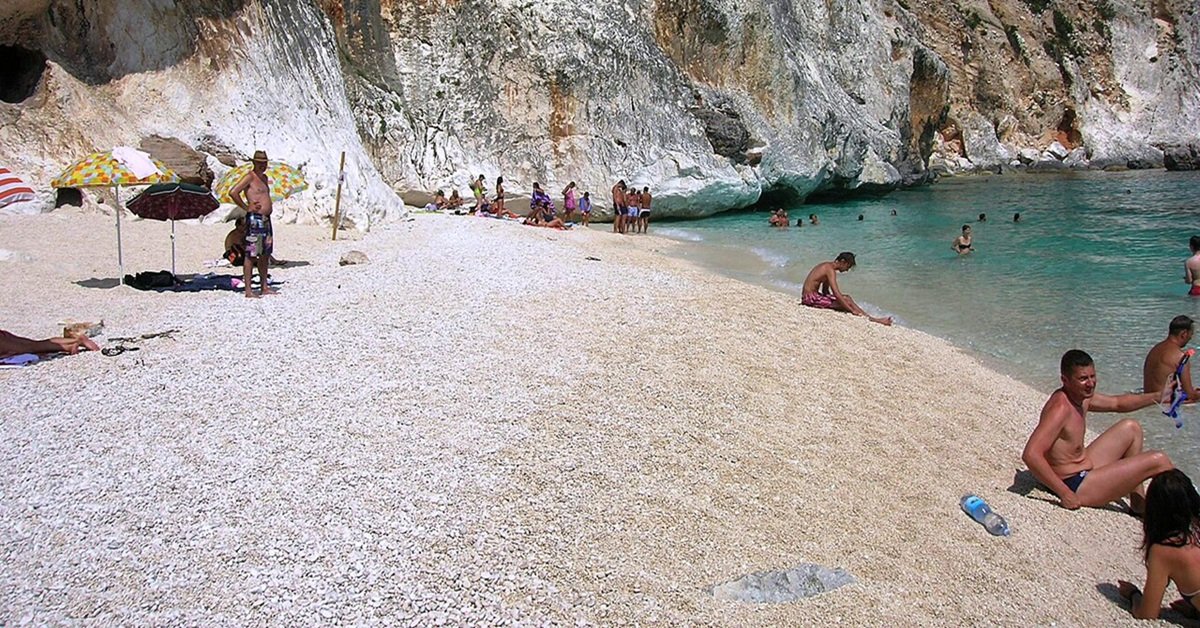
Hidden within the rugged Gulf of Orosei, Cala Goloritzé is often cited as the crown jewel of Sardinian shores. This isn’t your typical sandy beach; instead, it is composed of millions of tiny, snow-white pebbles that keep the water a startlingly clear neon-blue. Its most defining feature is the Aguglia, a 143-meter limestone pinnacle that towers over the cove, making it a bucket-list destination for free climbers and photographers alike.
Reaching this sanctuary requires effort, which helps preserve its “hidden” status. Motorized boats are strictly prohibited from docking or coming within 300 meters of the shore to protect the fragile marine environment. Most visitors choose to embark on a roughly one-hour trek starting from the Su Porteddu plateau. The trail is steep and rocky, so as noted by the official Turismo Baunei guide, high-quality hiking boots and at least two liters of water are necessities.
To prevent overcrowding and maintain its status as a National Monument, the local municipality has implemented a daily visitor cap of 250 people. As of 2026, you must book your entry in advance via the Heart of Sardinia app and pay a small environmental contribution fee. This ensures that the beach remains a tranquil refuge rather than a tourist trap. For those who prefer a sea approach, you can rent a boat from Santa Maria Navarrese, but be prepared to swim the final stretch to reach the shoreline.
2. Butterfly Valley (Kelebekler Vadisi), Turkey
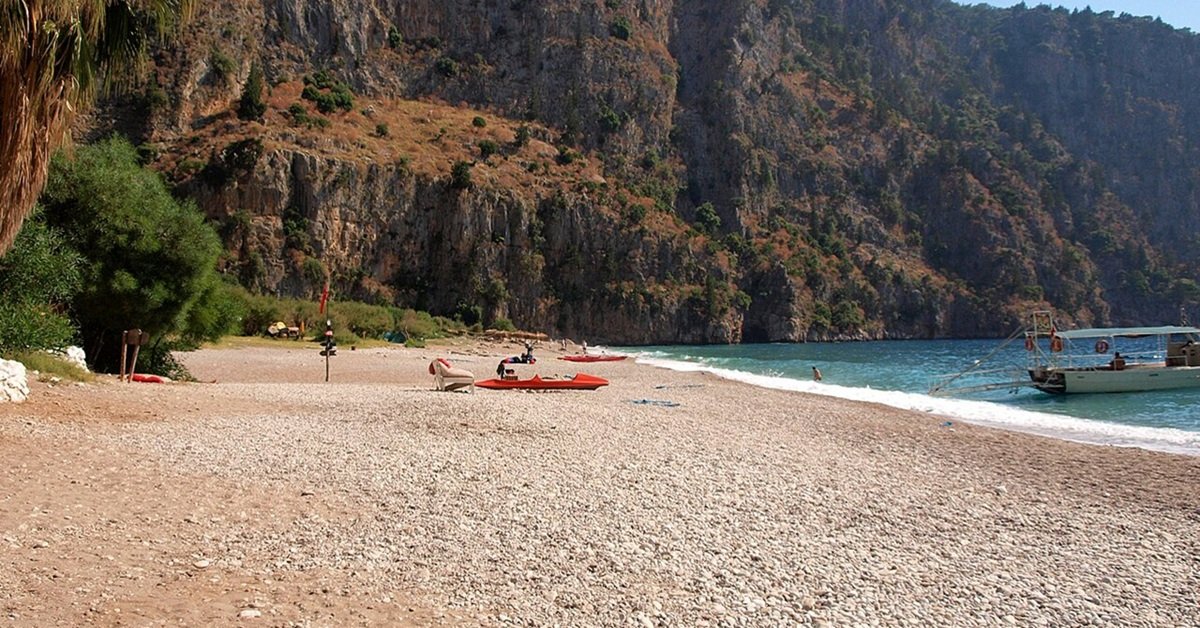
Accessing the valley is part of the allure. There are no roads leading into the canyon; most visitors arrive via shuttle boats from the main beach in Ölüdeniz. While a cliffside trail exists from the village of Faralya, it is notoriously steep and involves scrambling down rocks with fixed ropes. As Turkey Travel Planner warns, this route is only recommended for expert hikers and can be dangerous for casual tourists. For a safer and more scenic experience, the 30-minute boat ride offers a breathtaking view of the 350-meter-high cliffs that hem in the valley.
Once on shore, the vibe is decidedly bohemian. Because of its protected status, there are no hotels—only wooden bungalows and tents designed for “glamping.” Exploring the valley floor reveals a lush interior leading to a hidden waterfall, a site often highlighted by Smithsonian Magazine for its unique biodiversity. Whether you are there to snorkel in the turquoise waters or disconnect for a “digital detox,” Butterfly Valley remains one of the few places in the Mediterranean where nature still dictates the pace of the day.
Book Attractions in Butterfly Valley
3. Saplunara Beach, Mljet Island, Croatia
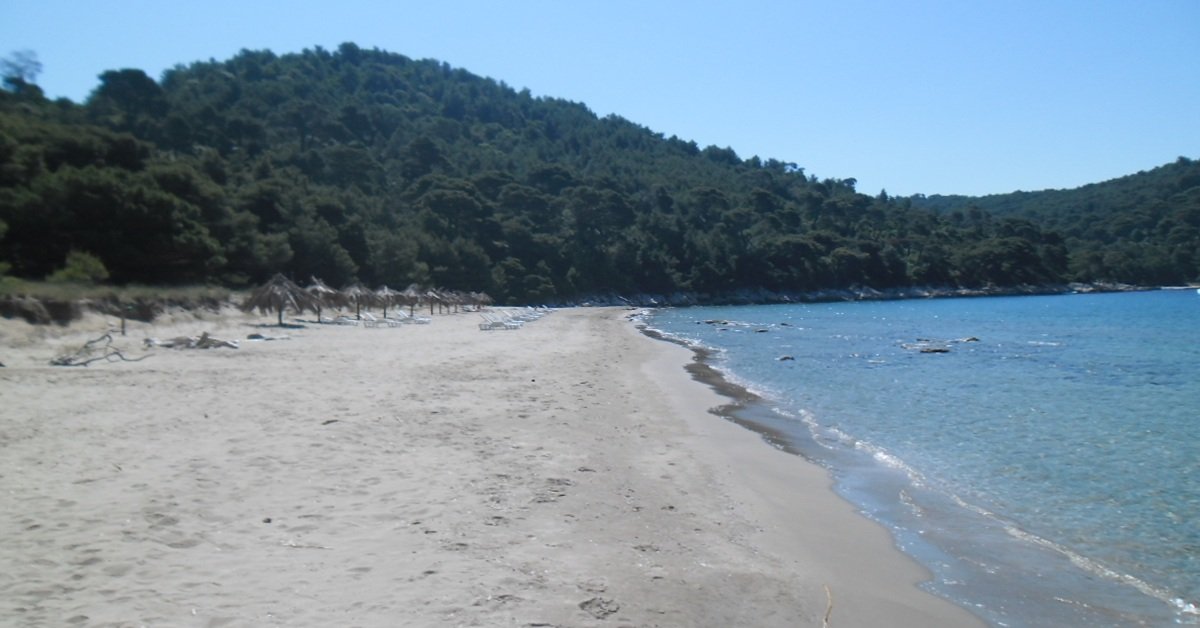
In a country famous for its jagged, pebbly coastline, Saplunara Beach is a rare and precious anomaly: a sprawling, kilometer-long stretch of fine, golden sand. Located on the southeastern tip of Mljet Island—often called the “Greenest Island” of the Adriatic—this beach remains a sanctuary for those looking to escape the yacht-filled harbors of Hvar or Dubrovnik. The bay is split into “Big Saplunara” and “Small Saplunara,” both of which are sheltered by a dense forest of Aleppo pines that provide natural shade and fill the air with a resinous, Mediterranean scent.
What keeps Saplunara truly hidden is its location. Mljet is one of Croatia’s most remote islands, and Saplunara sits at the far end of the single main road. To get here, you’ll need to take a ferry from Dubrovnik to the port of Sobra, then either catch a local bus or, more ideally, rent a scooter to navigate the island’s winding paths. Because the area is a protected coastal landscape, motorized water sports are banned, ensuring that the only soundtrack you’ll hear is the gentle lap of the Adriatic.
The waters here are exceptionally warm and shallow, making it a perfect spot for long-distance wading. According to the official Mljet National Park—which covers the other half of the island—the region is a biodiversity hotspot. While the beach itself sits just outside the park boundaries, it shares the same pristine environmental standards. For travelers interested in the local ecosystem, the Journal of Marine Science and Engineering has previously highlighted the Adriatic’s unique seagrass meadows, which are visible through the crystal-clear water at Saplunara. There are no large hotels here, only a handful of family-run “Sobe” (rooms) and small konobas serving fresh-caught calamari and local wine.
4. Simos Beach, Elafonisos, Greece

Often described as having the “whitest sand in the Mediterranean,” Simos Beach is located on the tiny island of Elafonisos, just off the southern tip of the Peloponnese. What makes Simos extraordinary is its unique geographical formation: it consists of two magnificent bays—Megalos (Large) Simos and Mikros (Small) Simos—separated by a narrow, sandy isthmus. The result is a double-sided beach with iridescent turquoise water and rolling sand dunes that can reach up to ten meters in height.
Despite its breathtaking beauty, Simos remains relatively quiet because it requires a specific effort to reach. Travelers must drive to the remote port of Pounta in the Laconia region and take a 10-minute car ferry across the strait. Because there are no major airports nearby, the crowd consists mostly of Greek families and savvy European road-trippers. As highlighted by the Official Greek Tourism Portal, the island’s small size ensures that the atmosphere remains intimate and slow-paced, even during the peak of summer.
The beach and its surrounding dunes are strictly protected under the European Environment Agency’s Natura 2000 Network, an initiative dedicated to preserving the continent’s most valuable and threatened habitats. This protection prevents large-scale commercial development, keeping the ancient cedar forests and rare sea lilies intact. For a deeper dive into the visitor experience, Discover Greece provides a detailed look at the “double dose of heaven” these twin bays offer. While there are a few organized spots with umbrellas, walking just five minutes down the shoreline will lead you to vast, empty stretches of sand that feel like a private paradise.
5. Calanque d’En Vau, France
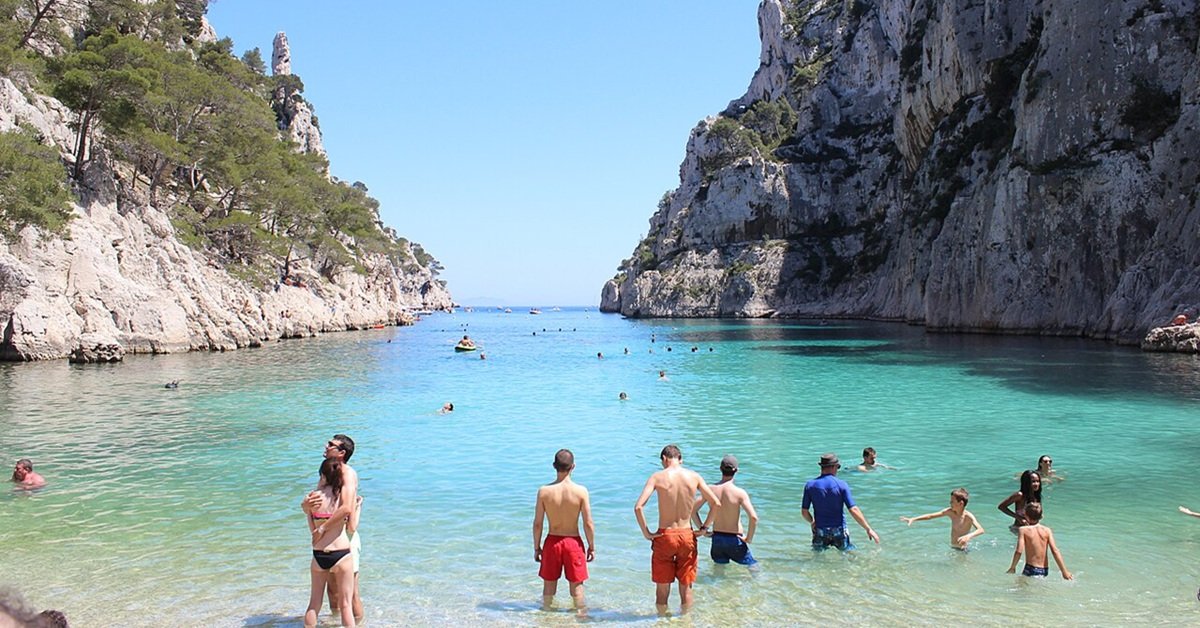
Hidden between the glittering ports of Marseille and Cassis, Calanque d’En Vau is arguably the most spectacular “fjord” of the French Riviera. This narrow, deep inlet is carved into towering white limestone cliffs that plunge vertically into water so clear it appears more like liquid emerald than sea. Unlike the manicured beaches of Cannes or St. Tropez, En Vau remains rugged, wild, and entirely free of commercial facilities.
Reaching this sanctuary is a rite of passage for Mediterranean hikers. Because it is located within the Calanques National Park, access is strictly regulated to prevent wildfires and erosion. The most popular route is a strenuous, two-hour hike from the town of Cassis, involving steep descents and slippery limestone paths. Hikers should always check the “Mes Calanques” app before departing, as the trails are often closed during the peak of summer (July and August) due to high fire risks.
For those who find the hike too daunting, the beach is also accessible by kayak or boat from Cassis. However, to maintain the tranquility of the cove, large motorized vessels are kept at a distance. This preservation effort is part of a broader European initiative to protect coastal biodiversity, often supported by organizations like The MedFund, which focuses on the sustainable management of marine protected areas. Once you reach the pebbled shore, you are rewarded with a silence broken only by the sound of cicadas and the occasional splash of a cliff diver.
6. Ksamil Islands, Albania
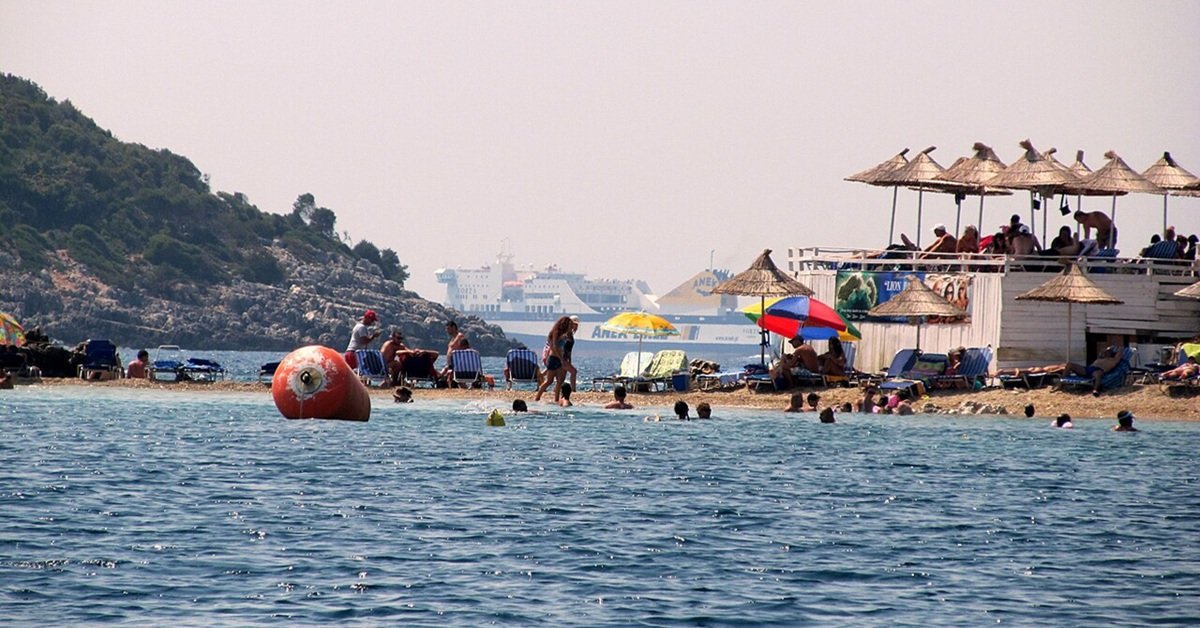
Long referred to as the “Maldives of Europe,” the Ksamil Islands are a cluster of four small, emerald islets situated just off the coast of the Albanian Riviera. While the main town of Ksamil has seen a surge in popularity due to its affordability, the islands themselves remain true hidden beaches in the Mediterranean. These uninhabited outcrops are carpeted in dense Mediterranean vegetation and surrounded by water so clear that you can see the seabed at depths of several meters.
The magic of Ksamil lies in its accessibility—or lack thereof. While the closest beaches on the mainland can get crowded in peak August, the islands are reachable only by a short boat trip, kayak, or for the strong swimmers, a 15-minute paddle from the shore. This physical barrier ensures that even on busy days, you can find a quiet cove to yourself. As noted by Albania Tourism, the region is ideally positioned for those who want to combine a beach holiday with world-class history; the islands sit right on the edge of the UNESCO-protected Butrint National Park.
To get here, most international travelers fly into the Greek island of Corfu and take a 30-to-70-minute ferry across the Ionian Strait to the port of Sarandë. Operators like Ionian Seaways run daily hydrofoils that make the transition between Greece and Albania seamless. Once in Sarandë, a quick 20-minute bus or taxi ride brings you to the white sands of Ksamil, where the “Emerald Islands” await on the horizon.
7. Cala Varques, Mallorca, Spain
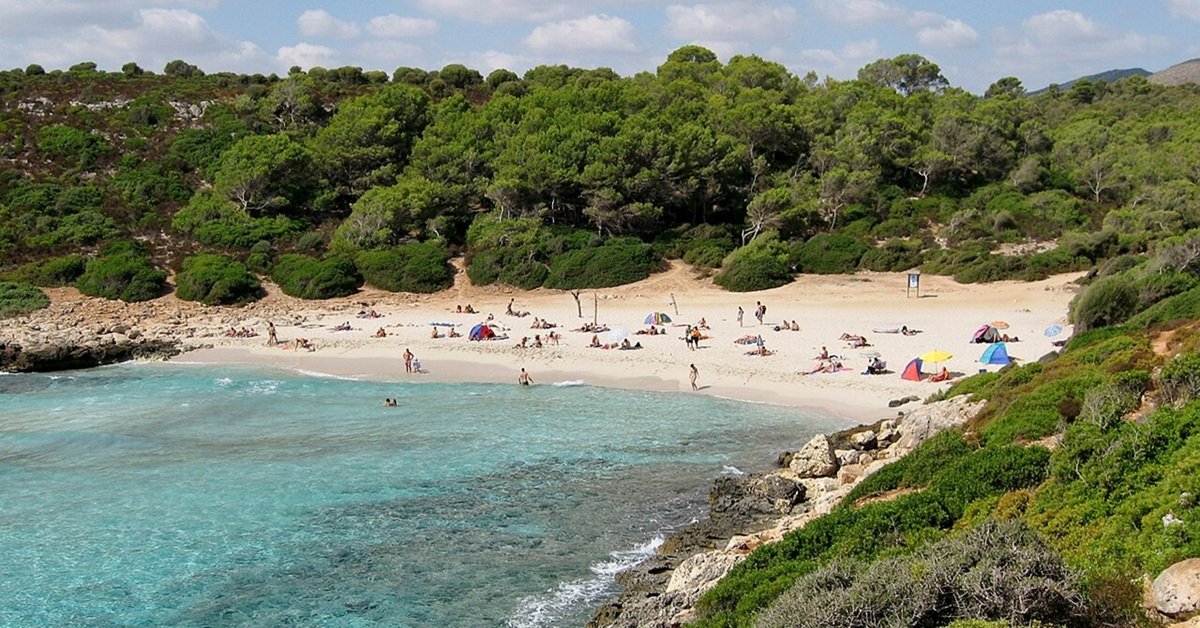
While Mallorca is famous for its high-end resorts and bustling calas, Cala Varques remains a bastion of the island’s wilder, bohemian past. Located on the eastern coast between Porto Cristo and Porto Colom, this beach is an pristine crescent of white sand flanked by low-lying cliffs and a dense forest of pine and oak. Its crystal-clear, turquoise waters are ideal for snorkeling, and the surrounding cliffs are honeycombed with sea caves and natural stone arches, including the famous “Es Pontet.”
The reason Cala Varques stays “hidden” is the absence of any direct road access. To reach the shore, visitors must park their cars on the side of the PMV-4015 road and embark on a roughly 20-to-30-minute trek through a dusty, private estate trail. Because there are no beach bars, toilets, or sunbed rentals, you must carry in all your own water and supplies. This lack of infrastructure is a deliberate choice to maintain the area’s natural state, a strategy often discussed by the Balearic Islands Tourism Board in their efforts to promote sustainable, low-impact travel.
The area is also a favorite for adventurous spirits. The cliffs surrounding the bay are a premier destination for “Psicobloc” (deep-water soloing), a sport popularized on the island by world-class climbers. For those interested in the geological significance of the region, the Spanish National Research Council (CSIC) has conducted studies on the intricate cave systems along Mallorca’s coastline, many of which are accessible only from the water at sites like Cala Varques. By keeping the hike challenging and the amenities non-existent, the local community ensures this cove remains a peaceful escape from the island’s more commercialized corners.
8. Saria Island, Greece
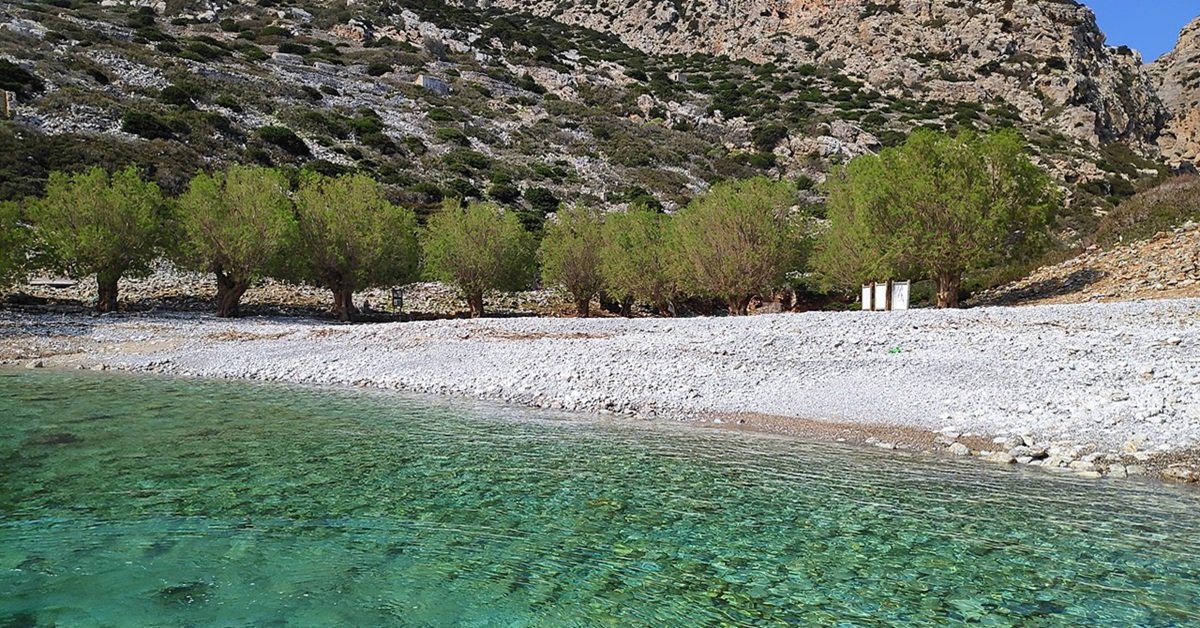
If you want to feel as though you’ve stepped back into the era of Mediterranean pirates, Saria Island is the ultimate escape. Located just north of Karpathos in the Dodecanese, Saria was once a bustling ancient city-state, but today it is an uninhabited, volcanic wilderness. The island is defined by dramatic geological formations, including the spectacular Palatia Beach, where turquoise waters lap against a shore backed by the ruins of 10th-century vaulted stone houses once used by Saracen pirates.
Reaching Saria is an adventure in itself, as it is separated from its “mother island,” Karpathos, by a narrow strait only 100 meters wide. Since there are no permanent residents or roads, the only way to explore these hidden beaches in the Mediterranean is by taking a traditional wooden excursion boat from the ports of Pigadia or Diafani. As detailed by Discover Greece, these boat trips often include a trek through the impressive Edi Gorge, which leads visitors to the abandoned medieval settlement of Argos.
The island is a critical protected area, specifically as a sanctuary for the endangered Mediterranean monk seal. This conservation effort is documented by the Monk Seal Alliance, which works to protect the specific sea caves found in the Dodecanese. Furthermore, the island’s unique ecosystem is part of the Natura 2000 Viewer, a database that tracks the biodiversity of the northern Karpathos and Saria region. Because of its ecological importance, there are absolutely no shops or tavernas on Saria; visitors must bring their own water and provisions and follow strict “leave no trace” principles to protect this wild Aegean outpost.
9. Cala Mitjana, Menorca, Spain
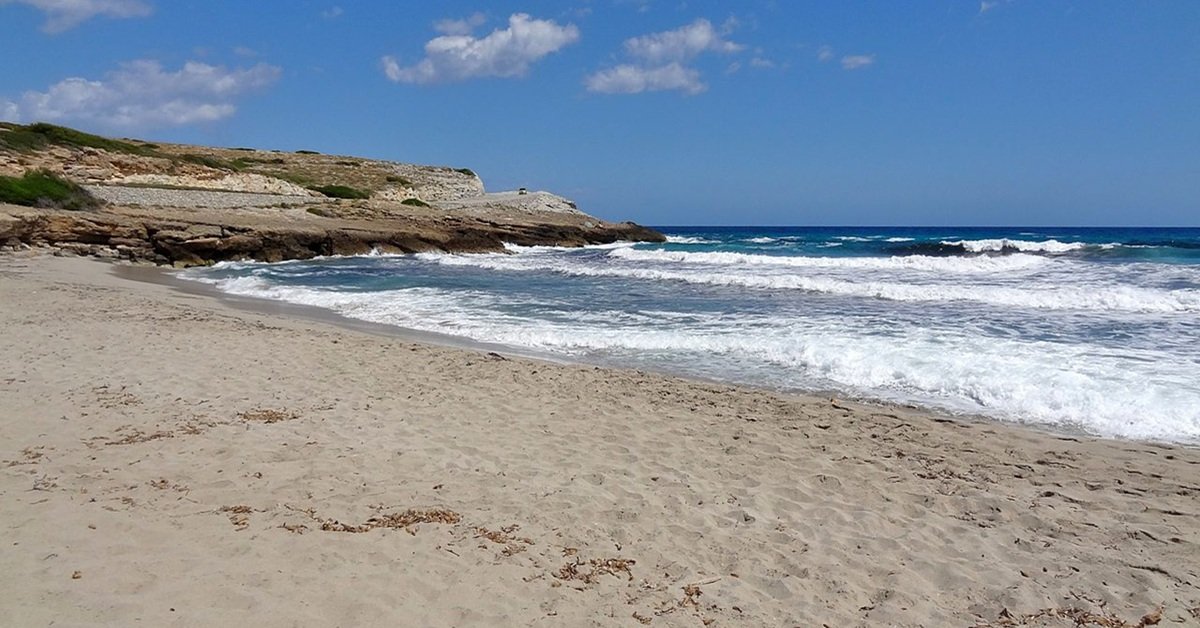
While the larger Balearic Islands often struggle with the weight of over-tourism, Menorca remains the archipelago’s soulful, quiet sanctuary. Cala Mitjana is the island’s hidden masterpiece—a pristine horseshoe bay of powder-white sand and water so intensely turquoise it looks filtered. Framed by high limestone cliffs and a thick canopy of Aleppo pines, this beach remains entirely free of the high-rise hotels and beach clubs that define neighboring Mallorca or Ibiza.
What truly secures its place among the best hidden beaches in the Mediterranean is the island’s commitment to preservation. Menorca has been recognized as a UNESCO Biosphere Reserve since 1993, a status that has successfully halted coastal development for over three decades. To reach Cala Mitjana, you must park at a designated lot off the Me-22 road and enjoy a scenic 20-minute walk through a shaded forest path. For those seeking even more seclusion, a smaller, neighboring cove called Cala Mitjaneta is accessible via a short swim or a scramble over the rocks.
The beach is also a key stop along the Camí de Cavalls, an ancient 185-kilometer bridle path that circles the entire island. Hikers can use this historic trail to hop between various secret coves, each managed with a focus on ecological integrity. Local efforts to maintain the water quality and shoreline are often championed by the Menorca Preservation Fund, which works to protect the island’s unique terrestrial and marine environments. Because there are no services on-site, remember to pack out everything you bring in to help keep this Balearic gem spotless.
10. Rovinia Beach, Corfu, Greece
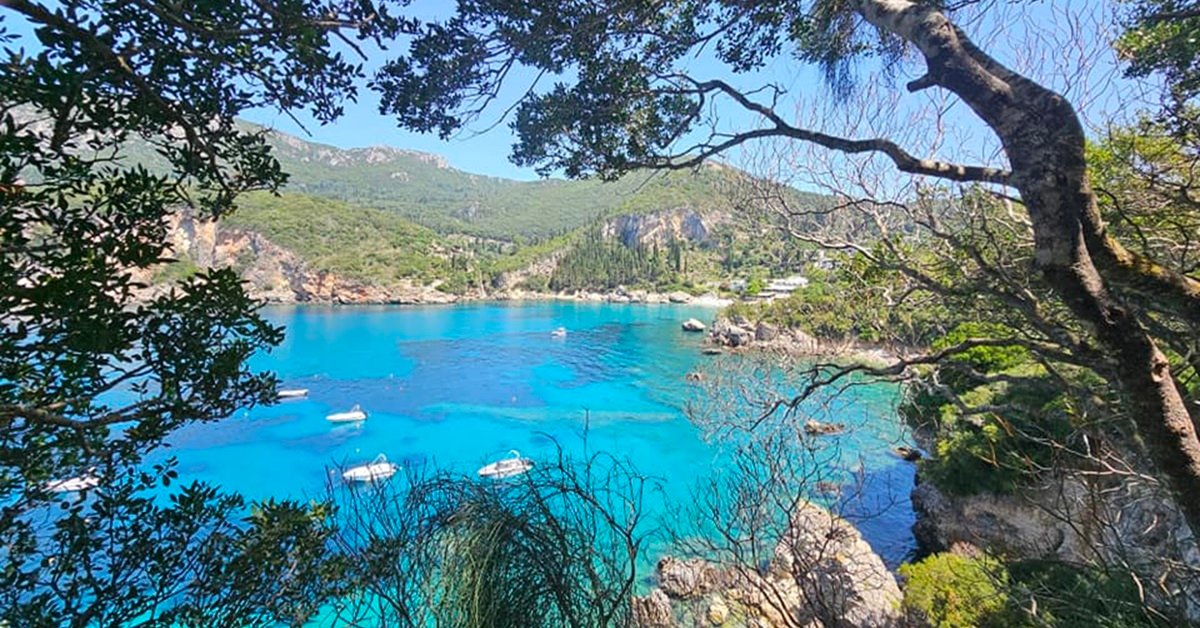
Tucked away on the lush western coast of Corfu near the village of Liapades, Rovinia Beach is widely considered one of the most serene hidden beaches in the Mediterranean. This secluded cove is defined by its striking contrast: stark, pebble-white shores set against a backdrop of vertical limestone cliffs and dense, vibrant greenery. The water here is famously cool due to local underground springs, providing a refreshing escape from the summer heat, while the seabed is scattered with small caves that are perfect for snorkeling.
Accessing Rovinia is part of its secret appeal. While you can drive part of the way, the road eventually turns into a narrow, bumpy track that requires a 15-minute downhill walk through an ancient olive grove. As noted by the travel guides at Greeka, many visitors find it more convenient to rent a small motorboat from nearby Liapades or Gefyra to arrive via the sea. This coastal approach offers a stunning perspective of the dramatic Ionian cliffs that remain inaccessible to those on the mainland.
The preservation of this area is a priority for regional conservationists who seek to balance tourism with environmental health. Organizations like the Ionian Environment Foundation work to protect the local marine biodiversity and the lush terrestrial habitats that make Corfu’s west coast so unique. Because Rovinia has no canteens, sunbed rentals, or commercial facilities, it retains a primitive atmosphere of total tranquility. For those planning a broader itinerary, the Official Corfu Travel Guide provides resources on exploring the island’s many hidden corners while respecting its natural heritage.
Travel Tips for Hidden Beach in the Mediterranean Seekers
Visiting the most remote hidden beaches in the Mediterranean requires a different level of preparation than a standard day at a resort. Because these locations lack infrastructure—often by design to protect the environment—you must be self-sufficient and mindful of your impact on these fragile ecosystems.
-
Master the “Pack In, Pack Out” Rule: Most of these beaches do not have trash collection services. To keep these shores pristine, strictly follow the Leave No Trace Seven Principles, which include disposing of waste properly and leaving what you find.
-
Essential Gear: Invest in high-quality water shoes for the rocky shores of Croatia and Greece, and a reliable dry bag if you plan to swim from a boat to the shore. For sun protection, opt for reef-safe sunscreen to ensure that harmful chemicals like oxybenzone don’t damage the local marine life.
-
Timing is Everything: As we move into the 2026 travel season, “overtourism” at popular hubs is driving more people toward these secret spots. To truly experience the silence of a hidden beach, aim for the “shoulder season” in late May or September. You can check the European Travel Commission for the latest trends on travel sentiment and the best times to avoid the crowds.
-
Safety First: Many of these beaches are in “dead zones” for cellular reception. Download offline maps and always inform someone of your planned route, especially if you are hiking into remote canyons like Butterfly Valley or Calanque d’En Vau.
Conclusion
The allure of hidden beaches in the Mediterranean lies in their ability to transport us back to a simpler, more rugged version of the coast. Whether it is the dramatic limestone cliffs of France or the volcanic ruins of a deserted Greek island, these secret coves offer a sense of discovery that modern, commercialized resorts simply cannot replicate. As we look toward the 2026 travel season, the value of these pristine spaces has never been higher. By venturing off the paved path, we don’t just find a place to swim—we find a deeper connection to the history and natural beauty of the Mediterranean.
Preserving these gems is a collective responsibility. By choosing sustainable travel options and respecting local regulations, we ensure that these “secret” spots remain wild for the next generation of explorers. The Mediterranean still has plenty of secrets to tell; you just have to be willing to hike, boat, or climb to hear them.
Frequently Asked Questions (FAQ)
Q. Do I need to pay an entrance fee for these beaches?
A. While most Mediterranean beaches are public, some highly protected areas like Cala Goloritzé in Italy or the Calanques in France require a small environmental fee or a pre-booked reservation to manage visitor numbers and protect the ecosystem. Always check the European Environment Agency’s local guidelines for the specific region you are visiting.
Q. Are these beaches safe for families with young children?
A. It depends on the beach. Locations like Saplunara in Croatia or Simos Beach in Greece have shallow, calm waters ideal for families. However, spots like Calanque d’En Vau or Butterfly Valley require strenuous hikes or steep climbs that may be difficult for small children or those with limited mobility.
Q. Is there cell phone reception at these remote locations?
A. Reception is often spotty or non-existent once you descend into deep canyons or reach remote islands. It is highly recommended to download offline maps before you begin your journey.
Q. Why is reef-safe sunscreen important in the Mediterranean?
A. Even though it isn't a tropical coral reef environment, the Mediterranean has delicate seagrass meadows (Posidonia oceanica) that are vital for oxygen production and marine life. Standard sunscreens contain chemicals that can disrupt these habitats. Using biodegradable, reef-safe products helps keep the water quality "excellent."