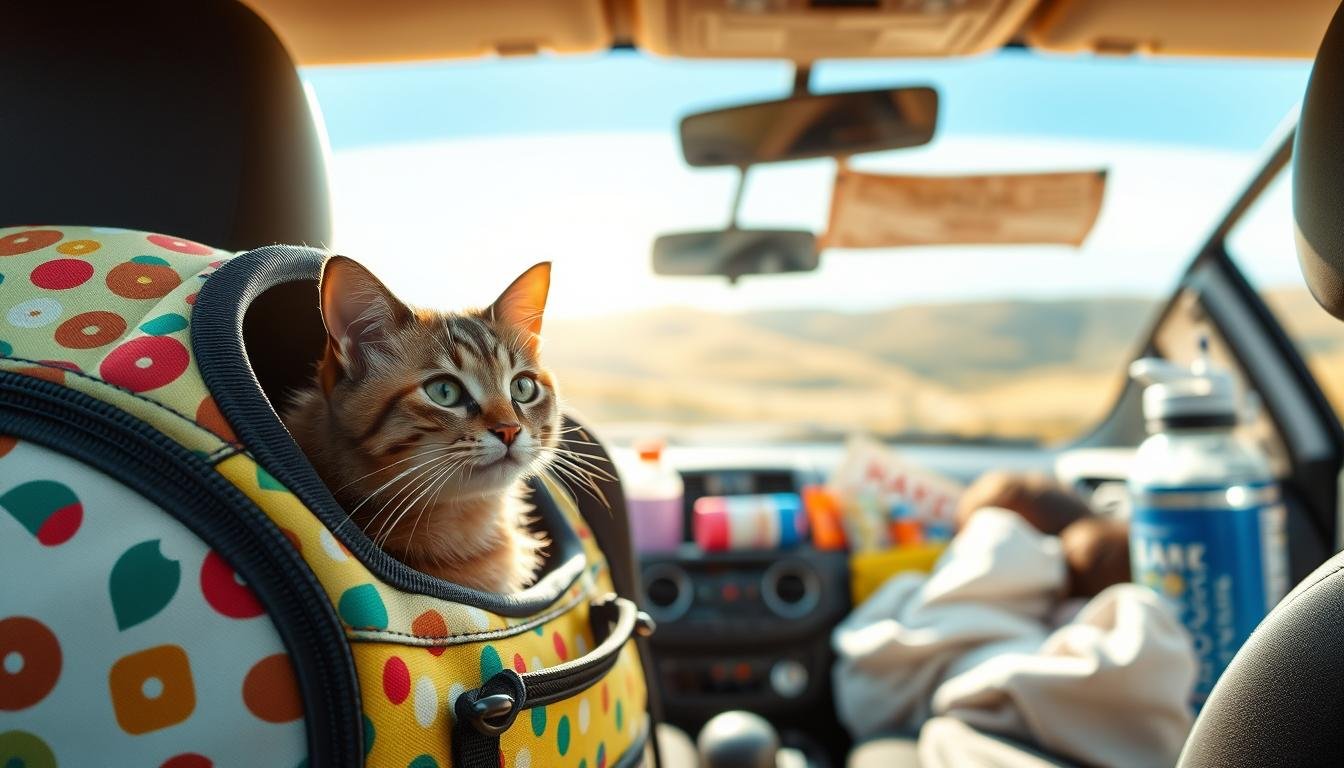
How to Travel with a Cat in a Car
Traveling with your cat in the car can be fun with the right prep. So let’s get started with learning how to travel with a cat in a car. It’s key to plan ahead to keep you and your cat comfy and safe on the trip.
To get your cat ready for car travel, start by picking the right carrier. Then, pack what your cat needs for the journey. Make sure your cat is safe and comfy. By doing these steps, you’ll make the trip good for both you and your pet.
Key Takeaways
- Prepare your cat for car travel to reduce stress.
- Choose a suitable carrier for your cat’s comfort and safety.
- Pack essential items for your cat’s well-being during the journey.
- Ensure your cat’s safety by following proper travel guidelines.
- Plan ahead to make the car journey enjoyable for both you and your cat.
Preparing Your Cat for the Journey
Getting your cat ready for a car trip is key. A good trip depends on how well you prepare them. You need to know what your cat needs for comfort and safety in order to know how to travel with a cat in a car .
Understand Your Cat’s Temperament
Every cat is unique, with their own personality. Knowing your cat’s temperament is important for car travel. Some cats get anxious, while others stay calm.
Watch how your cat acts in different situations. This helps you meet their specific needs. For anxious cats, extra steps to calm them down might be needed.
Familiarize Your Cat with the Carrier
Getting your cat used to their carrier is crucial. The carrier is their safe spot during travel. They need to feel safe and comfortable in it.
Start by leaving the carrier open for your cat to explore. Place treats or toys inside to encourage them to enter. Gradually increase the time they spend in it to build comfort.
Schedule a Pre-Trip Vet Visit
A vet visit before your trip is essential. Your vet can give advice on preparing your cat. They can also recommend precautions or medications.
Talk about your travel plans with your vet. Mention the trip’s length and your cat’s specific needs. This is also a chance to get a health certificate, if needed.
Choosing the Right Carrier for Travel
Traveling with your cat can be smoother with the right carrier. This is a good first step to learn how to travel with a cat in a car. A good carrier keeps your cat safe, comfortable, and less stressed on trips.
Types of Carriers Available
There are many cat carriers out there, each with special features. Soft-sided carriers are light and easy to carry, perfect for travel. Hard-sided carriers, though, offer better protection and last longer.
Some carriers have cool features like ventilation, comfy bedding, and secure locks.
- Soft-sided carriers for ease and convenience
- Hard-sided carriers for enhanced protection
- Carriers with advanced ventilation and comfort features
Size and Comfort Considerations
The carrier’s size is key for your cat’s comfort. It should let your cat stand up, turn around, and lie down easily. Choose a carrier that’s well-ventilated and comfy.
Adding a familiar blanket or toy can also help calm your cat during travel.
When picking a carrier, think about how easy it is to use. Look for ones with secure, simple latches. Also, consider how easy it is to put your cat in and out.
Packing Essentials for Your Cat
Going on a road trip with your cat? Make sure to pack the right stuff for a comfy and stress-free ride. A good cat travel kit is key to keeping your furry friend happy and healthy.
Food and Water Supplies
Bring enough of your cat’s regular food for the whole trip, plus extra for delays. A portable food and water bowl makes mealtime easier. Don’t forget a refillable water container to keep your cat hydrated.
Litter and Cleanup Items
A litter box and litter are essential for any cat trip. Choose a portable, collapsible litter box for easy setup and cleaning. Pack a small scoop, poop bags, and some odor-controlling sprays or wipes to keep the car fresh.
Toys and Comfort Items
Familiar toys and comfort items reassure your cat in new places. Pack favorite toys, blankets, or beds for calm and fun. Bring new toys too to keep things exciting and prevent boredom.
With these essentials, you’re ready for a fun and stress-free road trip with your cat. Check the weather and road conditions before you go. Plan well for a smooth journey.
Safety First: Securing Your Cat in the Car
Keeping your cat safe in the car is crucial to prevent harm during the trip. Your cat’s safety is top priority when traveling. There are several ways to ensure they stay secure on the journey.
Using a Carrier Safely
Using a carrier that can be fastened to the seat with a seatbelt is a safe option. This keeps the carrier from moving, reducing injury risk. Choose a carrier that fits well in your car and has good ventilation for your cat’s comfort.
Harness and Seatbelt Options
You can also use a cat harness with a seatbelt for a secure ride. The harness should fit your cat snugly, and the seatbelt should be attached correctly. This setup keeps your cat safe and comfortable.
Make sure the harness is comfy for your cat and doesn’t cause stress. Be aware of the risks of harness and seatbelt use, like injury from a loose seatbelt.
- Choose a harness made for cats.
- Adjust the harness to fit your cat well.
- Follow the manufacturer’s guide for attaching the seatbelt.
Plan Your Road Trip with Your Cat
Planning a road trip with your cat needs careful thought. It’s important to make sure both you and your cat have a good time. Start planning early to make the trip enjoyable for your pet.
Choosing Cat-Friendly Destinations
When you’re planning, look for hotels, motels, or vacation rentals that let cats. Make sure they welcome cats and offer things for them to enjoy.
- Pet-friendly hotels with no weight or breed restrictions
- Vacation rentals that allow cats and offer separate areas for your pet
- State parks or outdoor spaces where you can take your cat for a walk
Mapping Out Rest Stops for Breaks
It’s key to plan rest stops along your way. These stops let your cat stretch, eat, and use the litter box. Think about how long your trip will be and what your cat needs.
Find rest stops with places for pets or parks nearby. Bring a portable litter box and your cat’s favorite toys. This makes the breaks more fun.
- Identify pet-friendly rest stops along your route
- Plan for regular breaks every few hours
- Bring necessary supplies like food, water, and a litter box
Feeding Your Cat on the Road
Going on a road trip with your cat means more than just bringing their favorite toys. You also need to think about their meals. Feeding your cat during a trip should be done carefully to avoid making them sick.
Portion Control and Meal Timing
Feed your cat a light meal a few hours before you leave. This helps prevent car sickness. Keeping their meal times regular can also keep them calm and happy during the trip.
Offering Snacks during the Journey
Snacks at regular times can be good. But, watch the size to avoid making them uncomfortable. Pick snacks that are easy to eat while moving and that your cat likes.
Planning your cat’s meals and snacks makes the trip better for both you and your pet. It ensures a stress-free journey.
Ensuring Hydration During Travel
Traveling with cats requires keeping them hydrated. This is key for their health and comfort. Proper hydration helps your cat stay well, even when traveling.
Dehydration can cause serious health problems. It’s important to know the signs and prevent it.
Signs of Dehydration in Cats
Spotting dehydration in cats is the first step. Here are some common signs:
- Dry mouth or gums
- Dark urine or decreased urination
- Lethargy or depression
- Loss of appetite
Tips for Easy Drinking in the Car
Make water easy for your cat to drink. Here are some tips:
- Use a portable water bottle or dish that fits in the carrier or near your cat’s resting place.
- Offer water at regular intervals during rest stops.
- Consider using a water dispenser that attaches to the carrier for easy access.
By focusing on your cat’s hydration, you can make car travel better for them. Make sure they have easy access to water.
Keeping Your Cat Calm and Comfortable
To make car travel less stressful for your cat, it’s vital to understand how to keep them calm and comfortable. Ensuring your cat feels secure and relaxed during the journey can significantly enhance the overall travel experience for both you and your pet.
Soothing Techniques for Anxious Cats
Several soothing techniques can help calm your cat during car travel. Gentle petting, soft talking, or providing a familiar toy can be very comforting. These methods help in distracting your cat from the stress of the journey and provide a sense of security.
Playing calming music or white noise can also create a peaceful environment within the car. Keeping a comfortable temperature and ensuring good ventilation is also beneficial.
The Role of Feliway and Other Products
Products like Feliway, which mimic natural feline pheromones, can significantly reduce your cat’s stress levels. Feliway is available in diffusers, sprays, or wipes and can be used in the carrier or car to create a calming environment. These products help in reassuring your cat that they are in a safe space, reducing anxiety and stress.
Other products, such as calming treats or supplements, can also be effective. But, it’s crucial to consult with your veterinarian before introducing any new products to ensure they are safe and suitable for your cat.
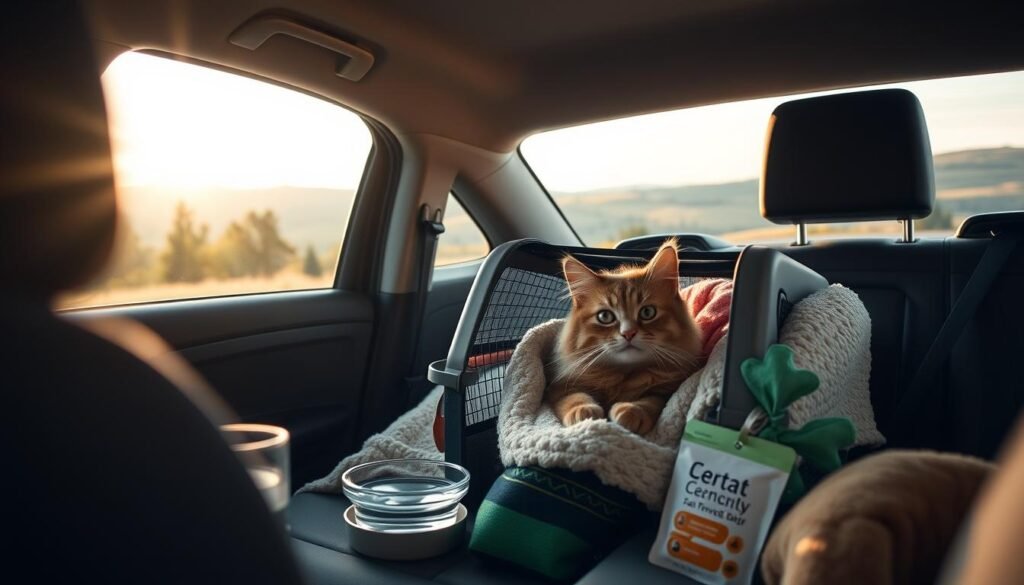
By combining these soothing techniques with the right products, you can create a more comfortable and less stressful travel experience for your cat. Remember, every cat is different, so it might take some experimentation to find what works best for your pet.
What to Do About Car Sickness
Car sickness is a common problem for cats during car rides. It makes them uncomfortable and can upset their owners. Knowing the signs and taking steps to prevent it can help.
Symptoms of Motion Sickness in Cats
Cats with motion sickness may show signs like vomiting, drooling, feeling tired, and not wanting to eat. Spotting these symptoms early is key to acting fast.
- Vomiting or retching during car travel
- Excessive drooling or salivation
- Lethargy or depression
- Whining or meowing
Tips to Prevent and Manage Car Sickness
There are ways to stop or lessen car sickness in cats. These include changing their diet, taking breaks, and getting advice from a vet.
- Feed a light meal before leaving to avoid an empty stomach.
- Don’t eat big meals during the trip to cut down on vomiting.
- Give regular breaks for fresh air and stretching.
- Consider talking to your vet about medication or other treatments.
By knowing the signs of car sickness and using these tips, you can make car rides better for your cat. For cats who really struggle with car sickness, seeing a vet is very important to find the best way to help.
Adjusting to New Environments
When you arrive at your hotel or rental, making your cat feel at home is key. A happy cat means a stress-free trip for both of you.
Acclimating to Hotels and Rentals
Choosing pet-friendly places is essential. Look for hotels or rentals that welcome pets. They should have the right amenities for your cat.
- Check if the hotel or rental has any pet-specific rooms or areas.
- Ensure that the accommodation is quiet and away from heavy foot traffic.
- Some hotels offer pet-sitting services or recommendations for local pet care.
Setting Up a Comfort Zone for Your Cat
Creating a cozy spot for your cat can really help. It should feel like home. Bring their favorite things to make them feel secure.
- Bring familiar items such as their favorite bed, toys, or blankets.
- Set up their carrier or bed in a quiet, draft-free area.
- Minimize exposure to new or stressful stimuli by keeping them in a quiet room initially.
By following these steps, you can make your cat’s new environment comfortable. This way, your road trip will be a success. Remember, preparation and attention to your cat’s needs are key.
Emergency Preparedness While Traveling
Traveling with your cat requires emergency preparedness. Being ready for any situation is key to keeping your cat safe and happy on the road.
Creating a Travel Emergency Kit
Make a travel emergency kit for your cat. It should have medical records, any needed medication, and a first-aid kit. These items are crucial in an emergency.
- Medical records and vaccination documents
- Prescription medication and a list of dosages
- A basic first-aid kit including bandages, antiseptic wipes, and tweezers
Identifying Local Emergency Vets
Find local emergency vets before you arrive. Knowing where to go for vet care can give you peace of mind. It ensures your cat gets help fast if needed.
- Research local vets and their emergency services
- Keep a list of emergency vet contacts handy
- Program important phone numbers into your phone
With a travel emergency kit and knowledge of local vets, your cat’s safety improves. This preparation helps you handle emergencies well. It makes your road trip safer and less stressful for your cat.
Post-Trip Cat Care and Routine
After a trip with your cat, it’s important to help them adjust back home. Make sure they feel comfortable in their environment. Simple cat car travel tips can help with this.
Behavioral Monitoring
Keep an eye on your cat’s behavior after traveling. Look for signs of stress, like changes in eating habits or hiding. If you see anything odd, talk to your vet for advice.
Maintaining Routine
Keeping your cat’s routine the same can help reduce stress. Stick to their usual meal times and let them enjoy their favorite spots. Creating a familiar environment is crucial.
By following cat-friendly car travel practices on your trip and at home, you can reduce your cat’s stress. This makes for a better experience for both you and your pet.
FAQ
How do I prepare my cat for car travel?
Start by understanding your cat’s personality. Get them used to their carrier. Also, take them to the vet before you go to make sure they’re healthy.
What type of carrier is best for traveling with my cat?
Choose a carrier based on your cat’s size and comfort. Look for ones that are safe, like those crash-tested and easy to secure.
What essentials should I pack for my cat when traveling?
Bring their regular food and water, a litter box, and cleaning supplies. Don’t forget toys and any medicine they need.
How can I ensure my cat’s safety during car travel?
Use a carrier that can be strapped to the seat. Or, get a cat harness. Always follow the instructions for both.
How often should I feed my cat during a road trip?
Give them a light meal a few hours before you leave. Offer snacks during the trip. Watch the portion sizes to avoid overfeeding.
How can I keep my cat hydrated during travel?
Make sure they have water easily accessible. Watch for signs of dehydration like dry mouth or dark urine.
What can I do to keep my cat calm and comfortable during car travel?
Use gentle petting and soft talking. Try giving them a familiar toy. Products like Feliway can also help reduce stress.
How can I prevent or manage car sickness in my cat?
Feed a light meal before you leave. Avoid heavy meals during the trip. Give them breaks for fresh air. Talk to your vet about medication if needed.
What should I do when arriving at a new destination with my cat?
Set up a quiet area for them with their carrier or bed. Provide familiar items. Minimize exposure to new things.
How can I prepare for emergencies when traveling with my cat?
Make a travel emergency kit with medical records and medication. Find local emergency vets at your destination.
How can I help my cat readjust to being back home after a trip?
Watch their behavior and keep regular routines. Make sure they have access to their usual spaces. Talk to your vet if they seem stressed.