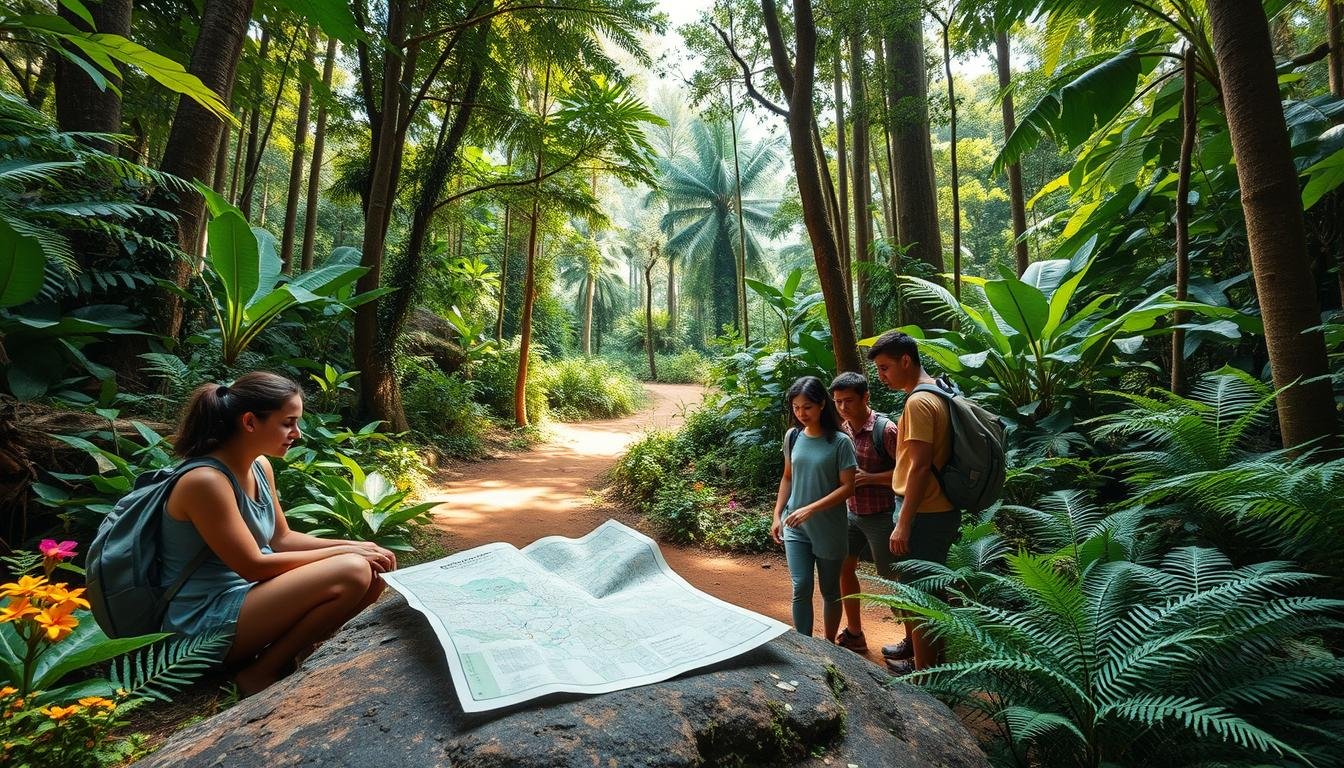
Jungle Trekking Tips For Beginners – Essential Hacks & Gear Guide!
Starting a jungle adventure is exciting, but you need to be ready. Let’s go over these jungle trekking tips for beginners. As a beginner, knowing what to expect and how to prepare is key.With the right advice, you can explore the dense jungle and see amazing views. A beginner’s guide will show you what gear to bring, safety tips, and how to move through the jungle. This will make your trip safe and fun.
Key Takeaways
- Understand the importance of preparation before embarking on a jungle trek.
- Learn how to choose the right gear and equipment for the journey.
- Discover essential safety precautions to take during the trek.
- Identify techniques to navigate through dense jungle terrain.
- Understand the value of guided tours for novice trekkers.
Understanding Jungle Environments
The first of the jungle trekking tips for beginners is to know your environment. Jungle environments vary greatly, from dense foliage in Khao Sok National Park to pristine wilderness in Sungai Kapur Virgin Jungle Reserve. Knowing these environments is key for a safe and fun trek.
Jungles worldwide have different ecosystems. Some have dense canopies and lots of rain, while others are more open with varied terrain.
Before trekking, it’s important to know about the plants, animals, and weather. Jungles are full of wildlife, including exotic birds and mammals. The dense plants also have many species, some useful, others dangerous.
Here are some key things to think about when exploring jungle environments:
- Climate and weather patterns: Jungles are hot and humid, with lots of rain all year.
- Diverse flora and fauna: You’ll see many different plants and animals.
- Terrain variability: Jungles have rough terrain, like hills and valleys, and sometimes ancient ruins.
- Potential hazards: Watch out for venomous animals, spiky plants, and other dangers.
If you’re planning to trek in Southeast Asia, more resources can help you navigate these areas.
By understanding and respecting the jungle, trekkers can enjoy their journey more. Whether you’re experienced or new, being ready is essential for a great jungle trek.
Essential Gear for Jungle Trekking
Next on our jungle trekking tips for beginners, is get the right gear. Jungle trekking needs specific gear for safety and comfort. The right equipment helps you tackle tough terrains and weather. It’s key to a great trekking experience.
Footwear is a top priority. You need sturdy, waterproof boots with good tread and ankle support. Leech socks offer extra protection against insects.
Clothing for humid weather is also crucial. Wear moisture-wicking fabrics to stay dry. Quick-drying pants and shirts protect you from the elements. Don’t forget a raincoat or poncho for sudden rain.
Other must-haves include a backpack with rain covers, a first-aid kit, and navigation tools like a compass and map. Carry a water filter or purification tablets for safe drinking water.
Key Essentials Checklist:
- Sturdy, waterproof hiking boots
- Leech socks and insect repellent
- Moisture-wicking clothing
- Raincoat or poncho
- Backpack with rain covers
- First-aid kit
- Navigation tools (compass, map)
- Water filter or purification tablets
By focusing on these essentials, beginners can prepare for jungle trekking. This ensures a safer and more enjoyable trek. Remember, good preparation and gear are the keys to success.
Preparing for Your Trek
Starting a jungle trek needs careful planning for a safe and fun trip. So the next of the jungle trekking tips for beginners is preparation. As a beginner, picking the right trail is crucial. It should match your skill level.
Learning about your destination is important. Knowing the weather, terrain, and dangers helps you pack right and plan your trip. For example, trails in Sungai Kapur VJR are special, but knowing the area is essential for a good journey.
Deciding how long your trek will be is also key. Beginners should start with shorter paths and get longer as they get stronger. Thinking about guided tours is smart for newbies. Guides offer great advice and help with tough spots. Learn more about planning your trip on our site: crafting your ultimate travel adventure.
Here are some top tips for new trekkers:
- Choose trails that are marked and well-documented.
- Pack light but include essentials like water, first aid kits, and proper clothes.
- Tell someone about your trek plans and when you’ll be back.
- Be ready for weather changes.
By following these tips, you’ll be ready for your jungle trek. Remember, good planning makes your trek safe and enjoyable.
Safety Precautions
Staying safe on a jungle trek starts with knowing and preparing for dangers. Taking the right steps can greatly improve your adventure.
Drinking enough water is crucial. That is the most important of the jungle trekking tips for beginners. The jungle’s dense plants and hot weather can cause dehydration fast. Always drink water during your trek. And unless you have a water purifier with you don’t drink from the streams.
Walking on tricky terrain is another big safety issue. The jungle has steep slopes, slippery paths, and hidden dangers. Wearing the right shoes and trekking poles can help avoid falls. For more tips on hiking safety, check out hiking safety guidelines.
It’s also important to protect yourself from bugs. Mosquitoes and ticks can carry diseases. So next on the list of jungle trekking tips for beginners is using bug spray and wearing protective clothes can help avoid bites.
- Wear long-sleeved shirts and pants to cover your skin.
- Apply insect repellent containing DEET, picaridin, or oil of lemon eucalyptus.
- Avoid peak insect hours, usually dawn and dusk.
By following these safety tips, you can have a safer and more fun jungle trek. Being ready is the first step to a great adventure.
Building Physical Fitness
Jungle trekking is an adventure that demands preparation, starting with physical fitness. To fully enjoy the experience and tackle the challenges that come with it, having a good level of physical endurance is crucial.
Improving your physical fitness before embarking on a jungle trek involves a combination of cardiovascular exercises, strength training, and flexibility exercises. Cardiovascular exercises such as running, cycling, or swimming can enhance your endurance, allowing you to trek for longer periods without fatigue.
Strength training is also vital as it helps in building muscle, particular in your legs, which are crucial for trekking. Exercises like squats, lunges, and leg presses can be very beneficial. Also, incorporating flexibility exercises, such as yoga or stretching routines, can improve your range of motion and reduce the risk of injury during the trek.
To get started, consider the following routine:
- Cardio exercises: 3 times a week, 30 minutes per session
- Strength training: 2 times a week, focusing on lower body
- Flexibility exercises: 2-3 times a week, holding each stretch for 15-30 seconds
By focusing on building your physical fitness, you’ll not only enhance your jungle trekking experience but also ensure a safer and more enjoyable journey.
Jungle Navigation
Effective jungle navigation uses many techniques and tools for a safe and fun trek. The dense jungle makes it hard because of the lack of landmarks and similar surroundings.
A map is a key tool for navigating the jungle. A detailed topographic map helps trekkers understand the terrain and find routes. It’s important to pick a map that’s up-to-date and accurate.
Compasses are also crucial for navigation. They help trekkers find their direction and stay on track. Using a compass with a map makes navigation more accurate.
Modern technology has brought GPS devices into jungle navigation. GPS gives precise location info, which is very helpful in dense jungles where other methods fail.
Knowing landmarks is vital for jungle navigation. Landmarks include rivers, mountains, and unique trees. Remembering these helps trekkers navigate the jungle better.
Key Navigation Techniques
- Using maps and compasses together for accurate navigation
- Employing GPS technology for precise location tracking
- Identifying and remembering natural landmarks
- Observing the sun and stars for directional guidance
By using these techniques and tools, trekkers can navigate the jungle safely and effectively. Knowing how to navigate the jungle is essential for any jungle trekking adventure.
Essential Survival Skills
Survival skills are key for any jungle trek. They give trekkers the knowledge to move safely through dense areas. Learning these skills is crucial for a safe and fun trip.
Basic first aid is a must for jungle trekking. Knowing how to treat injuries like cuts and snake bites is vital. Always carry a first aid kit with bandages, antiseptic wipes, and pain relievers.
Fire-making is another important skill. Fire keeps you warm, cooks food, and signals for help in emergencies. Use lighters, matches, or flint and steel to start a fire. It’s also important to know how to keep a fire safe.
Foraging for food is also essential. The jungle has many edible plants. But, it’s important to know which plants are safe to eat. Learn about local plants before you go.
Key Survival Skills to Master
- Basic first aid techniques
- Fire-making methods
- Foraging for edible plants
- Navigation and orientation
- Shelter building
Mastering these survival skills makes jungle trekking safer and more enjoyable. Consider training or going with experienced guides to learn more.
Respecting Nature
When you go into the jungle, remember you’re a guest in a delicate place. The thrill of jungle trekking is not just the adventure. It’s also about connecting with nature in its purest form.
Respecting nature means following the Leave No Trace principles. This means not leaving any sign of your visit. Dispose of waste properly, don’t harm plants, and don’t take anything from nature.
To follow these rules, you can take a few steps. Always carry a water filter or purification tablets to reduce plastic waste. Stay on the trails to avoid erosion and damage. And make sure your campsite is left as you found it.
Guidelines for Wildlife Encounters
Meeting wildlife is a thrilling part of jungle trekking. But it’s important to do it right.
- Keep a safe distance from animals to not stress them.
- Never feed wildlife, as it can harm their diet and behavior.
- Be quiet and aware of your surroundings to avoid startling animals.
By following these tips and Leave No Trace principles, you help keep the jungle safe. It’s also key for novice trekkers to understand the importance of respecting nature. This prepares you for a great jungle trek.
Before you go, learn about the local environment and weather. Knowing what to expect and respecting nature will make your hike unforgettable.
Mental Preparedness for Trekking
Jungle trekking is not just a physical challenge. It also tests your mental strength.
To face jungle trekking’s hurdles, you need a strong mind. Managing your anxiety and being open to adventure are key.
- Practice mindfulness and meditation to boost your mental strength.
- Imagine yourself overcoming obstacles during your trek.
- Learn about the jungle to lessen fear and uncertainty.
Mental readiness can greatly improve your jungle trekking adventure. It’s about believing in your ability to conquer challenges.

When you start your jungle trek, remember mental toughness is as vital as physical fitness. The right mindset helps you enjoy the journey and make the most of it.
Beginners should start with shorter treks to build endurance. Trekking with an experienced guide or group offers support and guidance.
Enjoying the Journey
As you start your jungle trekking adventure, remember to take breaks. Appreciate the beauty around you. With the right essentials, you’ll be ready to enjoy the journey.
Beginner-friendly tips say to observe wildlife, vegetation, and scenic views. Taking photos or journaling your experiences can make it even better.
By following beginner tips and being aware of your surroundings, you’ll dive into the jungle’s natural beauty. So, take a deep breath, relax, and enjoy the journey.
FAQ’s
What should I wear for jungle trekking?
Choose lightweight, breathable clothes. Also, pick sturdy hiking boots or shoes with good grip. This helps in humid and slippery jungle conditions.
How do I choose the right jungle trek for my experience level?
Research your destination well. Look at the terrain, elevation, and distance. Pick a trail that fits your fitness and experience.
What are the essential safety precautions for jungle trekking?
Stay hydrated and be aware of your surroundings. Watch out for hazardous terrain. Also, protect yourself from insects and wildlife.
How can I improve my physical fitness for jungle trekking?
Do cardio, strength training, and flexibility exercises. These help build endurance for jungle trekking.
What are the basics of jungle navigation?
Learn to use maps, compasses, and GPS. Also, recognize landmarks to stay on track.
What survival skills are necessary for jungle trekking?
Know basic first aid, fire-making, and how to forage for edible plants. These skills are crucial for safety in the jungle.
How can I respect nature during my jungle trek?
Follow Leave No Trace principles. Be mindful of your impact on the environment. Also, respect wildlife by keeping a safe distance and not littering.
How can I manage anxiety and stay mentally prepared for jungle trekking?
Focus on your training and visualize success. Use deep breathing and positive self-talk to manage anxiety.
What are some beginner-friendly jungle trekking tips?
Start with shorter treks and stay hydrated. Be prepared for changing weather. Don’t hesitate to ask for help when needed.
How can I stay safe from insects and wildlife during jungle trekking?
Wear protective clothing and apply insect repellent. Be aware of your surroundings to avoid encounters with insects and wildlife.