The Top 10 Most Walkable Cities in the USA
The United States has many cities that are great for walking. But who made it to our list of the most walkable cities in the USA? These are the cities that have good paths and places for people to walk as it makes it easy for both locals and visitors to get around without cars.
Cities like New York City, San Francisco, and Boston are among the top walkable cities. Walk Score says so. These cities are perfect for those who love to walk. They have lively city centers and beautiful waterfronts.
In this article, we will look at the top 10 most walkable cities in the US. We’ll talk about what makes them special.
Most Walkable Cities in the USA Key Takeaways
- Top walkable cities in the US according to Walk Score
- Characteristics of pedestrian-friendly cities
- Benefits of walking in urban areas
- Examples of vibrant city centers and waterfront areas
- Ranking of the top 10 most walkable cities
What Makes a City One of the Most Walkable Cities in the USA?
A city’s walkability depends on having amenities close by. Walkable cities offer easy access to services and attractions without cars.
Key Features of the Most Walkable Cities in the USA
Walkable neighborhoods mix housing, local businesses, and community spaces. This mix lets people live, work, and play without cars.
- Proximity to amenities like parks, shops, and restaurants
- Pedestrian-friendly infrastructure, including sidewalks and crosswalks
- A mix of housing types to support a diverse community
These features make neighborhoods livable and charming.
Benefits of the Most Walkable Cities in the USA
Living in a walkable city has many benefits. Residents get to walk more, improving their health.
Walkable cities also have less traffic. This makes living there more relaxed and enjoyable.
- Improved physical health through regular walking
- Reduced traffic congestion and lower emissions
- A stronger sense of community among residents
By focusing on pedestrian-friendly design, cities can build vibrant, healthy communities. These communities benefit both residents and the environment.
The Most Walkable Cities in the USA
America has many walkable cities, from old East Coast cities to lively West Coast ones. These cities are ranked by their walkability scores. These scores look at things like walking paths, mixed land use, and access to shops and services so here’s the top 4 most walkable cities in the USA.
Most Walkable Cities in the USA – #1. San Francisco, California
This compact, hilly city on a seven-by-seven-mile peninsula is consistently ranked as one of the most walkable cities in the USA. Its dense, mixed-use neighborhoods, outstanding public transit network (Muni, light rail, and BART), and proximity of amenities mean residents rarely need a car. Walking in San Francisco is a key part of the lifestyle, easily connecting you to world-class parks, attractions, and diverse cultural hubs like Chinatown, the Mission District, and Fisherman’s Wharf, often via historic or pedestrian-focused infrastructure.
Most Walkable Cities in the USA – #2. New York City, New York
The ultimate American walking city, New York’s legendary walkability is rooted in its grid system, extreme population density, and the presence of the world-class subway and bus systems. Major parts of Manhattan, including the central business district, offer a platinum-level pedestrian experience where two-thirds of residents walk or take transit to work. Innovative urban planning policies like Vision Zero and permanent Open Streets programs continue to enhance safety and reclaim road space for public use, solidifying its status as a global leader in car-free living. That’s why it’s number 2 on the list of the most walkable cities in the USA.
Most Walkable Cities in the USA – #3. Boston, Massachusetts
Boston is the classic New England walking city, with a history and urban layout that predate the automobile. Its modest size and dense core, characterized by narrow, winding, colonial-era streets, naturally promote pedestrian travel. Famous walking routes like the 2.5-mile Freedom Trail and the cobblestone streets of Beacon Hill immerse visitors in history, while the city’s network of green spaces, including the Boston Common and Public Garden, ensures a pleasant journey between its diverse neighborhoods. That’s why it’s near the top of the list of the most walkable cities in the USA.
Most Walkable Cities in the USA – #4. Washington, D.C.
The nation’s capital is a highly walkable city, meticulously planned for accessibility and movement. Its walkability is particularly strong in the central corridors and historic neighborhoods, where high population density and robust public transportation (the Metro) support a car-optional lifestyle. The core of D.C. allows residents and visitors to stroll between world-class museums, monuments, government buildings, and lively residential areas with ease, leading to a high percentage of residents who walk to work. Washington D.C. is pretty high on the list of the most walkable cities in the USA.
Most Walkable Cities in the USA – #5. Jersey City, New Jersey
Directly across the Hudson River from Manhattan, Jersey City has rapidly emerged as a highly walkable hub, particularly along its vibrant waterfront. Its compact downtown and older neighborhoods feature a dense mix of residential towers, retail, and dining options that are easily accessible on foot. The city benefits from excellent public transit connections to New York City via the PATH train, and its extensive Hudson River Waterfront Walkway provides 18.5 miles of scenic, car-free pathways for recreation and commuting.
Most Walkable Cities in the USA – #6. Chicago, Illinois:
Known for its sensible grid layout, Chicago provides a highly structured and accessible walking environment. The city’s walkability is anchored by its world-famous central business district, The Loop, which contains theaters, museums, and countless dining options within easy walking distance. Furthermore, its extensive system of walking trails, pedestrian-designated roadways, and the accessibility of the CTA public transit system make navigating vast portions of the Windy City easy and enjoyable on foot.
Most Walkable Cities in the USA – #7. Miami, Florida:
While much of South Florida is defined by suburban sprawl, Miami’s dense urban core and historic neighborhoods offer surprisingly high walkability. Areas like Downtown, Brickell, and Miami Beach boast mixed-use developments, high-rise living, and a continuous stream of shops and restaurants that are connected by well-maintained sidewalks and the free Metromover light rail. This urban evolution has shifted focus from car culture to vibrant street life, allowing for a genuinely pedestrian experience in the heart of the city. Because of this Miami also made it to the list of the most walkable cities in the USA.
Most Walkable Cities in the USA – #8. Newark, New Jersey:
Newark’s walkability is concentrated in its historic and commercial districts, making it one of the most pedestrian-friendly urban centers in the region. Neighborhoods like the Central Business District, North Ironbound, and University Heights feature a dense mix of residential, commercial, and educational institutions all within close proximity. A blend of historic architecture, easy access to transportation hubs, and local attractions like Military Park and the Prudential Center make day-to-day life convenient without needing a personal vehicle.
Most Walkable Cities in the USA – #9. Oakland, California:
As San Francisco’s East Bay neighbor, Oakland offers a great balance of accessibility and outdoor spaces, with several highly walkable neighborhoods. Areas surrounding Lake Merritt, the Uptown District, and Jack London Square are filled with local shops, vibrant arts scenes, and excellent dining, all connected by easy-to-navigate streets. Access to BART (Bay Area Rapid Transit) further enhances its walkability by providing quick transit throughout the Bay Area, and the city offers vast urban hiking and nature options right on its doorstep.
Most Walkable Cities in the USA – #10. Philadelphia, Pennsylvania:
Rich in history, Philadelphia’s walkability is a legacy of its original founder, William Penn, who designed the city’s grid system to be a “greene Countrie Towne.” This historic, compact layout, particularly in areas like Center City, Old City, and Rittenhouse Square, allows pedestrians to easily access the city’s main attractions, from Independence Hall to the Reading Terminal Market. The high density of amenities and excellent public transit ensures that life in the heart of Philly is easily navigated entirely on foot. So Philly made it to number 10 on the list of the most walkable cities in the USA.
Exploring City Infrastructure of the Most Walkable Cities in the USA
Infrastructure is vital for making cities walkable and sustainable. A good infrastructure plan helps people move around and improves their quality of life. Cities with walkable designs have better connections, less traffic, and a lively community.
Public Transportation Options in the Most Walkable Cities in the USA
Good public transport is essential for the most walkable cities in the USA. Places like New York and San Francisco have strong public transport systems. This makes it easy for people to move around without cars. For more on walkable cities, check out this resource that lists the top walkable cities in the U.S.
A good public transport system includes buses, trains, and subways. These should be reliable, efficient, and easy to use. This reduces car use and cuts down on traffic, making the city more walkable.
Sidewalk Quality and Accessibility in the Most Walkable Cities in the USA
Sidewalk quality and accessibility are key for a walkable city. Sidewalks that are well-kept and free of obstacles help pedestrians move safely and easily. They need good lighting, clear paths, and easy-to-use crossings.
Cities focused on walkability often check their sidewalks regularly. They fix any problems they find. This makes walking better for everyone in the city.
Community and Cultural Amenities
Walkable neighborhoods are filled with local culture and community spirit. They have vibrant cultural scenes, many parks, and a variety of local businesses. This makes them great places to live.
Parks and Green Spaces
Parks and green spaces are key in walkable communities. They offer places for fun, rest, and meeting others. Well-kept parks can also boost community spirit and well-being.
Here are some perks of parks and green spaces in walkable cities:
- They make the area look better
- They offer chances for exercise
- They’re perfect for community events
Local Businesses and Restaurants
Local businesses and restaurants add to a neighborhood’s charm. They give residents easy access to what they need. Supporting local businesses can also grow the local economy and community identity.
For example, cities listed as best vegan-friendly cities worldwide have a rich culture of local eateries and shops. They meet the needs of a diverse community.
Here are some advantages of local businesses in walkable areas:
- They offer a wide range of shopping and dining options
- They help the local economy
- They foster a stronger community
Walkability and Health
Cities that focus on walkability see a big improvement in their residents’ health. The way neighborhoods are designed and the city’s infrastructure matter a lot. They help people stay active and lower the chance of health problems.
Impact on Physical Well-being
Living in areas that are easy to walk around can help fight obesity and other health issues. Safe, walk-friendly paths encourage people to move more.
Research shows that places with high walkability scores have fewer chronic diseases. This is because walking is seen as a better way to get around.
Benefits for Mental Health
Walkable areas also boost mental health. Walking outside can lower stress and anxiety, making people feel better mentally.
These neighborhoods also help people feel connected to their community. Being around others in public spaces is key for emotional health.
How Walkability Influences Property Values
Neighborhoods with high walkability scores see higher property values and a stronger community bond. This is because people want to live close to amenities. It makes the community more lively and interactive.
Real Estate Trends in the Most Walkable Cities in the USA
Walkable cities have booming real estate markets. Homes in these areas are in high demand. Buyers love the convenience and lifestyle of walkable neighborhoods.
Some key trends in walkable areas include:
- Increased property values over time
- Higher demand for housing
- A mix of residential and commercial properties
Investment Opportunity for Homebuyers
Homes in walkable neighborhoods often increase in value. They are a smart investment for buyers. Living in these areas offers practical benefits like less need for cars and more chances for exercise.
For those looking to invest, consider these factors:
- Proximity to public transportation
- Access to local amenities like parks and shops
- The overall walkability score of the neighborhood
Challenges in Creating Walkable Cities
Making cities walkable and vibrant is a big challenge in urban planning. As cities grow, they must balance development with keeping neighborhoods unique. This balance is key to a city’s success.
Urban Sprawl and Its Effects
Urban sprawl is a big problem for walkable cities. It spreads out development, making it hard to get around without a car. This hurts the environment and city life.
Urban sprawl causes traffic jams, air pollution, and less community interaction. To fight these, cities are turning to compact, mixed-use areas. These areas encourage walking.
Balancing Development with Community Needs
It’s important to grow cities while keeping their character. This means adding public spaces and making streets safe for walkers. Mixed-use areas that serve residents are also key.
Here are some ways to achieve this balance:
- Use zoning rules to support mixed-use areas
- Invest in public transport to cut down on car use
- Build pedestrian-friendly streets with good sidewalks and crosswalks
By using these methods, cities can become more walkable and lively.
Case Studies of Successful Walkable Cities
Urbanization is changing America, and cities like Portland and Seattle are leading the way. They’ve made walking easier and more enjoyable and are included in our list of the most walkable cities in the USA. These cities show what other places can do to improve their walkability.
Portland, Oregon: Innovation in Urban Design
Portland is known for making walking easy and fun. It has a grid system and lots of sidewalks and paths. This makes walking around the city a breeze.
- Portland focuses on density and mixed-use areas, cutting down on long commutes.
- The city has many parks and green spaces, like Forest Park, for a break from the city.
- Portland’s walkability score is high, showing it’s great for walking as a main way to get around.
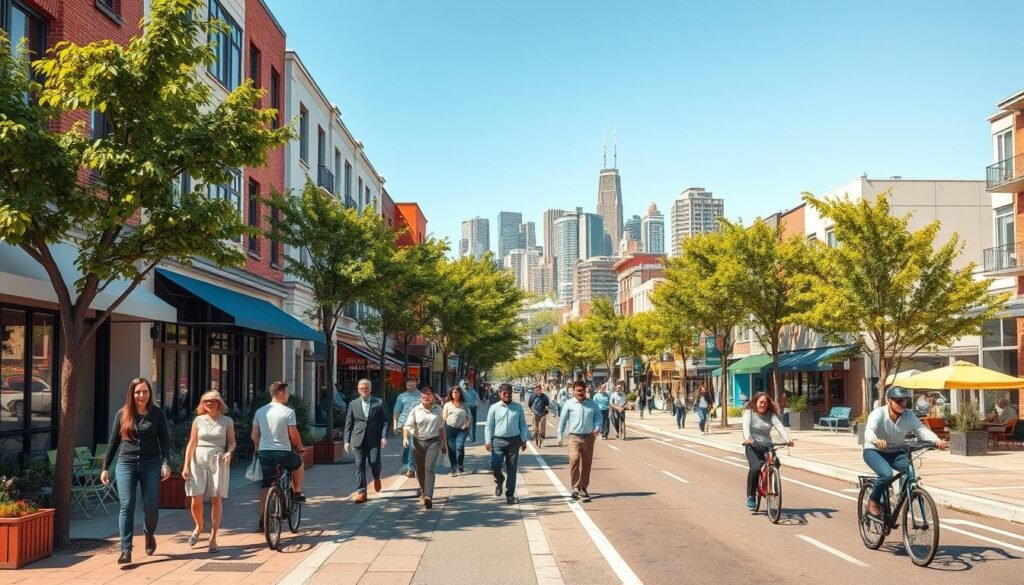
Seattle, Washington: Waterfront Redevelopment
Seattle has changed a lot, thanks to its waterfront project. This project made the city look better and walkable.
The project includes:
- Wider sidewalks and paths along the waterfront.
- New public areas and parks for people to meet and interact.
- Features that make the waterfront area easier for everyone to visit.
Seattle’s walkable city planning is a guide for other cities. It shows how to make urban areas better for walking and community.
The Future of Walkable Cities
Urban planning is changing, making cities more walkable. As cities grow, making them friendly for walkers is key.
Trends Shaping Urban Development
Several trends are changing urban walkability. These include:
- Mixed-use development, combining homes, shops, and parks to cut down on travel time.
- Transit-oriented design, making areas around public transport hubs walkable and dense.
- Adding green spaces and parks to make cities look better and be healthier.
These changes make cities better for walking and living in.
The Role of Technology in Walkability
Technology is big in making cities walkable. Smart systems, better paths, and apps help walkers.
Technology is used in many ways, like:
- Smart traffic systems to move cars faster and reduce jams.
- Data to understand how people walk and plan cities better.
- Apps for finding the best walking routes and local spots.
Technology makes walking in cities safer, more fun, and efficient. It boosts the appeal of walking in cities.
How to Determine Walkability Scores
Figuring out how walkable a city or neighborhood is involves looking at several key factors. Walkability scores are key in urban planning. They help make walkable cities in the USA.
Rating Systems and Metrics Used
Walk Score is a top tool for checking walkability. It looks at things like walking paths, the mix of land use, and access to shops and services. Other systems also look at road connections, how busy the roads are, and the quality of sidewalks.
The Walk Score algorithm checks things like:
- How close you are to places like grocery stores, restaurants, and fun spots
- How dense the population is and the mix of land use
- How well roads connect and how often you find intersections
Resources for Evaluating Neighborhoods
There are many online tools and resources to check a neighborhood’s walkability. Walk Score is a big name, giving detailed scores for cities and areas in the U.S.
Other tools include local government sites, urban planning reports, and community surveys. They offer important info on an area’s walkability.
Tips for Promoting Walkability in Your Community
Making your community walkable is a team effort. It involves residents, local businesses, and government working together. Together, they can build places that are good for walking and health.
Advocacy and Local Initiatives
Being an advocate is key to making streets better for walking. People can push for better sidewalks, more lights, and safe walking areas.
- Organize community events to raise awareness about the benefits of walkable communities.
- Collaborate with local businesses to support initiatives that promote walking.
- Engage with local government to advocate for policies that support walkability.
Engaging Residents and Stakeholders
Getting everyone involved is vital for walkability success. This can be done through meetings, surveys, and social media.
- Conduct surveys to understand the needs and concerns of the community.
- Host public meetings to discuss walkability projects and gather feedback.
- Utilize social media to promote walkability initiatives and encourage community participation.
By working together and using local efforts, communities can become more walkable. This makes them better for everyone.
Conclusion: The Importance Walkable Cities in the USA
Walkability is key in urban living, bringing many benefits. It improves physical health and strengthens community bonds. Cities that focus on walkability are among the best for walking. They offer lively, pedestrian-friendly spaces that boost everyone’s health and happiness.
Urban Walkability Trends
Urban walkability is changing how cities grow. It affects property values, local shops, and life quality. By supporting walkability, cities become more livable and sustainable. This benefits both locals and visitors.
Prioritizing Pedestrian Needs
Cities need to put pedestrians first for a walkable future. Investing in safe, accessible walking paths is essential. This creates a sense of community, encourages exercise, and improves the city experience.
FAQ
What makes a city one of the most walkable cities in the USA?
A walkable city has neighborhoods designed for pedestrians. They mix housing, local shops, and community areas. This makes it easy for people to get what they need without cars and included in the most walkable cities in the USA.
How do walkability scores work?
Walkability scores use several metrics. These include how good the pedestrian paths are, the mix of land use, and access to amenities. They give a full picture of a city’s walkability.
What are the benefits of living in a walkable city?
Living in a walkable city has many perks. It boosts physical health, cuts down on traffic, and strengthens community bonds. It’s a great place to call home.
How can I promote walkability in my community?
To boost walkability, you need a plan. This involves advocating, starting local projects, and working with people. It’s about making places friendly for walkers.
What are some examples of successful walkable cities in the US?
Cities like Portland and Seattle are leaders in walkability. They’ve invested in paths and community plans. They’re prime examples of how to make a city walkable.
How does walkability impact property values?
Walkable cities have strong real estate markets. Homes in walkable areas are more sought after. They’re valued higher because of their appeal and access to amenities.
What are some challenges in creating walkable cities?
One big challenge is urban sprawl. It can make cities less walkable as they grow. Cities must balance growth with keeping places walkable and community-focused.
How can technology improve walkability?
New tech and urban trends are shaping walkable cities. They focus on making places lively and safe for walkers. This supports the health and happiness of residents.