Packing Cubes: A Valid Travel Hack or a Gimmick?
Are you contemplateing using packing cubes next time you travel? We’ve all been there. You arrive at your hotel, exhausted from a long flight, and unzip your suitcase. Instead of a neat display of outfits, you are greeted by an explosion of fabric. Your socks have migrated into your shoe bag, your phone charger is tangled in your sweaters, and you have to dig through three layers of clothes just to find your pajamas.
This is the chaotic reality of the “stuff and sit” packing method.
For years, travelers have debated the most efficient way to maximize luggage space. Some swear by the classic rolling method championed by travel experts like Rick Steves, while others prefer the traditional fold. But recently, a third contender has taken over the travel sphere: packing cubes.
Influencers and frequent flyers claim these small zippered pouches are the secret to a perfectly organized bag. But do they actually save space, or are they just another accessory adding weight to your luggage?
To find out, I put them to the test. I packed the exact same carry-on suitcase twice—once using loose folding and rolling, and once using packing cubes. I also evaluated them against TSA security guidelines to see if they genuinely speed up the screening process.
Here is the truth about whether packing cubes are a valid travel hack or just an over-hyped gimmick.
The Experiment: Methodology
To keep this review honest and objective, I treated this like a science fair project (but with better clothes). I didn’t just want to see if everything fit; I wanted to measure accessibility, wrinkle levels, and how much “dead space” was left over.
The Variables: What I Packed
I used a standard 22″ x 14″ x 9″ carry-on suitcase, which fits the overhead bin requirements for most major US airlines.
To stress-test the bag, I packed a realistic list for a 5-day autumn trip—a notoriously difficult season to pack for because the layers are bulkier.
The Packing List:
-
5 T-shirts (Cotton and Merino wool blend)
-
2 Pairs of jeans/heavy trousers
-
1 Bulky sweater
-
1 Lightweight rain jacket
-
5 Pairs of socks and underwear
-
1 Toiletry bag
-
1 Pair of sneakers (packed inside)
Method A: The “Control” (No Cubes)
For the first attempt, I used the Ranger Roll technique for t-shirts and the traditional flat fold for the jeans and sweater. This is generally considered the most space-efficient way to pack without accessories.
-
The Strategy: I lined the bottom of the suitcase with the folded pants, placed rolled shirts in the grooves, and stuffed socks into the shoes.
-
The Experience: It fit, but barely. The “Tetris” factor was high. I had to sit on the suitcase to zip it shut, and the moment I opened it to grab the sweater, the tightly rolled t-shirts unraveled into a messy pile.
Method B: The “Test” (With Cubes)
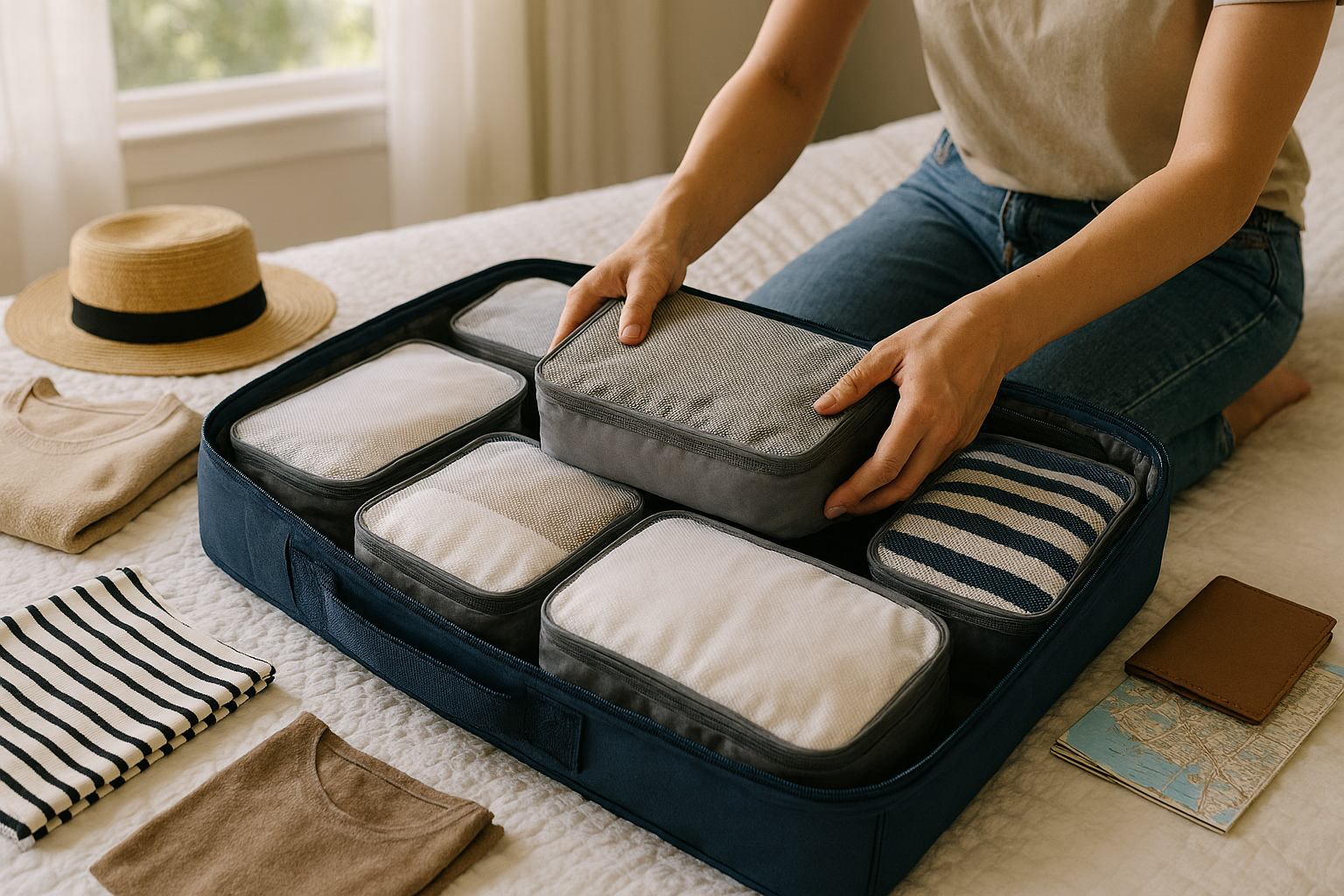
For the second attempt, I used a standard 4-piece packing cube set (one large, two medium, one small).
-
The Strategy:
-
Large Cube: Jeans and the bulky sweater.
-
Medium Cube 1: Rolled t-shirts.
-
Medium Cube 2: Shoes (in a shoe bag/cube).
-
Small Cube: Socks and underwear.
-
- The Experience: I categorized items by function rather than just stuffing them where they fit. I placed the cubes into the suitcase like building blocks.
The Results: Hype vs. Reality
After packing and unpacking my suitcase using both methods, the differences were stark. However, the results might surprise you—especially regarding which method actually saved the most physical space.
Space Savings: The Myth vs. The Math
This is the biggest point of contention in the travel community. Did the packing cubes magically create more room in my carry-on?
-
Method A (Loose Rolling): Surprisingly, loose rolling filled the corners of the suitcase better. Because t-shirts weren’t confined to a rectangular shape, I could stuff socks and underwear into the gaps around the wheel wells.
-
Method B (Standard Cubes): The cubes organized the load, but they didn’t significantly reduce the volume. In fact, the fabric of the cubes themselves added a tiny bit of bulk.
The Verdict: If you are using standard (non-compression) cubes, you do not gain extra space. You gain usable space. However, if space is your absolute priority, you should look specifically into compression packing cubes. These specialized cubes use a secondary zipper to mechanically squeeze the air out of your clothes, which did allow me to fit an extra hoodie that Method A couldn’t handle.
2. Accessibility: The “Exploding Luggage” Factor
This is where the experiment had a clear winner.
-
Method A: To get to the pair of jeans at the bottom of the stack, I had to remove the sweater and three rolled shirts. By the time I retrieved the jeans, my carefully rolled items were a jumbled mess.
-
Method B: I simply lifted the “Pants Cube” out, unzipped it, grabbed the jeans, and placed the cube back. The rest of the suitcase remained undisturbed.
The Verdict: Cubes are a game-changer for multi-destination trips. If you are moving hotels every two days, living out of cubes prevents you from having to repack your entire life every morning. It essentially turns your suitcase into a set of portable drawers.
3. The Wrinkle Test
Nobody wants to iron while on vacation. Which method kept the button-down shirt crisp?
-
Method A: Rolling is great for preventing creases, but the pressure of the other clothes pressing down on the rolls caused some flattening and odd crease lines.
-
Method B: Because the clothes inside the cubes are contained, they experience less friction against other items. I used a folder-style packer for my dress shirts, and they came out nearly pristine.
The Verdict: Cubes win for formal wear, provided you fold the clothes carefully inside the cube.
4. The Security Check (TSA)
If you’ve ever had your bag pulled for manual inspection, you know the panic of a stranger rummaging through your underwear.
-
Method A: A nightmare. The agent had to lift piles of loose clothes to see what was triggering the scanner.
-
Method B: I simply handed the agent the specific cube that contained the dense object (my toiletry kit). They checked it, put it back, and I was on my way in 30 seconds.
The Verdict: Valid Hack or Gimmick?
After testing both methods on the exact same packing list, the answer is clear: Packing cubes are a valid travel hack, but not for the reason most people think.
If you are buying standard cubes expecting to magically shrink your clothes by 50%, you will be disappointed. In fact, standard cubes technically consume space because of the fabric and zippers.
However, they are worth the investment because:
-
They stop the “Explosion”: You can live out of your suitcase without destroying it.
-
They save time: Unpacking takes seconds—just move the cubes from bag to drawer.
-
They offer “Mental Space”: Knowing exactly where your underwear is (without digging through dirty laundry) reduces travel anxiety significantly.
Top Brand Recommendations
Not all cubes are created equal. Cheap zippers break, and weak mesh tears. Based on durability tests and traveler reviews, here are the top recommendations for every budget.
The “Buy It For Life” Pick: Eagle Creek Pack-It Reveal
If you want cubes that will survive a round-the-world trip, this is the gold standard. Eagle Creek invented the packing cube category, and their “Reveal” line features a durable mesh window so you can see what’s inside without unzipping it. Check it out here.
-
Best For: Frequent flyers and backpackers who are rough on their gear.
-
Why We Love It: The angled zipper design makes packing easier than traditional top-loaders, and they come with a lifetime warranty.
-
Check them out: Eagle Creek Pack-It Collection
2. The Premium “Tech” Pick: Peak Design Packing Cubes
These are widely considered the “Rolex” of packing cubes. They use a unique tear-away zipper system that allows you to access contents instantly. They also feature an internal divider that separates clean clothes from dirty laundry—a feature typically missing from cheaper sets.
-
Best For: One-bag travelers and gear junkies who appreciate clever engineering.
-
Why We Love It: They are compressible and expandable, meaning they adapt to your load. Plus, the fabric is self-healing (small punctures disappear with a rub).
-
Check them out: Peak Design Packing Cubes
3. The Best Value Set: Shacke Pak
You don’t need to spend a fortune to get organized. Shacke Pak consistently outranks competitors on Amazon because of its high-quality nylon and YKK zippers (rare at this price point). This set also includes a laundry bag, which is a massive bonus.
-
Best For: Families, vacationers, and first-time cube users.
-
Why We Love It: The “X-Design” stitching prevents the fabric from folding in the middle, keeping your clothes flat and wrinkle-free.
-
Check them out: Shacke Pak 5-Piece Set
4. The Space Saver: Gonex Compression Cubes
If your main goal is fitting more into a smaller bag, you need compression. Gonex offers an affordable alternative to premium brands. These cubes have a secondary zipper that mechanically squishes the air out of your clothes, significantly reducing bulk.
-
Best For: Overpackers and winter travelers carrying bulky sweaters.
-
Why We Love It: They offer impressive compression for a budget-friendly price, making them a favorite among budget travelers.
- Check them out here : Gonex compression cubes
Conclusion
Whether you are Team Roll or Team Fold, adding a set of packing cubes to your arsenal is the single easiest upgrade you can make to your travel routine. You might not save physical space, but you will save your sanity—and on a long trip, that is priceless.