Shark Cage Diving: Is It Ethical?
The thrill of shark cage diving has drawn in many around the world. It’s now a big industry, worth millions. This activity lets people see sharks up close in their home, helping us appreciate them more. But, the fast growth of this industry has raised big questions about its ethical side. Some see it as a good way to learn about and protect sharks. Others worry it might harm these amazing animals.
With more people wanting responsible shark tourism, we need to think about the ethics of shark cage diving. We must find ways to make it safe for both humans and sharks.
Key Takeaways
- The shark cage diving industry has experienced significant growth, driven by adventure tourism.
- Concerns have been raised about the ethical implications of shark cage diving.
- Proponents argue it supports shark conservation and education.
- Critics point out potential risks and stress to sharks.
- The need for responsible shark tourism practices is increasingly important.
What is Shark Cage Diving?
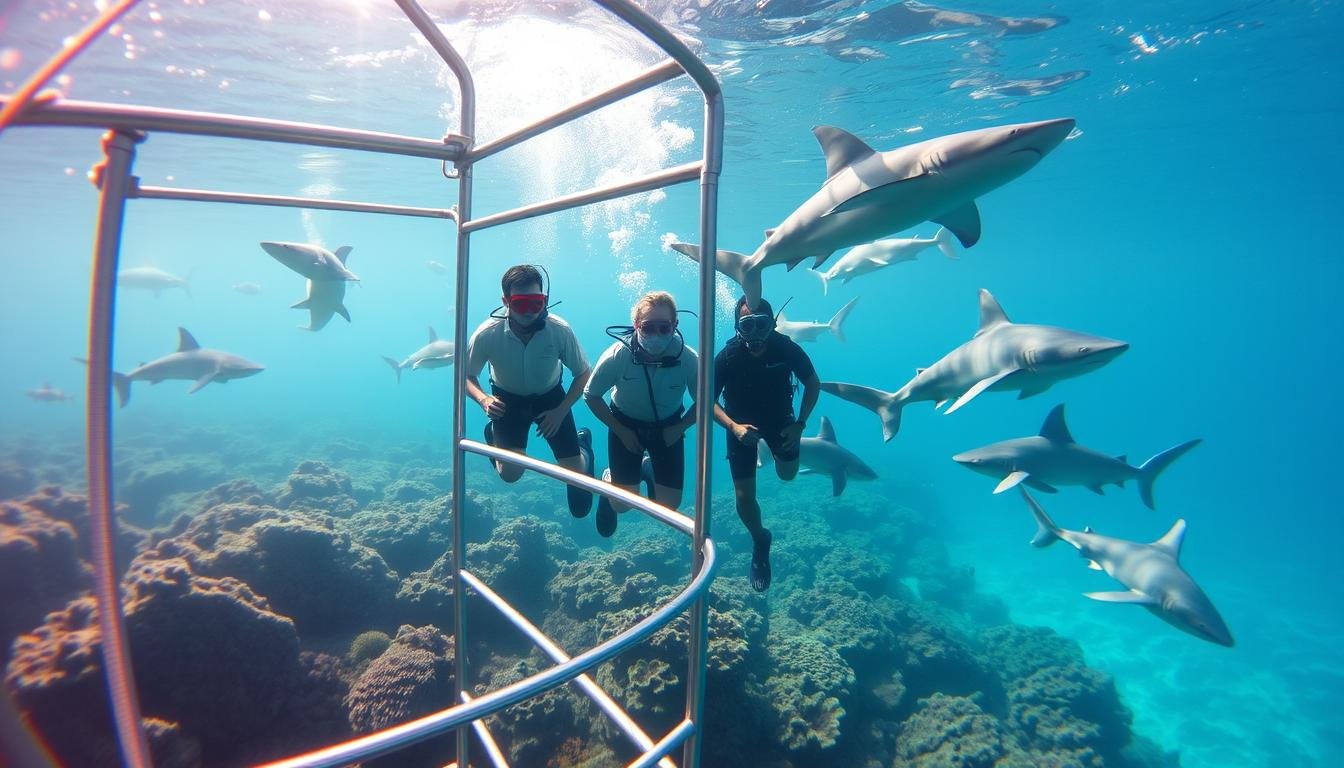
Shark cage diving lets you see sharks in their natural home. You sit in a steel cage underwater, often in places like Gansbaai, South Africa, or parts of Australia.
This activity is both safe and exciting. You’re in a strong steel cage that keeps you safe from sharks. The cage is lowered from a boat, and bait is used to attract sharks.
Places with lots of sharks are chosen for this activity. Gansbaai is famous for great white sharks. Australia’s Neptune Islands are also great for shark cage diving.
The shark cage diving experience can change based on where you are and when. Before diving, you get a briefing on what to expect. Safety is the top priority, with strict rules to keep everyone safe.
- The chance to see sharks up close in their natural home.
- A safe and controlled experience, thanks to the steel cage.
- Guided tours led by experienced professionals.
- Varied experiences depending on the location and time of year.
Knowing what shark cage diving is about helps you enjoy it more. It’s a key part of ethical wildlife tourism and shark conservation.
The Ethical Debate Surrounding Shark Cage Diving
Shark cage diving has sparked a lot of debate. Some say it helps sharks, while others worry about the safety of marine life. Supporters believe it can make people love and protect sharks more.
Those who back shark cage diving say it:
- Teaches people about sharks and why they’re vital in the ocean.
- Helps save sharks by bringing in money from diving tours.
- Changes how people see sharks, making them seem less scary.
But, there are also worries about how it affects the sea. Some concerns are:
- Sharks might start to see humans as food, leading to bad behavior.
- Divers and bait can mess up sharks’ natural ways of acting.
- There’s a chance divers could get hurt, which is very serious.
To lessen these problems, many diving places are changing how they do things. They use less bait, don’t feed sharks, and keep divers far away.
By knowing the ethical sides of shark cage diving, we can make diving better for everyone. This means safer and more respectful experiences for both humans and sea creatures.
Environmental Impact
Shark cage diving is getting more popular, but it’s affecting marine ecosystems. A big worry is the use of chum to attract sharks. This can change their natural behavior and harm other sea creatures or even people.
Chumming sharks to feed them is a problem. It makes them think humans are food sources. This can make sharks more aggressive towards people and dependent on chum. For more on the ethics of ecotourism and shark behavior, check out ethics in ecotourism.
Shark cage diving also affects the whole ecosystem. It can harm sharks and other sea animals. It’s important to support eco-friendly tours that don’t harm the environment.
These tours should reduce waste and not use chum. They should also help protect sharks and their homes. By choosing these tours, we can make shark cage diving good for the ocean, not bad.
The Role of Shark Conservation in Diving Ethics
Diving tourism is growing fast. This makes shark conservation more important for ethical diving. Shark cage diving lets people see sharks in their natural home. It helps people understand and appreciate these marine animals more.
Sharks are key to healthy oceans. Supporting shark conservation helps diving operators protect these creatures. Some, like those in South Africa, help by funding research and education.
- Promoting awareness and education about shark conservation
- Supporting conservation efforts through financial contributions or research participation
- Fostering a culture of respect and appreciation for sharks among divers and the broader community
Choosing responsible diving operators helps protect sharks. This makes diving better and supports ocean health.
Regulations Governing Shark Cage Diving
Rules for shark cage diving vary widely, showing how different places handle marine wildlife ethics. In the United States, for example, laws change a lot from state to state. Some places have stricter rules than others.
Different rules come from the unique environments and shark types in each area. Places famous for sharks, like South Africa and parts of Australia, have special rules. These rules help protect shark behavior and the ocean, following ethical wildlife tourism principles.
Worldwide, shark cage diving rules also differ. Some countries have strict rules, like limits on how many can dive, when, and how close to sharks. These rules help keep both divers and sharks safe, promoting responsible diving.
For shark cage diving to last, operators must follow local laws and use best practices. This means supporting conservation and ethical tourism. It’s key for the well-being of sharks and the ocean.
Following the rules helps protect sharks and their homes. It makes diving better and supports ocean conservation. This is good for everyone involved.
Alternatives to Shark Cage Diving
There are exciting ways to experience sharks without cage diving. Eco-tourism offers new options for those who love sharks. These alternatives focus on conservation and education.
Virtual reality shark experiences are a thrilling choice. They let you feel like you’re right there with the sharks. At the same time, they help spread the word about shark conservation.
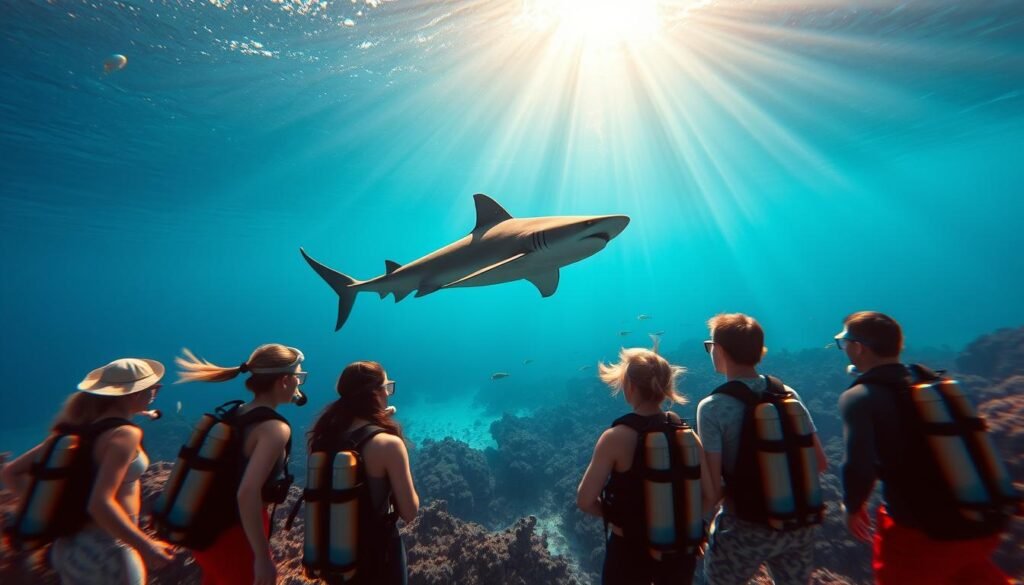
Eco-friendly shark tours are another great option. They let you see sharks in their natural home without cages. These tours also help local conservation efforts and support sustainable tourism.
- Virtual reality shark experiences
- Eco-friendly shark tours
- Shark conservation volunteering programs
Choosing these alternatives helps sharks and lets you have fun too. It’s a step towards protecting sharks for the future. Sustainable tourism is key for shark conservation.
Making an Informed Decision
When you think about shark cage diving, it’s key to make a choice that supports ethical shark diving. You should look into the operator’s methods and rules.
Ask important questions. For example, how do they reduce their environmental footprint? Do they help protect sharks and their homes? Are their guides experts in shark behavior and safety?
Picking a responsible shark tourism operator makes your dive better. These operators make sure you’re safe and help protect sharks and their places.
By choosing ethical operators, you help conservation efforts. And you get to enjoy this exciting adventure.
FAQ
What is shark cage diving, and is it safe?
Shark cage diving lets people see sharks up close in their natural home. It’s safe if you go with a trusted and careful operator.
What are the benefits of shark cage diving for shark conservation?
It teaches people why sharks are vital to our oceans. It also helps conservation by supporting it through tourism.
How does shark cage diving affect shark behavior?
It can change how sharks act, mainly when chum is used to draw them in. This can make them lose their natural ways and harm the ocean.
What are the regulations governing shark cage diving in the United States?
In the U.S., it’s watched by NOAA and the U.S. Coast Guard. Operators must follow rules and get permits to dive safely and responsibly.
Are there alternatives to shark cage diving for shark enthusiasts?
Yes, you can try eco-tourism like snorkeling or scuba diving without cages. Or, you can explore shark facts through virtual reality.
How can I ensure that my shark cage diving experience is eco-friendly and responsible?
Look for operators who care about the ocean and sharks. Make sure they don’t use chum and support shark conservation.
What questions should I ask a shark cage diving operator before booking?
Ask about their safety record and how they help sharks. Also, ask about their environmental policies, like chum use and waste handling, to support green shark tourism.