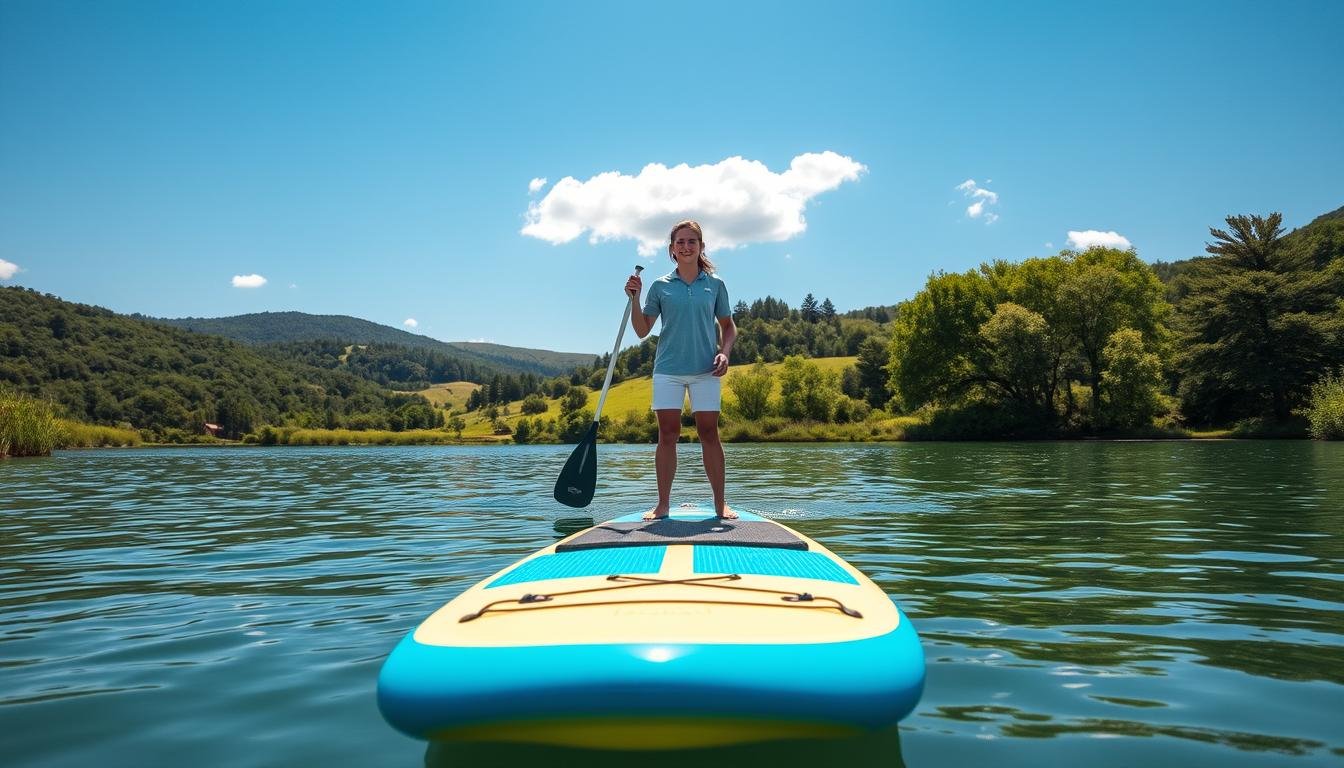
Stand Up Paddle Boarding For Beginners
Stand up paddle boarding for beginners is an exciting water sport to try out that opens up a lifetime of fun and adventure. It’s become very popular among water sports fans. Starting out can be tough because there are so many choices for equipment.
Finding the right board is key for a great time. With so many options, picking the best beginner stand up paddle board can be hard. This article will help you, offering tips and insights into stand-up paddleboarding.
Key Takeaways
- Understanding the basics of paddle boarding
- Tips for choosing the right equipment
- Insights into the best beginner stand up paddle boards
- Basic techniques for getting started
- Safety tips for beginners
What is Stand Up Paddle Boarding?
Stand up paddleboarding, or SUP, is a water sport that’s gaining popularity fast. It combines surfing and paddling. You stand on a big, stable board and use a long paddle to move through calm waters. Calm waters is the key for stand up paddle boarding for beginners.
This sport is fun and easy to learn. It lets you explore lakes, rivers, and coastal areas. Plus, it’s a great workout for your whole body.
It also has mental benefits. Being on the water helps you connect with nature. This can reduce stress and make you feel better.
You can paddleboard in different places, like calm lakes or coastal waves. Beginners start in calm waters. As they get better, they can try more challenging places.
To start paddleboarding, you need to know the basics. This includes the right equipment and techniques. Learning these will help you enjoy this exciting sport fully.
Essential Gear for Stand Up Paddle Boarding For Beginners
For beginners, picking the right paddle board and accessories is key for a fun start. First, choose a paddle board that fits your needs.
Inflatable paddle boards are great for beginners. They’re durable, easy to carry, and store well. Plus, they’re affordable and can handle rough use, perfect for newbies.
Rigid paddle boards offer better performance for frequent paddlers or those who want to learn advanced techniques. But, they cost more and are harder to move than inflatables.
Key Features to Consider in a Paddle Board
- Stability: A wider board is easier to balance on, great for beginners.
- Material: Choose durable materials for different water conditions.
- Size: Pick a board that matches your weight and paddling style.
Must-Have Accessories For Stand Up Paddle Boarding For Beginners
Along with a paddle board, you’ll need some key accessories for a safe paddle.
- Paddle: Get a light, adjustable paddle that fits you.
- Leash: It keeps your board to your ankle, so it doesn’t get lost if you fall.
- Personal Flotation Device (PFD): A PFD is vital for safety, even if you’re a strong swimmer.
By focusing on these gear essentials, beginners can have a safe and fun paddle boarding experience. Whether you’re looking for the best beginner stand up paddle board or need to know about beginner paddle board gear, understanding your needs is crucial for enjoying this sport.
Basic Techniques for Stand Up Paddle Boarding For Beginners
As a beginner, mastering paddleboarding techniques is key. Stand-up paddleboarding requires balance, strength, and coordination. But with practice, you’ll soon be gliding on the water.
Let’s begin with the basics of standing on the paddleboard. Your stance is key to balance. Here are some steps to get you started:
- Stand in the middle of the board with your feet parallel to each other and facing the direction of travel.
- Keep your feet shoulder-width apart to improve stability.
- Bend your knees slightly to lower your center of gravity.
- Keep your back straight and your core engaged.
Once you’re comfortable standing, it’s time to learn how to paddle. Proper paddling technique is essential for efficient movement and to avoid fatigue.
- Hold the paddle with both hands, ensuring your hands are shoulder-width apart.
- Insert the paddle into the water at a 45-degree angle, close to the board.
- Pull the paddle back towards you, using your core and back muscles for power.
- As you pull, twist your torso to maximize the stroke.
Turning and stopping are also crucial skills for beginners to master. To turn, use a sweeping motion with your paddle on the side you want to turn towards. To stop, insert the paddle into the water on one side and pull towards you, or use a reverse stroke.
By practicing these beginner paddle boarding tips and techniques, you’ll become more confident and comfortable on the water. Remember, the key to improving is consistent practice.
Tips for Choosing a Location For Stand Up Paddle Boarding For Beginners
For beginners, picking the right spot for paddle boarding is key. Look for calm and peaceful waters to start.
Choosing a safe and fun spot is crucial for beginner lessons. Lakes and slow rivers are great because they have calm waters. This makes it easier for newbies to learn and practice.
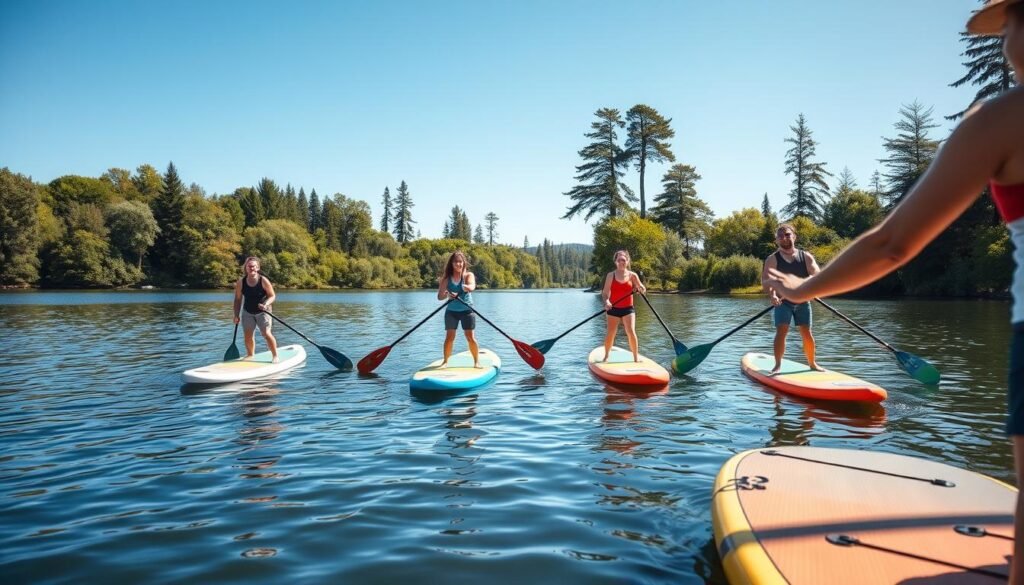
Before you go, check the water conditions. Knowing the currents, tides, and weather is important. Look at the local weather forecast and watch for any changes to stay safe and have fun.
- Look for locations with calm waters, such as lakes or slow-moving rivers.
- Check the weather forecast before heading out.
- Understand the local currents and tides.
Reading beginner SUP board reviews can help too. Many reviews talk about the best places to paddle. They share insights on where the board works best, helping you choose your spot.
By picking the right spot and watching the conditions, you’ll improve your paddle boarding. You’ll get the most out of your time on the water.
Safety Tips for Stand Up Paddle Boarding For Beginners
Paddle boarding is fun and exciting, but safety comes first. As a beginner, knowing and using safety tips can lower accident risks. It also makes your time on the water better.
Wearing a properly fitted life jacket is key. It can save your life if you fall off. Make sure your life jacket is Coast Guard-approved and fits your weight.
Knowing what’s around you is also important. Watch for swimmers, boats, and other paddle boarders. Also, be careful of rocks, weeds, and changing water currents.
Managing Weather Conditions
Weather can change fast on the water. It’s crucial to know when to go back to shore. Check the weather forecast before you go and be ready to stop if it gets bad.
- Always check the weather forecast before heading out.
- Be aware of changing wind patterns and increasing cloud cover.
- Know the signs of an approaching storm.
By following these tips, you can have a safe and fun paddle boarding experience. Always put safety first when you’re beginning stand up paddle boarding for beginners.
Joining the Paddle Boarding Community
Stand up paddle boarding for beginners is exciting. Connecting with others who love it can make it even better. Joining a paddleboarding community offers many benefits. You can learn from others, join events, and get tips from experienced paddleboarders.
Looking for local paddleboarding clubs or groups is a good start. Many areas have groups that host events, workshops, and meetups. These are great chances to meet new people and learn beginner tips.
Guided tours are another great way to start with stand up paddle boarding for beginners. They let you explore new places and paddle with others. Plus, you can find the best beginner SUP boards for your needs.
Online forums and social media groups are also useful. You can ask questions, share your experiences, and learn from others. These communities are full of helpful advice and support.
Being part of the paddleboarding community helps you grow and enjoy your journey more. It’s a rewarding experience that keeps getting better.
FAQ
What is the best type of paddle board for a beginner?
Beginners should look at inflatable paddle boards. They are stable, durable, and easy to carry. Great for stand up paddle boarding for beginners. Brands like Red Paddle Co and Isle make great options for newbies.
What are the essential accessories needed for stand up paddle boarding for beginners?
You’ll need a paddle, leash, PFD, and comfy clothes. Choose a paddle that you can adjust. A leash keeps the board with you. A PFD is key for safety. Wear clothes that dry fast and are comfy.
How do I stand on a paddle board comfortably?
Stand with your feet parallel and shoulder-width apart. Your dominant foot should face forward. Keep your knees bent and your weight centered. This stance helps you balance.
What are some beginner-friendly locations for paddle boarding?
Start with calm lakes, slow rivers, and sheltered bays. These spots are perfect for learning. Always check the weather and water before you go.
What safety precautions should I take while paddle boarding?
Wear a life jacket that fits right. Consider a wetsuit or rash guard for sun and cold protection. Be mindful of others and the weather. Paddle with a friend if you can.
How can I find local paddle boarding clubs or guided tours?
Look online for local clubs or check with outdoor stores and surf schools. Meetup.com is a great place to find groups in your area.
What are some common mistakes trying stand up paddle boarding for beginners?
Mistakes include bad foot placement and paddling wrong. Practice the right stance and paddling to avoid these. It will make your experience better.
How can I improve my paddle boarding skills?
Practice often and take lessons from a pro. Watch tutorials, join clubs, or go on tours. Learning new things will help you get better.