Ultimate Carry-On Guide: How to Pack for 2 Weeks in 1 Bag
We’ve all been there: standing at the baggage carousel, watching a parade of identical black suitcases circle by, praying that yours wasn’t the one that took an unplanned detour to Reykjavik. Packing for a fourteen-day journey in a single carry-on might sound like a feat of professional sorcery, but it is actually the ultimate travel “cheat code.”
By ditching the checked bag, you aren’t just dodging those ever-climbing airline baggage fees; you’re gaining the freedom to navigate cobblestone streets without a struggle and exit the airport while everyone else is still waiting for their luggage to drop. According to travel experts at Lonely Planet, the secret isn’t finding a bigger bag—it’s mastering a minimalist mindset.
The goal isn’t to pack for fourteen unique days. Instead, it’s about packing for one week and planning for a mid-trip laundry session. Whether you are heading to the Mediterranean or mountain-hopping through the Alps, this guide will show you how to streamline your gear using the TSA 3-1-1 liquids rule as your framework and a curated “capsule wardrobe” as your foundation. Ready to travel lighter, faster, and smarter? Let’s dive into choosing the right vessel for your two-week adventure.
Phase 1: Choosing Your Vessel
The foundation of a successful one-bag trip is the bag itself. If your bag is too heavy when empty or doesn’t comply with airline regulations, you’ve lost the battle before you’ve even reached the airport. Before you buy, always consult the official baggage policies of major airlines to ensure your “vessel” fits the standard 22″ x 14″ x 9″ overhead bin dimensions.
Soft-shell vs. Hard-shell
-
Soft-shell Backpacks: These are the gold standard for minimalist travelers. Brands like Osprey are popular because soft-sided bags have “give,” allowing you to squish them into tight overhead compartments or under-bus storage. They also usually feature exterior pockets for easy access to your passport or tablet.
-
Hard-shell Spinners: If you have back issues or prefer the ease of four wheels, a hard-shell suitcase offers superior protection for fragile items. However, they are rigid; if the bag is an inch too wide, there is no “squeezing” it into a sizer box.
The Internal Layout
Look for a bag with a “clamshell” opening (it opens flat like a suitcase) rather than a “top-loading” opening (like a traditional hiking pack). A clamshell design allows you to see everything at once, preventing you from having to dig to the bottom of the bag to find a clean pair of socks.
The “Personal Item” Strategy
The secret to “one-bagging” for two weeks is often actually 1.5 bags. Most airlines allow one carry-on for the overhead bin and one “personal item” to go under the seat in front of you.
-
The Carry-On: Holds your clothes, shoes, and heavy gear.
-
The Personal Item: Use a small 15–20L daypack or tote for your “in-flight essentials”—noise-canceling headphones, power banks, medications, and your TSA-approved liquids bag. This keeps your heavy bag in the bin while keeping your comfort items within arm’s reach.
Phase 2: The Essential Gear (The Secret Weapons)
Even the best bag can become a chaotic mess without the right internal organization. To survive two weeks out of a single carry-on, you need to stop thinking of your bag as a hollow cavity and start thinking of it as a modular storage system.
The Power of Packing Cubes
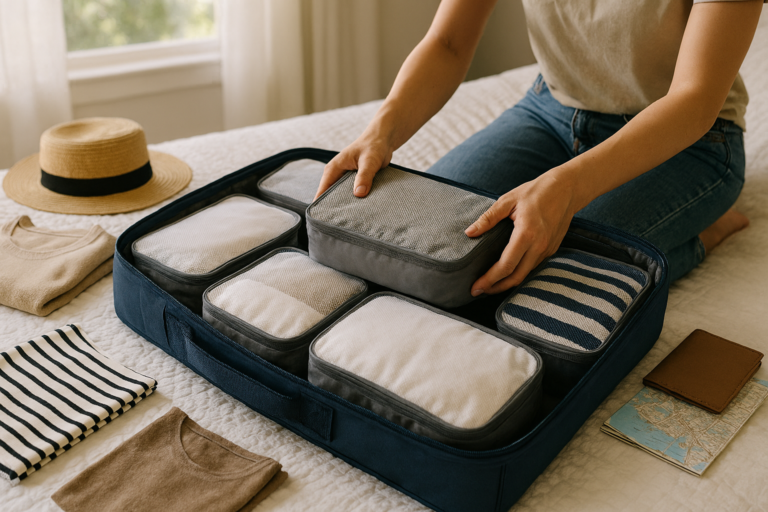
If you aren’t using packing cubes yet, this is the single biggest upgrade you can make. Packing cubes act like “drawers” for your suitcase, allowing you to categorize your clothing (e.g., one for tops, one for bottoms, one for undergarments).
Not only do they keep your gear organized, but they also compress your clothes to save roughly 20–30% more space. Experts at Eagle Creek suggest that using cubes also prevents your clothes from shifting during transit, which significantly reduces wrinkles.
The 3-1-1 Liquid Strategy
Toiletries are often the heaviest part of a bag and the most likely to cause delays at security. To master the TSA 3-1-1 Rule, you must embrace the “solid” revolution:
-
Solid Toiletries: Swap liquid shampoo, conditioner, and soap for bar versions. Brands like Ethique offer high-quality concentrates that don’t count toward your liquid limit.
-
Refillable Containers: For the liquids you must bring (like sunscreen or specialized skincare), use high-quality, leak-proof silicone tubes like GoToob.
Tech Management
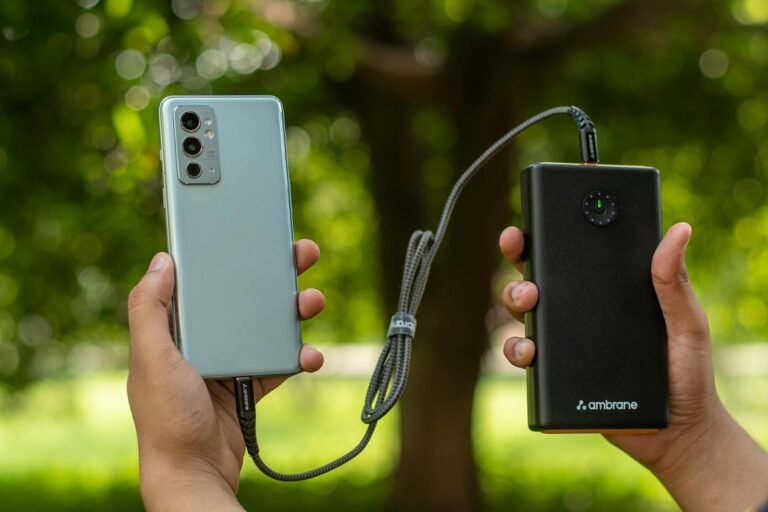
In a digital world, cables and chargers are the modern “tangle-trap.” Instead of letting them float freely in your bag, use a dedicated tech organizer. A small, slim pouch ensures your external power banks, charging cables, and universal travel adapters are always in one place.
Pro Tip: Invest in a universal travel adapter with multiple USB ports. This allows you to charge your phone, camera, and watch simultaneously using only one wall outlet—an essential for older hotels or hostels with limited plugs.
Phase 3: The Capsule Wardrobe Strategy
The biggest mistake travelers make is packing for “what if” scenarios. To fit two weeks of clothing into a carry-on, you must pack for the “likely” rather than the “possible.” This is where the Capsule Wardrobe comes in—a collection of a few essential items of clothing that don’t go out of fashion and can be augmented with seasonal pieces.
The 5-4-3-2-1 Rule
This proven countdown method ensures you have enough variety for 14 days without overstuffing your bag. By focusing on pieces that can be layered, you can adapt to shifting temperatures easily.
-
5 Tops: A mix of t-shirts, a moisture-wicking base layer, and one “nice” button-down or blouse.
-
4 Bottoms: This includes the pair you wear on the plane. Think one pair of jeans or chinos, one pair of versatile shorts or a skirt, and one pair of lightweight travel slacks.
-
3 Pairs of Shoes: One pair of sturdy walking shoes (wear these on the plane), one pair of “dressier” shoes or flats, and a pair of lightweight flip-flops or sandals for the beach or hotel showers.
-
2 Outer Layers: A lightweight fleece or cardigan and a packable rain shell.
-
1 Accessory Set: A hat, a pair of sunglasses, and a scarf (which can double as a blanket on the plane).
Fabric Choice: The Secret of Merino Wool
If you want to pack light, you need to be picky about fabrics. Merino wool is the “super-fabric” of the travel world. Unlike cotton, it is naturally antimicrobial, meaning it resists odors even after multiple wears. Brands like Smartwool or Icebreaker specialize in thin, stylish merino pieces that keep you cool in the heat and warm in the cold, allowing you to go longer between laundry days.
The Color Palette
To ensure every top matches every bottom, stick to a three-color palette. Usually, this consists of two neutrals (like navy, black, or khaki) and one “pop” color (like red or teal). If every item in your bag coordinates, you can create dozens of unique outfits from just a handful of pieces. As noted by Travel + Leisure, the goal is “interchangeability.”
Phase 4: Packing Techniques
Now that you have curated your gear and wardrobe, the challenge is fitting it all together. How you fold and arrange your items can be the difference between a bag that zips easily and one that requires you to sit on it to close.
The Ranger Roll vs. Flat Folding
For most clothing items—like t-shirts, leggings, and undergarments—the “Ranger Roll“ (a military-style rolling technique) is the ultimate space-saver. Rolling your clothes minimizes air pockets and reduces wrinkles compared to traditional folding.
However, for structured items like blazers or heavy linen, the “Bundle Method” is often superior. This involves wrapping your garments around a central “core” (like a pouch of socks) to maintain the fabric’s shape and prevent hard creases. Real Simple provides an excellent visual breakdown of how this technique can save significant space while keeping your clothes looking fresh.
Using Every Internal “Niche”
Think of your suitcase like a game of Tetris. To maximize space, you must utilize the “dead zones” that most people ignore:
-
The Inside of Shoes: Your extra pair of shoes is essentially a small, hard-sided container. Stuff them with socks, rolled-up belts, or fragile items like sunglasses (if they are in a soft pouch).
-
The Gaps Between Cubes: Once your packing cubes are in the bag, you’ll notice small triangular gaps near the corners or edges. Use these spots for loose items like your tech cables or a packable tote bag.
-
The Compression Straps: Most travel-specific backpacks, like those from Tortuga, come with internal and external compression straps. Use them! Internal straps pull your clothes tight against the back of the bag, keeping the weight centered and creating extra room at the top.
The “Last In, First Out” Rule
Always pack your most essential items last. Your 3-1-1 liquids bag, your light jacket, and your tech pouch should sit right at the top of your bag or in an easily accessible exterior pocket. This ensures that when you get to airport security or feel a chill on the plane, you aren’t unpacking your entire two-week wardrobe in the middle of a crowded terminal.
Phase 5: Wear Your Weight
If you’re flying on a budget carrier with strict weight limits (common in Europe and Asia), your biggest obstacle isn’t the size of the bag—it’s the scale. The “Wear Your Weight” strategy is the ultimate loophole to ensure your carry-on stays under the 7kg or 10kg limit.
The “Airport Uniform”
Never pack your heaviest or bulkiest items; wear them. Even if you’re traveling from a warm climate to another warm climate, the “Airport Uniform” should consist of:
-
Your heaviest shoes: Wear your hiking boots or sneakers on the plane.
-
Your bulkiest layers: A hoodie, a denim jacket, or a trench coat. Airplanes are notoriously chilly anyway, so you’ll likely want the extra warmth once the cabin altitude reaches 30,000 feet.
-
Your heaviest bottoms: Wear your jeans or chinos and pack your lightweight linen or gym shorts.
Pockets Are Your Best Friend
A high-quality travel jacket is more than just clothing—it’s extra luggage. Brands like SCOTTeVEST specialize in garments with hidden pockets designed to hold smartphones, tablets, and even cameras. By shifting heavy electronics from your bag to your person during the check-in process, you can easily shave 2–3 pounds off your bag’s official weight.
The “Pillow Case” Hack
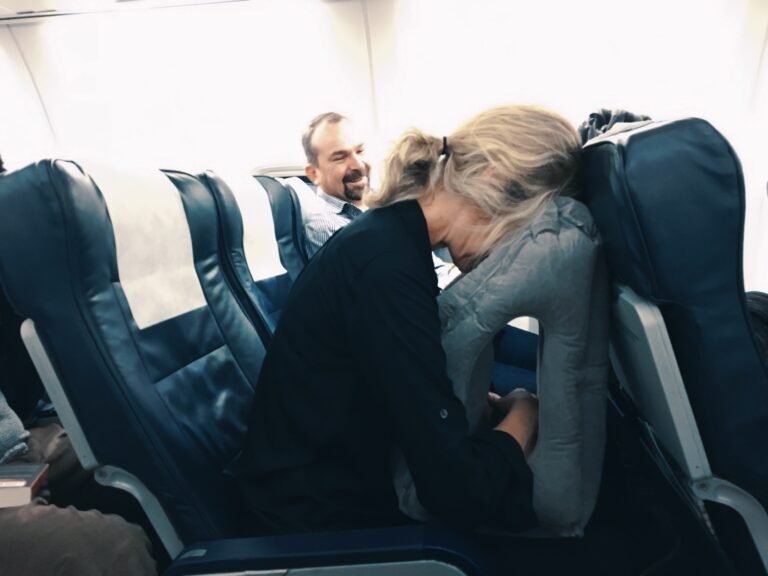
A viral travel trend that actually works involves the “travel pillow.” Many travelers are now using zippered, empty pillow covers and stuffing them with soft clothing items like socks, sweaters, or t-shirts. Most airlines do not count a neck pillow as a personal item, allowing you to effectively carry an extra 2–3 liters of gear for free. Condé Nast Traveler has noted that while it’s a clever trick, you should still ensure the pillow remains comfortable enough to actually use for sleep!
The “What to Leave Behind” Checklist
Packing for two weeks in one bag is just as much about what you don’t take as what you do. Every “just in case” item is a weight tax you’ll pay every time you lift your bag into an overhead bin. If you’re struggling to zip your bag, it’s time to be ruthless.
Here is what you should leave on the shelf:
-
Full-Sized Toiletries: Unless you have a very specific medical need, leave the 12oz shampoo and the giant tube of toothpaste at home. If you run out of something, remember that pharmacies and grocery stores exist everywhere in the world. Using refillable travel bottles is far more efficient.
-
More than Two Books: We all love the feel of a physical book, but they are heavy and bulky. One paperback for the plane is fine, but for a 14-day trip, an Amazon Kindle or the Libby app on your phone can hold thousands of titles for zero extra weight.
-
The “Third” Pair of Jeans: Jeans are heavy and take forever to dry. You only need one pair (worn on the plane). If you need another pair of pants, opt for lightweight chinos or technical travel trousers.
-
Specialized Hair Tools: Most hotels and even many high-end hostels provide hair dryers. Unless you are attending a formal gala, leave the heavy-duty flat irons or curling wands behind. If you must have one, look for a dual-voltage “mini” travel version.
-
Excessive “Glitter and Glam”: Heavy jewelry, multiple evening clutches, and three different types of cologne/perfume add up. Stick to one versatile set of accessories that works for both day and night.
Conclusion
Traveling for two weeks with nothing but a carry-on isn’t about deprivation—it’s about freedom. It’s the freedom to hop off a train in Florence and walk to your hotel without being weighed down. It’s the peace of mind knowing your belongings are always within arm’s reach, never sitting in a lost-luggage warehouse.
By embracing the capsule wardrobe, mastering the Ranger Roll, and utilizing the right gear, you’ll find that you actually have everything you need. The less you carry, the more room you have for experiences.
As the experts at Rick Steves’ Europe famously say: “You can’t travel heavy, happy, and cheap. Pick two.” We choose happy and cheap every time.
Now it’s your turn! What is the one item you absolutely cannot travel without, even when packing light? Let us know in the comments below!